Showing posts with label #Black Lives Matter. Show all posts

Friday, August 25, 2017

Protest Spreads in the NFL


With two preseason games left to be played, the jumbo jet that is the National Football League regular season is taxiing on the runway. The NFL is all that is left of national culture in the United States; it is the only thing you can talk about with just about anyone in any American city; it is the paste, however thin, that sticks Americans together; it also remains the foundation of broadcast television.

That's why last year an unexpected significant loss of viewers at the beginning of the season caused wails of lamentation in corporate boardrooms across the country. The unspoken fear was that if interest in the NFL disintegrated then capitalism itself couldn't be far behind.

Many explanations for the ratings drop were floated -- the presidential election, the splintering of consciousness due to smartphones, and, my choice, for the first time in years (decades?) most of the games were plain old lousy -- before the plutocrats who guide the NFL settled on ailing San Francisco quarterback Colin Kaepernick as the scapegoat.

Kaepernick started kneeling last year during the national anthem to protest institutional racism and show support for Black Lives Matter. His protest was picked up by players throughout the league before petering out by November. Viewership had started to pick back up by then. So the NFL, in a fit of "magical thinking," conveniently tarred Kaepernick and his un-American protest the root cause of the problem.

Since then Kaepenick has severed his relationship with the 49ers. A big story of the off-season was his inability to secure employment. A blacklist was obviously at work. Talk to any fan -- even if s/he dislikes Kaepernick --and s/he will tell you the same thing: He is good enough to start for most teams. The Denver Broncos could likely return to the Super Bowl with Kap at QB. If a wheeler-dealer like Broncos GM John Elway passed on Kaepernick the only meaningful explanation is that the league is enforcing a blacklist.

The problem for the NFL, as Ken Belson explored the other day in "Kaepernick’s Protest Cascades Into Protests Over His Job Situation," is that, post-Charlottesville, Kaepernick's protest of last season has reappeared this preseason and it is broader and better organized among the players:
On Monday, in the largest on-field demonstration yet, a dozen Cleveland Browns players knelt during the national anthem, while several other players stood next to them in solidarity. In contrast to last season, when Kaepernick and a handful of black players refused to stand during the anthem, the group included white players.
Goodell has insisted that the league’s 32 teams are not banning Kaepernick. But the issue has put Goodell in the awkward position of defending owners and coaches who have twisted themselves in knots defending their decision not to sign Kaepernick, a quarterback who, unlike the two dozen or so who have been signed so far this year, has led a team to a Super Bowl.
From Baltimore to Miami to Seattle, teams in need of starting or backup quarterbacks signed players with either little experience or a mixed track record, and had to explain, often awkwardly, why they had passed over Kaepernick, who opted out of his contract with the 49ers in March. The Dolphins even coaxed Jay Cutler out of retirement.
Kaepernick and the anthem-kneeling dispute that he inspired are just the latest in a series of headaches for Goodell and the N.F.L., which is in the spotlight again for its handling of players who are accused of domestic violence, for its handling of concussions and for its harsh stand against the use of marijuana, which some players contend is a safer alternative to the highly addictive painkillers that teams dispense.
The continuing debate over whether players should or should not stand for the national anthem, though, is perhaps the most explosive issue facing the N.F.L., which celebrates patriotism and military service like no other league. The anthem-kneeling that Kaepernick inspired has divided fans like few other issues and has shown signs of chipping away at the league’s bottom line.
Television ratings at every one of the league’s network partners fell last year for the first time, and while the reasons for the decline are complicated — including the presidential election and the absence of recognizable stars like Peyton Manning — some fans said they had stopped watching the N.F.L. because Kaepernick and other players knelt during the anthem.
As the controversy continues into its second year, more fans who look to sports for a diversion from politics could turn away as the season progresses.
I think the idea that TVs were turned off because a barely visible player or two took a knee or raised a fist during the national anthem is pure bullshit; to believe that, you are basically making a ultra-nationalist political statement.

The reality is that the games were no good; that, and people are gradually abandoning broadcast television.

Who knows why the early season match-ups were so poor.  If teams figure out new offensive schemes this year, or Marshawn Lynch has a big comeback with the Raiders, or any of a dozen captivating storylines, people will tune in. The NFL remains the most powerful opiate in our opioid nation.

Monday, November 7, 2016

Hamburger Hippies

When I plod along Sunday afternoons lying on my back on the mattress on the floor watching the National Football League I have noticed the new Chili's commercials (though I didn't see any yesterday).

The ad campaign is called "The Hamburger Hippies." It celebrates the founding of the restaurant chain by bohemians from the Age of Aquarius. The counterculture is invoked with classic rock'n'roll songs -- Foghat's "Slow Ride" (1975), Faces' "Ooh La La" (1973) and ZZ Top's "Tush" (1975). I thought I heard Free's "All Right Now" (1970) too, but I can't verify that.

The ad campaign is effective because it reminds the viewer of a time when our culture seemed roomy and affordable enough that we could drink, get stoned and laid; then wake up the next day, yawn, and not feel paranoid about the rent going up or being late for work or feeling the need to check email or Facebook. In other words, society provided enough time and space -- freedom! -- for the working class to do what it likes, which is fornicate and alter the everyday mundane pensiveness of sober-minded consciousness.

We know though from the irregular -- the last one was in July -- "Hippies vs. Punks" posts that 1975 is in fact the end of the line for the Hippies. In 1976 there is an efflorescence of California lite rock with Hippie hues -- Fleetwood Mac, Steve Miller Band, Eagles, Peter Frampton -- that signals an accommodation with the workaday world. No longer are the Hippies rocking out with cries of "Kick Out the Jams, Motherfucker!" Rather, it is a shift on the assembly line before stopping off for a meal at a Hippie-run eatery (probably what Chili's was at its founding; what Geppetto's was in my hometown) before returning home to smoke a joint and watch Baretta on ABC.

The Hippies made the transition back to The Man, exchanging their aspirations for another world, whether psychedelic or political, for a steady job, cheap rent, and free time filled with recreational drugs and looser sexual mores.

Sounds pretty good, but something mostly alien in our present digital age. We still long for such a society though. When Foghat's "Slow Ride" or Free's "All Right Now" fill the air we remember what it was like.

The GOP came to power in the late 1960s thanks to two Californians, Ronald Reagan and Richard Nixon. They perfected the politics of white working-class resentment. The scapegoats were Blacks and Hippies, the Watts Rebellion in Los Angeles and the Freedom of Speech Movement at U.C. Berkeley.

Now with marijuana set for a legalization breakthrough and Black Lives Matter here to stay as a cultural force, the foundation of reactionary politics is cracked. Hippies and Blacks are saintly once again. Trump is the last gasp of White Flight, like the Iraqi Baath Party hiding out in Nineveh bankrolled by Saudi royals waiting to pop up reborn as the Islamic State.

Hillary will win, but the war will rage on.

Monday, July 11, 2016

It's the Militarization of a Culture at Perpetual War That is to Blame, Not Black Lives Matter

The effort is underway to link the Thursday night police-targeted shootings in Dallas by Army Reserve veteran Micah Johnson with Black Lives Matter. Nowhere have I seen mentioned the obvious linkage, not with Black Lives Matter, but with the U.S. military. Johnson was deployed overseas to Afghanistan. Johnson's CV is all military. According to Richard Faussett, Manny Fernandez and Alan Blinder in "Micah Johnson, Gunman in Dallas, Honed Military Skills to a Deadly Conclusion":
. . . [A]fter Johnson graduated from John Horn High School in Mesquite, Tex., where he had shown some interest in the military, going so far as to participate in the school’s Junior Reserve Officers Training Corps program. He was not, it seemed on Saturday, a standout: Horn’s former J.R.O.T.C. instructor said he had little recollection of Mr. Johnson. 
He enlisted in the Army Reserve in 2009 and was assigned to a unit — a component of the 420th Engineer Brigade — near Dallas. More than four years later, the unit deployed to Afghanistan. But before the soldiers left for the Afghan theater, they stood in formation not far from the streets where Mr. Johnson would someday stage a siege.
Clearly the Army had more to do with the creation of Micah Johnson than Black Lives Matter. So why is Black Lives Matter being blamed for the deaths of police and not the Army Reserve? And why can't we read this as obvious blow back from a culture basted in militarism?

Obama performed his swan song at the NATO summit in Warsaw over the weekend, the main event being the celebration of the alliance's lurch to the East with garrisons in Latvia, Lithuania, Estonia and Poland, as well as four battalions to be based in Romania and Bulgaria.

The man who owes his place in history due to an ability to convince voters that he was a peace candidate has presided over the creation of a New Cold War with Russia and NATO's garrisoning of many of the nations of the former Warsaw Pact. A spectacular achievement of misdirection.

Obama was asked about this at the NATO summit. According to White House scribe Mark Landler in "Obama on ‘Brooding’ Over the Interminable Wars of His Presidency":
[A] reporter asked [Obama] at a NATO news conference about the nature of war in the 21st century — and, specifically, how he felt about the likelihood that he would be the first two-term president to have presided over a nation at war for every day of his presidency.
Speaking with striking candor for a public setting, Mr. Obama said: “As commander-in-chief of the most powerful military in the world, I spend a lot of time brooding over these issues. And I’m not satisfied that we’ve got it perfect yet.” But he added, “I can say, honestly, it’s better than it was when I came into office.” [Talk about chutzpah!]
The president pointed out that when he took office in 2009, the United States had 180,000 troops in Iraq and Afghanistan. Now that number is about 15,000. He also said these service members were not engaged in combat but in training, advising and equipping Iraqi and Afghan troops — though such roles have increasingly put them in combat situations.
Still, a week after announcing that the United States would leave 8,400 troops in Afghanistan for the foreseeable future, Mr. Obama acknowledged that the threat of terrorism, the resilience of groups like Al Qaeda and the Islamic State, and the weakness of governments in Iraq and Afghanistan made it difficult for the United States to ever leave.
“It’s very hard for us ever to get the satisfaction of MacArthur and the emperor meeting and a war officially being over,” he said, referring to the surrender of Japan at the end of World War II.
Mr. Obama characterized his approach to war as a hybrid: committing limited numbers of American troops to conflict-ridden countries, but working with those countries to develop their own armies and police. He drew attention to an announcement at the Warsaw meeting that NATO would begin training Iraqi troops inside the country. (The alliance had already been training them in neighboring Jordan.)
In Landler's piece Obama hides behind the straw man that "There are fewer wars today between states, he said, and no wars between great powers," without acknowledging his reboot of the Cold War with Russia and his ballyhooed Asia pivot to confront China which is about to ratchet up several notches with The Hague set to rule tomorrow on the status of China's claim to Scarborough Shoal 140 miles off the Philippine coast.

The obvious is that the U.S. is on perpetual war footing with indefinite deployments in Africa, Afghanistan and the Middle East. Nations are shattered beyond repair. And Obama's overriding concern is that he will leave office before being able to thoroughly routinize this new perpetual warfare with its drones and mass surveillance and secret legal findings:
Earlier in his presidency, Mr. Obama spoke of taking the United States off the perpetual war footing of the post-9/11 era. These days — with troops going back into Iraq and Afghanistan, airstrikes in Libya, and drone strikes in Yemen and Pakistan — he says less about this. 
For Mr. Obama, who was a lawyer, the shadowy legal status of this hybrid form of warfare is another heavy burden. That, he said, helped explain why the White House issued a report two weeks ago disclosing estimates of the civilian casualties from drone strikes. 
“What I’m trying to do there is to institutionalize a system where we begin to hold ourselves accountable for this different kind of national security threat and these different kinds of operations,” he said. 

Friday, February 26, 2016

Why Hillary is So Beatable


This morning the pro-Hillary New York Times calls on Clinton to release the transcripts of her speeches to the big banks, "Mrs. Clinton, Show Voters Those Transcripts." This comes a day after video of Black Lives Matter protester Ashley Williams confronting Hillary at a tony Charleston fundraising soiree with a piece of cloth reading "WE HAVE TO BRING THEM TO HEEL" (a quote from Hillary's 1996 "super-predator" speech) went viral.

Look at Adam Johnson's AlterNet post "Black Lives Matter Activist Confronts Clinton About Racially Charged Remarks Because the Corporate Media Won't" for an immediate visceral understanding of why Hillary is the establishment's candidate of choice -- not Rubio, not the "suspended" Jeb Bush, not Ted Cruz.

Hillary is the personification of everything rancid in a political system controlled by the wealthy for the wealthy to the detriment of working people and the planet.

The hashtag #WhichHillary began trending yesterday as people saw the video. Naked Capitalism's Yves Smith points out that Twitter "apparently expunged from the 'trending' list" #WhichHillary.

This is the story of Hillary 2016. We all know that she is a sickening corpse. The problem is that the people in power want her to lead us.

It's not over yet. There is still hope. Young Ashley Williams will inspire many more activists. The transcripts of Hillary's Goldman groveling will hopefully find there way to the public.

Tuesday, December 29, 2015

Guess What? We Don't Need to Live in a Police State

Chicago mayor Rahm Emanuel, the former Clinton and Obama administration power broker and macho-posturing one-percenter, is in trouble. As Monica Davey reported the other day, "Rahm Emanuel, Under Siege in Chicago, Shows Contrite Side":
Mr. Emanuel swept into the mayor’s office in 2011, helped in part by what black Chicagoans knew about him at the time: that Mr. Obama trusted him. Four years later, he faced a steeper climb in a city that had gotten to know him better. He was forced into a runoff with Jesus G. Garcia, a county commissioner who was seeking to become the city’s first Latino mayor, partly because of critics who said Mr. Emanuel was too brusque and more attentive to the wishes of downtown interests than the needs of residents from some poorer neighborhoods.
The mayor, whose clash with public schoolteachers helped set off the city’s first teachers’ strike in a quarter-century, drew special anger in 2013 for overseeing the closing of nearly 50 public schools, many of them in black and Latino neighborhoods. After winning the unexpectedly tense campaign in April, Mr. Emanuel promised that he had gotten the city’s message.
The start of Mr. Emanuel’s second term already was complicated by the city’s fiscal problems. Facing mounting pension payments and sinking credit ratings, Mr. Emanuel pushed through the largest property tax increase in the city’s modern history. Also, the possibility of another teachers’ strike looms.
The fatal shootings Saturday morning occurred on the city’s West Side, the police said, after officers answered a call about a domestic disturbance and were confronted by a “combative” man who relatives said was wielding a baseball bat. The man, Quintonio LeGrier, was shot dead, as was a bystander, Bettie Jones, a first-floor tenant who the police said was hit accidentally by officers’ shots. Mr. LeGrier’s relatives said that he had mental health problems and that the deaths raised questions about the Police Department’s handling of mental illness and about its use of weapons near bystanders.
Mr. Emanuel’s spokesman said the mayor was monitoring the events closely and had been in communication since early Saturday with the Police Department and his office. Mr. Emanuel spoke to the family of Ms. Jones on Sunday to offer his condolences, his spokesman said.
“Anytime an officer uses force, the public deserves answers, and regardless of the circumstances we all grieve anytime there is a loss of life in our city,” the statement from Mr. Emanuel said. “With that in mind, I have been informed that the Independent Police Review Authority has opened investigations into each shooting, and that all evidence will be shared with the Cook County state’s attorney’s office for additional review in the days ahead.”
But the focus of criticism against Mr. Emanuel has been the McDonald case. For months after Mr. McDonald, 17, was killed on the Southwest Side on Oct. 20, 2014, the city kept a police dashboard camera video of the shooting private. It showed Officer Jason Van Dyke firing at Mr. McDonald even after he lay crumpled on the ground. Mr. McDonald had been carrying a knife, but he appeared to veer slightly away from officers when Officer Van Dyke fired the fatal shots. 
Mr. Emanuel has said the city’s longstanding policy is to keep videos private until prosecutors’ investigations are complete. In Mr. McDonald’s case, the city announced in April that it would pay his family $5 million even before a lawsuit was filed. Yet the city refused to make public the video until a judge ordered it last month; only hours before the release, the Cook County state’s attorney, Anita Alvarez, charged Officer Van Dyke with murder in the shooting. 
Since then, Mr. Emanuel has fired his police superintendent, Garry F. McCarthy; replaced the head of an agency that investigates the most egregious complaints against officers; appointed a task force to recommend changes to the department; and met this month with Justice Department officials as they started a broad review of the Police Department. Mr. Emanuel, who says he did not view the McDonald video until the rest of Chicago saw it in November, made an emotional speech before the City Council apologizing for the death and pledging reforms. 
Yet demonstrators here complain that Mr. Emanuel should have released the video months ago. They question whether his stressful re-election bid played a role in the city’s quick settlement with the McDonald family and its efforts to keep the video private — claims Mr. Emanuel’s office vehemently denies. Regardless, the demonstrators say Mr. Emanuel should have demanded changes in the Police Department, with its well-documented history of mistreating black residents, long ago.
The problem for big city mayors, as New York City's Bill de Blasio discovered last year around this time, is any criticism of the "thin blue line" can lead to an open revolt. Then metropolitan citizens of the indispensable nation are confronted with the ugly realization that they actually belong to a banana republic. To question the sovereign infallibility of the police is to invite retribution. I saw it up close during the Seattle WTO when my neighborhood, home to a community college with a radical activist student body, was perceived to be a hotbed of protest and anti-police sentiment. For a week or two following the ministerial it felt like we were under quarantine.

Last week Naked Capitalism posted Matthew Haywood's helpful outline of the post-Ferguson state of affairs for American policing, "The Logic of the Police State in America," the gist of which is that police forces across the country, feeling the pressure of Black Lives Matter, are attempting to protect their "above-the-law" privileges.

The problem for the popo is in their main argument, which Haywood summarizes as follows:
If you’ve been listening to various police agencies and their supporters, then you know what the future holds: anarchy is coming — and it’s all the fault of activists.
In May, a Wall Street Journal op-ed warned of a “new nationwide crime wave” thanks to “intense agitation against American police departments” over the previous year. New Jersey Governor Chris Christie went further. Talking recently with the host of CBS’s Face the Nation, the Republican presidential hopeful asserted that the Black Lives Matter movement wasn’t about reform but something far more sinister. “They’ve been chanting in the streets for the murder of police officers,” he insisted. Even the nation’s top cop, FBI Director James Comey, weighed in at the University of Chicago Law School, speaking of “a chill wind that has blown through American law enforcement over the last year.”
According to these figures and others like them, lawlessness has been sweeping the nation as the so-called Ferguson effect spreads. Criminals have been emboldened as police officers are forced to think twice about doing their jobs for fear of the infamy of starring in the next viral video. The police have supposedly become the targets of assassins intoxicated by “anti-cop rhetoric,” just as departments are being stripped of the kind of high-powered equipment they need to protect officers and communities.  Even their funding streams have, it’s claimed, come under attack as anti-cop bias has infected Washington, D.C.  Senator Ted Cruz caught the spirit of that critique by convening a Senate subcommittee hearing to which he gave the title, “The War on Police: How the Federal Government Undermines State and Local Law Enforcement.” According to him, the federal government, including the president and attorney general, has been vilifying the police, who are now being treated as if they, not the criminals, were the enemy.
Haywood goes on to describe how violent attacks against the police are at all-time low. What is more problematic for the police state is the case of New York City, where the end of aggressive law enforcement, in the form of stop and frisk, led not to a spike in crime, as many pundits and cops predicted, but to a significant drop in crime. This from yesterday's unsigned editorial: "New York City Policing, by the Numbers":
The warnings began even before Bill de Blasio was sworn in as New York City’s mayor in January 2014. A safe New York depended on the aggressive policing tactics that began in the 1990s and flourished under Mayor Michael Bloomberg and his police commissioner, Ray Kelly. Without those tactics, the doomsayers said, the city would be swamped by a 1970s-style crime wave. 
After a federal judge ruled in 2013 that the Police Department’s “stop and frisk” policy was so sweeping that it violated the Constitution, Mr. Kelly was furious. “Violent crime will go up,” he said on NBC’s “Meet the Press.” “No question about it.” 
That prediction has, of course, been proved wrong, as crime in the city remains at historic lows under Mayor de Blasio and his police commissioner, William Bratton, even as arrests, stops and summonses continue to plummet after a peak in 2011. 
An illuminating new report released by the John Jay College of Criminal Justice provides the most comprehensive analysis yet of the numbers behind the rise and fall of police “enforcement actions” over the past decade. Between 2011 and 2014, the report found, the total number of these actions — defined as arrests for felonies and misdemeanors, criminal summonses, and stop-and-frisks — fell by more than 800,000, or 31 percent. 
The biggest drop was in street stops, which had skyrocketed to more than 685,000 in 2011 from 160,000 in 2003. Some officers admitted they felt constant pressure to meet arbitrary productivity quotas, but the effect was to disproportionately target young African-American men, most of whom were doing nothing wrong. By 2014, the number of stops was under 46,000 — a 93 percent decline in only three years, with stops going down most sharply in those poorer and minority neighborhoods where they grew the fastest over the previous decade.
Guess what? We don't need to live in a police state.

Thursday, November 19, 2015

Black Lives Matter: The Only Game in Town

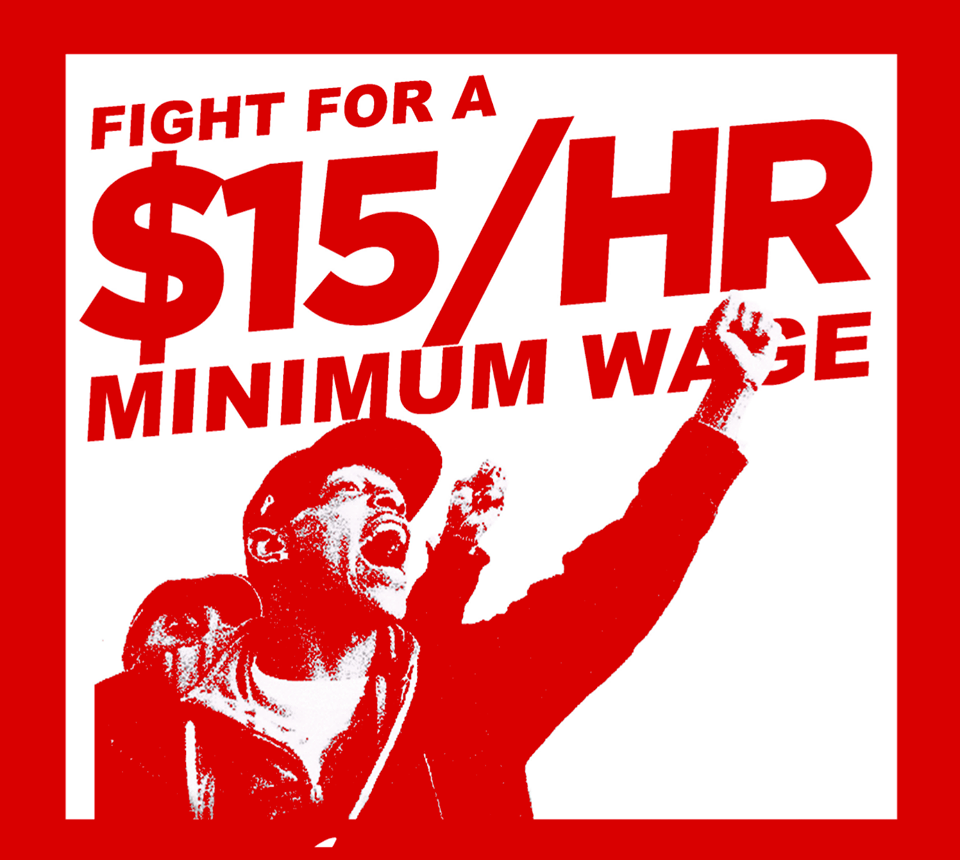
There is a good story, sort of a roundup, on Black Lives Matter by John Eligon ("One Slogan, Many Methods: Black Lives Matter Enters Politics"). At this point, as I see it, Black Lives Matter is pretty much "the only game in town," if you exclude efforts to struggle in the Augean Stables of the duopoly. The $15 Now movement has largely been adopted by the mainstream. Efforts continue to raise the minimum wage at the city level and for large university systems, but by and large $15 Now has carried the day.

Ferguson, where Black Lives Matter took off, is now almost a year-and-a-half gone, but Black Lives Matter, as Eligon's piece makes clear, is still going strong. It has plenty of grass-roots mojo, as well as insider chops. In a potentially troubling sign, a Black Lives Matter super PAC is being set up, as Eligon reports, to raise money from wealthy Democrat funders:
“At this point, marching and protesting, it’s not going anywhere,” said Tarik Mohamed, treasurer and a founder of the super PAC. “So we’re trying to find new avenues of engaging people for change.” 
And, in a sign of its growing influence, the movement is attracting the attention of deep-pocketed Democratic donors, who met with activists in Washington this week to discuss how they can support the budding movement.
*** 
The Black Lives Matter Super PAC, in addition to contributing to campaigns next year, hopes to capitalize on new technology, such as virtual reality software, to help people understand experiences like solitary confinement, Mr. Mohamed said.
Members of the Democracy Alliance, an influential club of liberal donors, met on Tuesday with groups allied under the Black Lives Matters banner — including ColorOfChange.org, Black Youth Project 100 and the Black Civic Engagement Fund — to discuss possibly directing funds to the movement, said Leah Hunt-Hendrix, an alliance member. The organizations represented only a sample of the groups that donors wanted to shed light on, she said.
“It was just a really real conversation about the complexities of funding movements and the need for more infrastructure, especially black-led infrastructure,” said Ms. Hunt-Hendrix, who has inherited wealth from an oil company her grandfather started. 
Specific funding commitments were not made, she said, and it would be up to individual donors to follow up with organizations they want to support.
“We don’t want to raise expectations that this is a secretive group of donors hoping to raise tons of money,” she said.
As soon as "gee whiz" whiz-bang technology is trotted out as a growth strategy for a social movement run for the hills, preferably the Sierra Maestra.

Nonetheless, Black Lives Matter has been around now and is organizing, growing and influencing perception and governance longer than Occupy Wall Street, an organization I thought would be able to successfully redefine itself with its Occupy Sandy volunteerism after its main encampment was demolished. No such luck,

There needs to be an egalitarian mass movement that is not appropriated by one of the two devilish hands of the duopoly. Obama's legacy will be that he proved adept at suckering people back into belief and participation in a corrupt and failed political system. There are no avatars of the mainstream who will better our lot because the mainstream is choked with lies and is sped along by warfare and concentrated wealth.

There is a powerful, expanding understanding that the system has failed. Black Lives Matter so far has walked the talk.

Monday, August 10, 2015

Black Lives Matter Creates a Stir in Seattle

The hubbub in the Emerald City over the weekend was the disruption of a Bernie Sanders campaign rally at Westlake Mall by Black Lives Matter activists. I had gone to bed early Saturday evening because I had a 10K to run early the next day. I was in a deep sleep dreaming about tracking dirty slushy snow on the expensive carpets of a rich man's home when I awoke to the sound of knocking at my door. The knocking repeated itself several times. Concerned that it might be the building super with an issue having to do with the new kitchen plumbing that had just been installed in my apartment, I lumbered out of bed and opened the door.

No one was there. But then my downstairs neighbor suddenly appeared. She is a friend, a retiree, whom I have known for years. She and my next-door neighbors were either on their way to or returning from Sanders' appearance at the University of Washington. She handed me a book -- Bernie Sanders' The Speech: A Historic Filibuster on Corporate Greed and the Decline of Our Middle Class (2011). I was disoriented with drool on my chin. I apologized for my state and thanked her for the book. She apologized for waking me. Then she was off, and I went back to bed.

The next morning I left the apartment early, 6:30 AM, to run that race. Stuck on my front door was this post card from my neighbor:


So she had been to the Westlake event and was upset by the Black Lives Matter activists commandeering the microphone and hijacking Sanders' appearance. I understand that. My first reaction was that it was a provocation or dirty trick orchestrated by the Clinton campaign. What better way to guarantee that Sanders cannot broaden his appeal to blacks and Latinos than by driving a wedge between the white liberals and progressives that are flocking by the thousands to see Sanders as he tours the country?

But the important thing to do here is not to react. Read the statement that was posted to Black Lives Matter Seattle:
PRESS RELEASE: Black Lives Matter Seattle ‪#‎BowDownBernie‬ Action 
MEDIA CONTACTS: Marissa Johnson (360) 840-6234 blacklivesmatterseattle@gmail.com 
Black Lives Matter Seattle organizers and supporters take over Bernie Sanders’ rally at Westlake on Saturday, August 8, 2015. 
Today BLM Seattle, with the support of other Black organizers and non-Black allies and accomplices, held Bernie Sanders publicly accountable for his lack of support for the Black Lives Matter movement and his blatantly silencing response to the ‪#‎SayHerName‬ ‪#‎IfIDieInPoliceCustody‬ action that took place at Netroots this year. 
Bernie’s arrival in Seattle is largely significant in the context of the state of emergency Black lives are in locally as well as across America. The Seattle Police Department has been under federal consent decree for the last three years and has been continually plagued by use-of-force violations and racist scandals amongst their rank and file. Seattle Mayor Ed Murray has refused to push any reform measures for police accountability, not even the numerous recommendations of his self-appointed Community Police Commission. The Seattle School District suspends Black students at a rate six times higher than their white counterparts, feeding Black children into the school-to-prison pipeline. King County has fought hard to push through a plan to build a $210 million new youth jail to imprison these children, amid intense community criticism and dissent. The Central District, a historically Black neighborhood in Seattle, has undergone rapid gentrification over the past few decades, with Black people being displaced from the only neighborhood that we could legally live in until just years ago. While white men profit off of the legalization of marijuana, our prisons are still filled with Black people who are over-incarcerated for drug offenses. 
This city is filled with white progressives, which is why Bernie Sanders’ camp was obviously expecting a friendly and consenting audience for today’s campaign visit. The problem with Sanders’, and with white Seattle progressives in general, is that they are utterly and totally useless (when not outright harmful) in terms of the fight for Black lives. While we are drowning in their liberal rhetoric, we have yet to see them support Black grassroots movements or take on any measure of risk and responsibility for ending the tyranny of white supremacy in our country and in our city. This willful passivity while claiming solidarity with the ‪#‎BlackLivesMatter‬ movement in an effort to be relevant is over. White progressive Seattle and Bernie Sanders cannot call themselves liberals while they participate in the racist system that claims Black lives. Bernie Sanders will not continue to call himself a man of the people, while ignoring the plight of Black people. Presidential candidates will not win Black votes without putting out an explicit criminal justice reform package. As was said at the Netroots action, presidential candidates should expect to be shut down and confronted every step along the way of this presidential campaign. Black people are in a state of emergency. Lines have been drawn in the sand. You are either fighting continuously and measurably to protect Black life in America, or you are a part of the white supremacist system that we will tear down in the liberation of our people. 
On this, nearly the one year anniversary of the ruthless murder of Mike Brown, we honor Black lives lost by doing the unthinkable, the unapologetic, and the unrespectable. Out of radical love for our Black brothers and sisters, we put our lives and our bodies on the line to testify to their persecution and resilience. We join together in Black love to #SayHerName and declare that #BlackLivesMatter, understanding that our love will disrupt the complicity and corruption of our anti-Black society; GOP, Democrat, and otherwise. 
There is no business as usual while Black lives are lost. We will ensure this by any means necessary. 
With the strength of our ancestors and for the future of our children, 
Black Lives Matter Seattle Co-Founders 
Marissa Johnson and Mara Willaford
#BowDownBernie
#SayHerName
#IfIDieInPoliceCustody
‪#‎NotOneMoreDeportation‬‪#‎FreePalestine‬‪#‎MikeBrown‬#BlackLivesMatter
What they say is true. Now my hope is that they would continue their confrontations by going after other campaigns, such as Hillary's. If all they do is hector Bernie Sanders, then clearly the end result is a provocation that benefits other candidacies. Eric Garner's daughter, Erica, speaking yesterday at the anniversary of Mike Brown's killing, justified the shutdown of the Sanders event:
Erica Garner, the daughter of Eric Garner, applauded the activists who climbed on stage with the Democratic presidential candidate Bernie Sanders and demanded an opportunity to talk about police killings during an event in Seattle on Saturday. Mr. Sanders left the event without addressing the crowd. 
“We got to hold our elected officials accountable,” Ms. Garner said. “If he’s not going to talk about our issues, he shouldn’t talk at all.”
But Sanders can't be the only elected official targeted; if so, then Black Lives Matter is just doing the dirty work of the mainstream frontrunners.

When I was active in the Nader-era Green Party, we were criticized all the time for not being a viable progressive movement because we had no black support. Somehow -- and this is the absurdity -- the Democratic Party was more progressive because it had the overwhelming allegiance of blacks. This is poppycock. But the same skewed logic is being applied to the Sanders campaign. This is from an otherwise complimentary piece by Adam Nagourney, "Similarities Aside, Bernie Sanders Isn’t Rerunning Howard Dean’s 2004 Race":
And while there are similarities in the crowds both men draw — overwhelmingly white, for the most part liberal activists — this is not the Democratic Party Mr. Dean was seeking to lead in 2004. The party is younger and more ethnically diverse now, in a way that Mr. Sanders’s crowds are not. The liberal wing of the party, or what Mr. Dean liked to call the “Democratic wing of the Democratic Party,” has undergone its own maturation over the years, its ambitions readjusted after it watched Mr. Dean lose and President Obama turn out to be something short of an unfaltering ideological ally. 
“Sanders gives me a sense of déjà vu, not just the level of excitement that he generates among people who desperately want an alternative to the establishment status quo, but also the irrational cherry-picking of news to convince themselves that victory is just around the corner,” said Markos Moulitsas, the founder of the liberal blog Daily Kos and the organizer of the first Netroots Nation convention, as it came to be known. 
“I was knee-deep in the Dean movement, so I remember those big exciting crowds, but I also remember ignoring the fact that they were almost exclusively made up of young, white, fairly affluent and educated people,” Mr. Moulitsas said. “And Sanders’s are no different, ill reflecting a modern Democratic Party that is at least 40 percent minority and overwhelmingly female.” 
In Seattle on Saturday, Mr. Sanders was confronted by protesters from the Black Lives Matter movement who climbed onstage and demanded an opportunity to talk about police brutality and to note the anniversary of the fatal shooting by a white police officer of Michael Brown, an unarmed 18-year-old black man, in Ferguson, Mo. Mr. Sanders stepped aside and finally left the event without addressing the crowd. 
Yet Mr. Sanders’s appeal shows no sign of fading. And in a sign of self-confidence — and a tribute to Mr. Dean’s signature argument, when he was chairman of the Democratic National Committee, that the party had to compete in all 50 states — Mr. Sanders is campaigning in such unlikely Democratic states as Louisiana and Texas. It appears to be working: He walked out to a rally in Arizona to find 11,000 people waiting to hear him on a Saturday night.
The important takeaway here is that Sanders, for all his lily whiteness and his passive militarism, is not going to go away. His crowds are the most substantial of any presidential candidate. Sanders, as his book The Speech makes clear, is addressing the most salient political issue of our times and that is the complete capture of the government by a destructive oligarchic elite.

But Black Lives Matter is not going anywhere either. Let's hope an accommodation is reached between the two.

Tuesday, June 9, 2015

Gray Lady Bangs the Drum on Institutional Racism/Police Accountability


On the one hand, we have The New York Times daily laying the foundation of the New Cold War; while on the other, the "newspaper of record" nearly as often shines a light on institutional racism, the criminal justice system and the lack of police accountability. It is a strange age we live in. A Cold War is being resuscitated sans the specter of international communism at the the same time one of the main tenets of the 1960s New Left -- black liberation -- is making a comeback.

Make no mistake, the Gray Lady is advocating for black justice. She didn't need to run a story (Carol Cole-Frowe and Richard Fausset, "Jarring Image of Police’s Use of Force at Texas Pool Party") about the police storming a pool party in a Dallas suburb, but she did. And it is decent story to boot, drawing attention to the racial divide in the city where the incident took place:
McKinney, with around 150,000 people, is a fast-growing, mostly middle-class suburb with deep racial and economic divisions. In 2009, according to an article in The Atlantic, the city settled a lawsuit in which it was accused of hindering the construction of affordable housing in the western part of the city, which is more white and more affluent.
The pool party took place on the west side, in a neighborhood that residents said is usually marked by friendly relations among black, white, Hispanic and Asian residents.
Of course the video speaks for itself. You would be hard pressed to find a better depiction of domination: an armed cracker in a dark uniform manhandling a black girl in a colorful bathing suit. It as if white fascistic America's pornographic daydream was caught on a cell-phone camera.

And the McKinney pool party story is not even the best black justice report featured in today's paper. Michael Schmidt and Matt Apuzzo have an excellent piece, "Cleveland Leaders Bypass Prosecutors to Seek Charge in Tamir Rice Case," on how an obscure Ohio law is being used to attempt a bypass of the grand-jury system so that the murder of Tamir Rice might receive a public trial:
Ohio is one of a handful of states that allow residents to request an arrest without approval from the police or prosecutors. It is difficult to know how the case will play out because there is little precedent for a citizen to request an arrest in such a contentious, high-profile case. 
Mr. Madison [lawyer for the Tamir Rice family] said that he knew of no instance in which an Ohio judge had ordered the arrest of a police officer based on a citizen complaint, but that most previous complaints had been frivolous. 
Shooting deaths by officers over the past year have prompted the most significant national discussion on policing since the 1991 beating of Rodney King in Los Angeles. The debate has highlighted, among other things, the differences in how prosecutors handle cases involving investigations of police officers. 
In a typical murder case, prosecutors often present only their best evidence to a grand jury in order to get an indictment. Arguments that a shooting was justified are typically not made until much later, at trial. 
In cases involving police officers, prosecutors are more likely to let grand jurors hear conflicting testimony or see evidence favorable to the officer. Critics say that has established two standards for bringing charges: a high one for police officers, and a much lower one for everyone else. 
A task force appointed by President Obama recommended in March that all cases involving the use of force by police officers be handled by independent prosecutors to “demonstrate the transparency to the public that can lead to mutual trust between community and law enforcement.” In the Cleveland case, however, Cuyahoga County prosecutors will decide whether to bring charges. Those prosecutors work regularly with Cleveland police officers, a closeness that activists have said is a conflict of interest.

By going directly to a judge, community leaders are trying to circumvent that process. Ohio law allows anyone with “knowledge of the facts” to file a court affidavit and ask a judge to issue an arrest warrant. If approved, the arrest would be followed by a public hearing, and community members said that was preferable to allowing prosecutors to make the decision in secret.

“Here we are taking some control of the process as citizens,” Mr. Madison said. “We are going to participate without even changing the law.”
Tamir was fatally shot in November while he played in a park. A 911 caller had reported that the boy was waving a gun that was “probably fake.” When officers arrived, they pulled their car into the park, next to the boy. Within two seconds, an officer, Timothy Loehmann, shot Tamir in the abdomen. The boy’s gun, it turned out, was a toy replica of a Colt pistol and fired plastic pellets.
The shooting raised questions about whether the officers followed procedures and whether they had time to warn Tamir three times to put down the gun, as they said they had done. Lawyers for the city have defended the shooting, saying the officers mistook the toy for a real gun. 
The Rev. Jawanza K. Colvin, who signed affidavits seeking charges of murder and manslaughter, said: “We have the video, and having witnessed it, you can see that it took two seconds for the officers to shoot a 12-year-old boy who showed no malicious intent or aggressive behavior. There is certainly reasonable suspicion that a crime was committed.” 
The planned filing comes as Cleveland tries to move past what the Justice Department recently said was a pattern of police abuse and unconstitutional behavior. The city agreed to put in place new training and civilian oversight to head off a civil rights lawsuit.
It is hard for me to imagine a Cleveland judge issuing an arrest warrant for Timothy Loehmann. The judicial system exists to protect the status quo, and the status quo allows law enforcement to operate with impunity. This impunity embraces the regular murder of black people.

For some reason, the NYT has taken up the cause of the #Black Lives Matter movement, an amazingly progressive thing to do and something that doesn't square with the paper's crude, backward parroting of USG propaganda when it comes to foreign affairs. But why?

Are the editors privy to some secret government study that foretells of a crackdown by the police state and they're, in the finest tradition of public service, trying to get out front and build a movement of civic resistance? Doubtful to impossible. Something is happening here, some form of mass awakening that is broader and simultaneously more cynical than what happened in the 1960s/early 1970s and the Gray Lady is just trying to keep up.

Wednesday, May 20, 2015

Los Angeles $15/Hr. Minimum Wage Huge Win


Leadership of mainstream political parties, zombies of a bankrupt and corrupt neoliberal consensus, got a jolt yesterday as the megalopolis of Los Angeles adopted a $15/hr. minimum wage. Jennifer Medina and Noam Scheiber have the story, "Los Angeles Lifts Its Minimum Wage to $15 Per Hour":
LOS ANGELES — The nation’s second-largest city voted Tuesday to increase its minimum wage from $9 an hour to $15 an hour by 2020, in what is perhaps the most significant victory so far for labor groups and their allies who are engaged in a national push to raise the minimum wage.
The increase, which the City Council passed in a 14-to-1 vote, comes as workers across the country are rallying for higher wages and several large companies, including Facebook and Walmart, have moved to raise their lowest wages. Several other cities, including San Francisco, Chicago, Seattle and Oakland, Calif., have already approved increases, and dozens more are considering doing the same. In 2014, a number of Republican-leaning states like Alaska and South Dakota also raised their state-level minimum wages by ballot initiative.
The effect is likely to be particularly strong in Los Angeles, where, according to some estimates, almost 50 percent of the city’s work force earns less than $15 an hour. Under the plan approved Tuesday, the minimum wage will rise over five years.
“The effects here will be the biggest by far,” said Michael Reich, an economist at the University of California, Berkeley, who was commissioned by city leaders to conduct several studies on the potential effects of a minimum-wage increase. “The proposal will bring wages up in a way we haven’t seen since the 1960s. There’s a sense spreading that this is the new norm, especially in areas that have high costs of housing.” 
The groups pressing for higher minimum wages said that the Los Angeles vote could set off a wave of increases across Southern California, and that higher pay scales would improve the way of life for the region’s vast low-wage work force. 
Supporters of higher wages say they hope the move will reverberate nationally. Gov. Andrew M. Cuomo of New York announced this month that he was convening a state board to consider a wage increase in the local fast-food industry, which could be enacted without a vote in the State Legislature. Immediately after the Los Angeles vote, pressure began to build on Mr. Cuomo to reject an increase that falls short of $15 an hour.
Opponents of the $15/hr. minimum wage hide behind small business owners, arguing that it will force them to close their doors. This is a red herring akin to trotting out the family farm when it comes time to call for a repeal of the estate tax or similar to USG claims that Shiite militias have to be sidelined in order to prevent the spread of sectarianism as Islamic State rampages.

If you have been to any urban core lately, you will have noticed, as I did recently on a trip to the Bay Area, that there are very few independent, small business retailers left standing. The overwhelming number of the storefronts I saw were corporate chains. The Bay Area I grew up in always had a large number of vibrant, independent small businesses, part of the legacy of being a Hippie Mecca. No longer.

As the Medina and Scheiber story makes plain, neoliberal Democrats like Andrew Cuomo are now on the hot seat. It is "shit or get off the pot" time for captive politicians. This minimum-wage wave is robust in red states too, as victories in Alaska and South Dakota during the GOP landslide of the 2014 midterms prove.

Over the weekend I finished Tariq Ali's The Extreme Centre: A Warning (2015). Ali takes us on a tour of Western democracies, focusing principally on the UK, since the collapse of communism in the late 1980s/early 1990s. The mainstream parties have morphed into de facto permanent neoliberal government cannibalizing the remnants of the post-WWII social order.

I mentioned in a post last month that Ali thinks that there is plenty of juice left in U.S. global hegemony. All talk of a "decline of the U.S.-led West" is wishful thinking. The one wild card Ali does hold out is popular reaction. As the mainstreams parties have cohered into an extreme center, they have become almost totally divorced from the 99% they nominally represent. This creates an opportunity for new parties to form, at least in parliamentary systems where party formation isn't impossible. So you have Syriza, which has been locked in a death struggle with enforcers of neoliberal austerity, the troika, since it came out on top in Greece's January elections. And you have Podemos in Spain, which will get a chance this Sunday in municipal and regional elections.

In the U.S., the only game in town is $15 Now. Well, that's not true. There's the #Black Lives Matter movement, which has, in less than a year, re-framed centuries of policing and racial stereotypes. Whites are moving toward minority status in the U.S. Obama, in Camden, NJ on Monday, announced that he was curtailing the Pentagon pipeline of surplus hardware to local police.

The LA $15 minimum wage and the shift underway in racial perceptions are huge gains and bode ill for business-as-usual neoliberalism. A mainstream party will win the election next year, but the ground is shifting. Change is coming.

Thursday, April 30, 2015

This is the End for Both the Democrats and the Long U.S. War in Afghanistan

Democrats' hopes of holding onto the White House seem remote. Obama is in free fall. Anti-police #Black Lives Matter protests continue, now in their second year. When I got off the train last night and scooted up the escalator, a couple of officers from the King County Sheriff's Department stood at the entrance to the transit station. A sure sign that a protest was underway. Last year, beginning with Thanksgiving and the riots in Ferguson, the police stayed on the streets for a month, a massive display of force for the holiday shoppers.

The cities are protesting and Obama is trying to have it both ways, poo-pooing rioters while explaining the conditions -- drug abuse, broken homes, underdevelopment of black communities in the inner-city -- that make riot necessary. But Obama does not call out the system by name --institutional racism. The Kerner Commission Report identified the problems 50 years ago in the wake of the riots of 1967 and articulated solutions, principally economic investment. Half-a-century later solutions remain unimplemented, a huge failure.

Obama is paying out what little political currency he has left to get the Trans-Pacific Partnership  through Congress. In order to do so he is going to have to rely on Republican votes. In many ways the last year of Obama's presidency is shaping up to look like Bill Clinton's, and we know how that turned out for Democrats.

The difference between Obama and Clinton is that Clinton was waging war in a relatively modest manner, bombing Yugoslavia into submission and terrorizing Iraq. Obama has more wars on his hands than we can count.

The one that kicked it all off for Clinton's successor, George W. Bush, is promising to provide a spectacular failure for Obama as he exits the White House. U.S. forces in Afghanistan, despite the administration's declaration of the end of combat operations there at the end of last year, are actively engaging the Taliban in attempt to keep the government of Ashraf Ghani from losing large chunks of territory.

Two stories over the last two days -- Mujib Mashal and Jawad Sukhanyar, "Afghan Troops Rush to Kunduz Amid Taliban Assault"; Azam Ahmed and Joseph Goldstein, "Taliban Gains Pull U.S. Units Back Into Fight in Afghanistan" -- depict a dire situation. The coalition government of Ashraf Ghani and Abdullah Adbullah is not fully functional after more than half a year. There is still no defense minister even though the Taliban spring offensive has jumped off to an earlier than expected start with the provincial capital of Kunduz threatened.

As Ahmed and Goldstein explain, commander of U.S. forces in Afghanistan Gen. John Campbell is basically acting as Ghani's defense minister, and this despite the declared end of a U.S. combat role:
As early as January, when officials in Washington were hailing the end of the combat mission, about 40 American Special Operations troops were deployed to Kunar Province to advise Afghan forces that were engaged with the Taliban over a handful of villages along the border with Pakistan.
Advertisement
With the troops on the ground, the command for the American-led coalition called in airstrikes under the authority of force protection, according to two Western military officials, who spoke on the condition of anonymity because the details of the operation were not public.
“They are putting guys on the ground in places to justify the airstrikes,” one of the officials said. “It’s not force protection when they are going on the offensive.”
Commenting on the continuing military operations against the Taliban, the top American commander in Afghanistan, Gen. John F. Campbell, vehemently denied accusations that he was putting troops into harm’s way just to enable more airstrikes.
He has insisted that it is within his purview to target Taliban insurgents who pose a threat not just to American or NATO troops but to any Afghan security forces. And his options on the ground were clear, he said in an interview, even if Washington’s public description of them was not.
“Washington is going to have to say what they say politically for many different audiences, and I have no issue with that,” General Campbell said. “I understand my authorities and what I have to do with Afghanistan’s forces and my forces. And if that doesn’t sell good for a media piece then, again, I can’t worry about it.”
He added: “Combat and war and transition, as you know, it’s a very complex thing. For me, it’s not black and white.”
The operations are continuing during a troubling stretch for the Afghan security forces, as the Taliban are continuing to make gains. Members of the nation’s military and police forces were killed by the insurgents at a high rate last year. And in the first three months of this year, things already appeared worse: The casualty rate rose 54 percent over the same period last year, according to one Western and one Afghan official, who spoke on the condition of anonymity because the figures were not public.
The danger was highlighted in recent days in the northern province of Kunduz, where the Afghan Army has been forced to send thousands of reinforcements to beat back a major Taliban offensive. In addition to threatening to claim at least one district, the insurgents have come within a few miles of the provincial capital, officials in Kunduz said. Coalition forces deployed jets to the area in a show of force but no munitions were dropped, officials said.
In that environment, American military officials have been reluctant to let go of the war, arguing that their involvement remains necessary given the Taliban threat and changing regional factors.
But in March, when Mr. Obama and President Ashraf Ghani of Afghanistan publicly announced that they had agreed to slow the withdrawal of American troops, administration officials emphasized that counterterrorism and training were still the focus, not everyday combat missions against the Taliban. The idea of the extended timeline was to bolster the ability of Afghans to fight, officials said, not to directly fight on their behalf.
Now, though, the distance seems to be widening between the administration’s public statements and what the military appears to be doing, whether at the behest of the White House or on its own, officials here said.
“What I’m thankful for is that I have the authority and flexibility to make those very tough decisions,” General Campbell said. “They could have said, ‘Every time you hit a target, you have to get approval.’ ”
***
Still, General Campbell has found strong support from Mr. Ghani, who became the president in September. Many officials characterize their relationship as a strikingly close partnership: General Campbell visits the president nearly every day — more than any other Western official in the country — and the commander’s staff has been tasked with not only helping to write policy for the Afghan forces but also helping direct overall strategy, at a time when the war is meant to be entirely in the hands of the Afghans.
Some Western officials have privately expressed discomfort with the American role and questioned how prolonging the American strategy in Afghanistan would be more effective this year than it was in the past 13.
“I’m not surprised they are continuing in this way,” said one Western diplomat living in Kabul. “What’s surprising is how much of it they’re doing.”
For an idea of the "thumb in the dike" nature of expanded U.S. airstrikes, read the Mashal and Sukhanyar story about the Taliban offensive in Kunduz. One thing that is apparent from their report is that there is a deep fissure in the Afghan force structure. The Afghan Local Police, militias set up and funded by the U.S., are often at odds with the Afghan National Police and Afghan National Army. (There is an excellent short film produced by The New York Times that documents this.) According to Mashal and Sukhanyar,
The intensity of the violence around Kunduz sent the government scrambling to respond, with three high-level visits to Kunduz on Monday alone, and with confusion and dissension reported among some of the forces fighting back against the insurgents.
The provincial head of the Afghan Local Police, militia forces that have often been on the front lines of fighting against the Taliban, was scornful. “The army and the police don’t coordinate the operations with the A.L.P.,” said the forces’ leader, Sayed Dawood Hashemi. “We are used as firewood in the fighting.”
Despite requests for assistance from the security forces, one A.L.P. unit with dozens of men was forced to retreat from the neighborhood of Talawka, on the outskirts of Kunduz, allowing Taliban fighters to flood in, according to a member of the provincial council. Elsewhere, 26 A.L.P. fighters have been captured by the Taliban and two killed, Mr. Hashemi said.
Intense fighting started relatively early this year. Two weeks before the official start of their spring offensive, the Taliban attacked Afghan Army positions in remote Badakhshan Province, with hundreds of fighters overrunning Jurm District, abducting and killing dozens of soldiers, some of whom were reportedly beheaded. The government says it has begun a counteroffensive in Badakhshan, even as heavy fighting has been reported in several other northern provinces, including Sar-i-Pul, Jowzjan and Faryab.
With so many battles raging across the country, visiting army officials have told provincial council members in Kunduz that the best they can do is push back the enemy a bit, and that they cannot afford to sustain a longer operation, according to Mr. Ayoubi, the council chief in Kunduz.
In the meantime, irregular militias that were once funded by the United States as bastions against the Taliban have largely been on their own.
In Qala-i-Zal District, the 300 men under a commander named Nabi Gechi have been trying to fend off the Taliban advance. After five days of sustained small-arms and mortar fire from the insurgents, Mr. Gechi said, his militia was forced to retreat from one of its posts, with three men killed and a dozen wounded.
“The people of Qala-i-Zal are paying for the ammunition and food to supply us enough so we can stand up to the Taliban attacks,” he said.
Not only is there a war with the Taliban, but there is a war within the U.S.-created Afghan state between local and national armed forces. This cannot end well. The question is when will it collapse not if it will collapse.

Tuesday, April 28, 2015

Baltimore's Freddie Gray Riots: U.S. Thuggishness Comes Home to Roost

There is something that seems not quite right in the explanation of why Baltimore police mustered in force the day of Freddie Gray's funeral. In her front-page story, "Baltimore Enlists National Guard and a Curfew to Fight Riots and Looting," Sheryl Gay Stolberg says the decision was based on rumor and a flyer posted on social media:
The police said early in the day that they had received a “credible threat” that members of various gangs, including the Black Guerrilla Family, Bloods and Crips, had “entered into a partnership to ‘take out’ law enforcement officers.” But officers kept a low profile in the neighborhood during Mr. Gray’s funeral. The police also said that a flier circulated on social media called for a period of violence on Monday afternoon to begin at the Mondawmin Mall and move toward City Hall downtown.
Warned by the police of possible violence, the University of Maryland campus in downtown Baltimore closed early, as did the Mondawmin Mall. The Orioles postponed their home game against the Chicago White Sox. The Baltimore police vowed the authorities would take “appropriate measures” to keep officers and the neighborhood safe. 
“You’re going to see tear gas. You’re going to see pepper balls. We’re going to use appropriate methods to make sure we can preserve the safety of that community,” a spokesman, Capt. J. Eric Kowalczyk, said at a news conference. Fifteen police officers were injured, some with broken bones, and one was unresponsive, according to the department.
Well, the "appropriate methods" -- tear gas, pepper balls -- didn't keep the community safe. Parts of Baltimore burned last night, despite a curfew being declared by the mayor. The National Guard, called out by Maryland's governor, now patrols the streets with rifles drawn (Richard Oppel and Stephen Babcok, "Morning Brings Wail of Fire Engines in Wake of Baltimore Riots").

A display of force in a community by ninja-clad, armor-wearing police firing off tear gas and pepper spray never works to keep the peace. It didn't work in Hong Kong to tamp down the pro-Democracy protests, nor in Kiev on the Maidan. People in charge know it doesn't work to keep the peace. What they know is that it sends a message, and that message is that I am stronger than you are. I am the biggest thug on the block.

Keep that in mind when you hear "thug" thrown around in the wake of the Freddie Gray Baltimore riots. Freddie Gray was murdered in police custody; his neck was broken and his larynx crushed. Yet it is people like Freddie Gray, young men living in the Gilmor Homes of Baltimore, who are labeled "thugs" by the mayor of Baltimore and the governor of Maryland.

As Sheryl Gay Stolberg notes,
Also among the mourners [at the Gray funeral service] were Kweisi Mfume, a former congressman and chief of the N.A.A.C.P.; three aides to President Obama; and several family members of others killed by the police in various parts of the country, including Erica Garner, daughter of Eric Garner, a man who died after a police officer put him in a chokehold last year on Staten Island. She said she had come “to stand with the family of Freddie Gray. It’s unfortunate, but I feel we have a connection.” In his eulogy, Mr. Bryant [Pastor Jamal Bryant of the Empowerment Temple] spoke of the plight of poor, young black men like Mr. Gray, living “confined to a box” made up of poor education, lack of job opportunities and racial stereotypes — “the box of thinking all black men are thugs and athletes and rappers.”
Sure enough, at the beginning of Stolberg's article, you have the white Republican governor of Maryland and the black mayor of Baltimore both invoking the talisman-like term "thug" to dismiss the riots yesterday:
In Washington, Attorney General Loretta E. Lynch, on her first day on the job, briefed President Obama, who in turn called Governor Hogan. Mr. Hogan said the president urged him to have law enforcement officers exercise restraint, and he assured the president they would. “But,” the governor added, “I assured him we weren’t going to stand by and allow our city of Baltimore to be taken over by thugs.”
City officials said schools would be closed on Tuesday for the safety of children. At City Hall, Ms. Rawlings-Blake, sounding exhausted and exasperated after days of appealing for calm, announced that a 10 p.m. to 5 a.m. curfew would be imposed for a week beginning on Tuesday. The city already has a curfew for juveniles under age 17.
“Too many people have spent generations building up this city for it to be destroyed by thugs,” she said. “I’m at a loss for words. It is idiotic to think that by destroying your city that you’re going to make life better for anybody.” The police said that at least 27 people had been arrested.
But the important takeaway from Stolberg's piece is this: the #Black Lives Matter uprising will not die down anytime soon.
It was the second time in six months that a state called out the National Guard to enforce order in a city shaken by violence after a black man died in an encounter with police. Missouri deployed the guard in Ferguson in August after a white police officer killed an unarmed black teenager, Michael Brown, and then again in November when violence greeted the news that a grand jury had not indicted the officer who shot Mr. Brown.
At a late night news conference, the Baltimore police commissioner, Anthony W. Batts, noted that Ferguson is a much smaller city than Baltimore, which covers 80 square miles. “We were pulled so thin,” he said, adding, “We had opposite ends of the city pulling us at the same time.”
Policing is a bigoted and thuggish profession with an institutional memory that knows nothing but racism and violence.

And that is the United States in a nutshell. From the genocide of the American Indians and the Middle Passage of the Atlantic slave trade to the crimes against humanity in Yemen and the re-militarization of Japan, the United States raison d'etre is first and last to be the biggest thug on the block.

Tuesday, April 21, 2015

U.S. Institutional Racism: a Genocide of 1.5 Million Black Men, or the Maintenance of the Three-Fifths Compromise

No one will be tried at The Hague. The crimes against humanity, the disappearance of 1.5 million black men in the prime of life, 25 years of age to 54, have been going on for a long time in the United States. One would have to go back to the founding of the nation and the "Three-Fifths Compromise" at the 1787 Constitutional Conventional to appreciate the genocidal nature that lies at the core of the country.

That is why the work The New York Times has done exposing American institutional racism in wake of the Mike Brown shooting last summer is appreciated. The Gray Lady might be a willing accomplice in the ongoing destruction of the Middle East and the New Cold War because of slanted reporting that bolsters the false narrative peddled by USG, but in the homeland she advocates relatively progressive positions.

This morning's "1.5 Million Missing Black Men" by Justin Wolfers, David Leonhardt and Kevin Quealy puts a statistical face on institutional racism:
In New York, almost 120,000 black men between the ages of 25 and 54 are missing from everyday life. In Chicago, 45,000 are, and more than 30,000 are missing in Philadelphia. Across the South — from North Charleston, S.C., through Georgia, Alabama and Mississippi and up into Ferguson, Mo. — hundreds of thousands more are missing.
They are missing, largely because of early deaths or because they are behind bars. Remarkably, black women who are 25 to 54 and not in jail outnumber black men in that category by 1.5 million, according to an Upshot analysis. For every 100 black women in this age group living outside of jail, there are only 83 black men. Among whites, the equivalent number is 99, nearly parity.
African-American men have long been more likely to be locked up and more likely to die young, but the scale of the combined toll is nonetheless jarring. It is a measure of the deep disparities that continue to afflict black men — disparities being debated after a recent spate of killings by the police — and the gender gap is itself a further cause of social ills, leaving many communities without enough men to be fathers and husbands.
Perhaps the starkest description of the situation is this: More than one out of every six black men who today should be between 25 and 54 years old have disappeared from daily life.
“The numbers are staggering,” said Becky Pettit, a professor of sociology at the University of Texas.
And what is the city with at least 10,000 black residents that has the single largest proportion of missing black men? Ferguson, Mo., where a fatal police shooting last year led to nationwide protests and a Justice Department investigation that found widespread discrimination against black residents. Ferguson has 60 men for every 100 black women in the age group, Stephen Bronars, an economist, has noted.
Ferguson is literally trying to be true to the "Three-Fifths Compromise":
Since the 1990s, death rates for young black men have dropped more than rates for other groups, notes Robert N. Anderson, the chief of mortality statistics at the Centers for Disease Control and Prevention. Both homicides and H.I.V.-related deaths, which disproportionately afflict black men, have dropped. Yet the prison population has soared since 1980. In many communities, rising numbers of black men spared an early death have been offset by rising numbers behind bars. 
It does appear as if the number of missing black men is on the cusp of declining, albeit slowly. Death rates are continuing to fall, while the number of people in prisons — although still vastly higher than in other countries — has also fallen slightly over the last five years.

But the missing-men phenomenon will not disappear anytime soon. There are more missing African-American men nationwide than there are African-American men residing in all of New York City — or more than in Los Angeles, Philadelphia, Detroit, Houston, Washington and Boston, combined.

Thursday, April 9, 2015

The Walter Scott Homicide: 1984 in Reverse?

With the latest video of lethal force by the police -- in this case, a South Carolina officer, Michael Slager, nonchalantly gunning down a fleeing Walter Scott -- topping the national news for a second day, the question I have is how often does this happen? It seems like every other week -- whether it is a homeless guy in Los Angeles, a kid playing with a toy gun in a snowy Cleveland park, or Michael Brown or Eric Garner, to name a few -- we are confronted with another example of the police ruthlessly committing homicide.

A problem I have with television police drama like The Shield, even though I watched all seven seasons, is the body count that the cops rack up does not seem believable to me. Certainly they would be suspended constantly pending interminable investigations conducted by the local department, the FBI or the Justice Department. Right?

Well, apparently not because the Justice Department and the FBI don't know how many of these shootings take place. So, in answer to the question, "How often does a Walter Scott incident take place?" We don't know.

As Michael Schmidt explores today in "Scant Data Frustrates Efforts to Assess Number of Shootings by Police":
Under current federal laws, there is nothing requiring any of the 18,000 police departments and other law enforcement agencies across the country to report to the public or to the Justice Department anything about shootings involving officers.
Roughly 91 percent of departments and agencies in the country voluntarily report crimes like murders, rapes, car thefts and burglaries to the F.B.I., which releases an annual report.
But under the current reporting systems, there is no category for episodes in which the officer’s use of force was not deemed legally justified, and there is no category to report police shootings in which the officer has not killed a person. There are categories for “justifiable” or “excusable” homicides by police officers, ones in which officers kill a felon.
The National Law Enforcement Officers Memorial Fund keeps data on how often people shoot police officers, and departments willingly share that data. But the statistics on the police shooting civilians are much harder to find.
In the aftermath of police officers’ using lethal force in Staten Island, Ferguson, Mo., and elsewhere last year, Attorney General Eric H. Holder Jr. and James B. Comey, the F.B.I. director, have strongly advocated changing reporting requirements. A White House task force created to look into the episodes made similar recommendations in a report released in March.
So far, though, those efforts have not provoked much interest on Capitol Hill, where lawmakers would most likely need to pass legislation to require departments and agencies to report figures to the Justice Department.

In January, Mr. Holder spoke about the issue at a Justice Department ceremony honoring the Rev. Dr. Martin Luther King Jr. in Washington.
“I’ve heard from a number of people who have called on policy makers to ensure better record-keeping on injuries and deaths that occur at the hands of police,” he said. “I’ve also spoken with law enforcement leaders, including the leadership of the Fraternal Order of Police, who have urged elected officials to consider strategies for collecting better data on officer fatalities. Today, my response to these legitimate concerns is simple: We need to do both.”
Mr. Holder said that in the 1990s, Congress passed a law that was intended to help the Justice Department collect better statistics about shootings involving officers. But that law was ultimately not effective because the reporting was optional, and local departments and agencies may not have the proper resources to be able to make reports to the Justice Department in a timely manner.
In a speech in February about the relationship between the police and minorities, Mr. Comey said that during the riots in Ferguson last summer, he had asked his staff members for figures on the number of blacks who had been shot by the police. They told him there were no uniform statistics on such shootings.
They couldn’t give it to me, and it wasn’t their fault,” Mr. Comey said. 
Mr. Comey said that law enforcement officials and minorities “must find ways to see each other more clearly.” He added, “Part of that has to involve collecting and sharing better information about encounters between police and citizens, especially violent encounters.” 
Mr. Comey said he had spoken with the police chief in a major American city who said that he did not know whether the Ferguson police “shot one person a week, one a year or one a century.”
Since Congress is controlled by a neo-Dixiecrat GOP, I wouldn't expect a mandatory reporting law for the nation's 18,000 police departments anytime soon. Police use of lethal force overwhelming targets blacks, and that works well for the 113th Congress. The more the people are divided -- whether by race or sect -- the better for the money bags that run the show.

Another aspect of the Walter Scott murder that needs to be addressed is the positive role played by technology; here, a smartphone camera. Lately I am coming closer to the conclusion that the explosion of digital technology is creating a dystopia rather than utopia, that The Postmodern Condition leads us to a "dream machine" of endless passivity and distraction and not the upturning of old, rancid power narratives.

But smartphone videos capturing the police in the act of homicide prove that the Panopticon can be turned back on the jailers, a sort of 1984 in reverse.