On a recent Saturday, while out for a run, a Yes song shuffled on my iPod, something off one of the three seminal studio albums of the early 1970s -- TheYes Album (1971), Fragile (1971), Close to the Edge (1972) -- and it sounded good. Lush, sweeping, soothing, harmonic -- whatever you want to call it -- "big ticket" rock 'n' roll.
Then, up next or shortly thereafter, came a Black Flag song, "Wasted," off the band's first record, the Nervous Breakdown EP (1978), and it pretty much said it all in terms of Hippies vs. Punks:
I was so wasted I was a hippie I was a burnout I was a dropout I was out of my head I was a surfer I had a skateboard I was so heavy man, I lived on the strand I was so wasted I was so fucked up I was so messed up I was so screwed up I was out of my head I was so jacked up I was so drugged up I was so knocked out, I was out of my head I was so wasted I was wasted
The contrast between these two songs, Yes's "Mood for a Day" and Black Flag's "Wasted" couldn't be greater. Yet there it is -- Hippies vs. Punks. It is almost as if there is no reason to continue on with these Hippies vs. Punks posts because aurally the matter has been settled. But who won?
One thing that leapt to my attention out of the happenstance iPod shuffle was the realization that Black Flag's first record, Nervous Breakdown, an EP that clocked in at all of 5 minutes 13 seconds, was recorded as early as January 1978, the month that Punk is supposed to have died when the Sex Pistols broke up after their show at Winterland. This qualifies Black Flag as a first-wave Punk band.
Nervous Breakdown didn't appear until the fall when foot-dragging by Bomp Records! motivated Black Flag founder and guitarist Greg Ginn to use funds from his ham radio business, Solid State Transmitters, to establish, along with Black Flag bass player Chuck Dukowski, a new record label, SST Records. Nervous Breakdown is the first SST Records disk, 001.
Black Flag was formed in 1976. Originally the band's name was Panic. But just as Joy Division had to change from Warsaw to Joy Division because there was another band going by Warsaw, Panic changed its name to Black Flag because there was another band called Panic.
In 1976 Yes was at the top of the heap along with Peter Frampton. This is what the kids were listening to when Greg Ginn put his band together. Skateboarding was very big. Skateboards with wheels of polyurethane instead of clay. Puka-shell necklaces and rugby shirts, long hair and Ocean Pacific drawstring cotton pants. Hippies, without a war to protest or a president to impeach, decided to let the good times roll. They might not necessarily have absconded to the discotheque but they had certainly found their way to AstroTurfed sports stadiums, where, along with tens of thousands of other shaggy-headed boys and girls, drunk and stoned, they, in the words of Crass, stared "up a superstar's arse."
This is the milieu that created Punk. The summer of 1976. The American Bicentennial. The summer that the boys from Joy Division see the Sex Pistols in Manchester and decide to start a band; the same summer that Mari Elliot, a.k.a., Poly Styrene, sees the Sex Pistols in Hastings and decides to start a band. The Yes-Frampton-Gary Wright sold-out stadium tour is happening simultaneously. The sonic womb that begets Punk is the no-longer-Hippie corporate sounds of Hippies like Yes, Peter Frampton and Gary Wright.
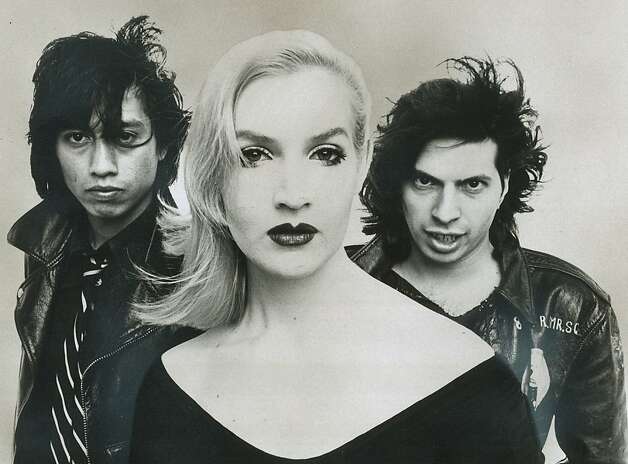
To bring to a close a series of posts on the famous Winterland concert of January 14, 1978 -- the last show of the Sex Pistols, the event designated as the moment that Punk ended, the first wave at least, and Post-Punk began -- today's Hippies vs. Punks will look at the Avengers, the San Francisco band fronted by archetypal Punk lead singer Penelope Houston. All bands that performed that night, and even the one that didn't, will have thus been dealt with: Sex Pistols, The Nuns and Negative Trend. However meager the final product, there is something to be said for completion.
It is fitting that today, the 50th anniversary of the assassination of John F. Kennedy, is the day that we finish off the Sex Pistols' final show at Winterland. Previously, we argued that the Age of Aquarius begins the summer of 1964 with the cross country psychedelic bus trip of Ken Kesey and the Merry Pranksters to the New York World's Fair, the same time the Gulf of Tonkin Resolution is passed in Congress paving the way for the expansion of American involvement in the Vietnam War.
For several decades debate has raged in Kennedy assassination circles, largely I think due to Oliver Stone's JFK Hollywood blockbuster, whether the main motive of the conspirators who killed Kennedy was to prevent him from pulling U.S. troops out of Vietnam. John Newman wrote an influential book, JFK and Vietnam: Deception, Intrigue, and the Struggle for Power (1992), that placed special significance on one of LBJ's first official acts as president: to sign a National Security Action Memorandum (NSAM 273) committing the United States to militarily prop up the rotten government of South Vietnam. Noam Chomsky entered the fray with Rethinking Camelot: JFK, the Vietnam War, and U.S. Political Culture (1993) arguing that Kennedy was the ultimate Cold Warrior and that he had no intention of withdrawing from Vietnam.
The Hippies begin with the Vietnam War and end with the Vietnam War. First wave Punk occupies that important place where the Hippies die off and the tentacles of neoliberalism and neoconservatism are attached to the body politic. That's why it is so important in these End Times of the death throes of neoliberalism and neoconservatism that we go back and evaluate the period of first wave Punk, 1975 to 1979, in order to look for answers and see what mistakes were made and what was gotten right.
The Avengers have a nice take on the Kennedy assassination in "The Amerikan in Me," riffing on Kennedy's inaugural "Ask not what your country can do for you":
It's the American in me that makes me watch the blood
running out of the bullethole in his head.
It's the American in me that makes me watch TV
see on the news, listen what the man said.
He said
"Ask not what you can do for your country
what's your country been doing to you
Ask not what you can do for your country
what's your country been doing to your mind?"
It's the American in me says it an honor to die
in a war that's just a politicians lie
It's the American in me that makes me watch TV
see how they burn the SLA
They say
"Ask not what you can do for your country
what's your country been doing to you
Ask not what you can do for your country
what's your country been doing to your mind?"
In the USA!
In the USA!
In the USA!
It's the American in me that makes me watch the blood
running out of the bullethole in his head.
It's the American in me that never wonders why
Kennedy was murdered by the FBI (said)
Thanks to the recommendation of my buddy Oliver, I purchased a copy of the eponymous Avengers (1983), also known as the Pink Album, not too long, probably one year, after its release. I picked it up new at Rasputin Records, which tells me that at that point, late 1984, the record was still easily found and not the rarity it would become.
I played the LP a lot. I remember I copied it onto cassette tape for a high school buddy at Stanford whose musical tastes tended toward the commercial mainstream. I had a decent stereo; not connoisseur-level great, but a cut above your average undergraduate's sound system. It was a Marantz receiver, turntable and cassette tape player with a pair of fairly large big-woofer'd speakers made by a local company in Sunnyvale. I ran a patch jack from the receiver to a Toshiba boom box, allowing me to use the boom box's speakers as auxiliaries; this provided me a rich mid-range sound; it also provided the bonus, through use of the boom box's condenser mic, to add my singing voice to whatever album I was copying to cassette tape.
I only took advantage of this technical feature once. It was on a night I was making a tape of Avengers for my Stanford buddy Kevin. I was drunk and I moaned along with Penelope Houston on "Car Crash."
Later Kevin would say that whenever he had friends over to his dorm room sitting around drinking beer and they were listening to the cassette of Avengers I had made he would have to spring quickly to his stereo and fast forward past that part of the tape to save him and me from embarrassment.
In any event, the Pink Album was put together by drummer Danny Furious a few years after the band broke up in 1979. Penelope Houston describes the process in an excellent interview with rock 'n' roll historian Richie Unterberger:
I moved to England, and before I left the country--this was in '81, '82--Danny [Furious], who was the drummer, was living in San Francisco trying to ask me for any tapes I had or photos. Because he wanted to get an album together. I think I sent him some stuff. The album originally came out on Go! Records, which were partners with David Ferguson [of CD Presents]. They had some falling out. He ended up suing them, and preventing them from releasing that record when they had already printed up 1000 record covers. Every now and then you can see those in collections. But I was in Europe, and basically he was dealing with Danny. So he had Danny's permission to put it out on his label.
At some point, I think that the other guys said hey, what about us? Because Danny was getting these producer advances. So then Jimmy came on board, Jimmy Wilsey, and he was doing something with it. Because he felt that Danny was not handling it. When I came back to San Francisco, I called up Ferguson's. I said, "You've put all this stuff [out], you haven't even asked me. And you haven't given me money, you haven't sent me any contract." He said, "Oh, yeah, come on in." I was visiting, actually, I hadn't moved back. I called and called and called. I tried to contact him from the U.K., where I was living. I went to his house, and as soon as I was there on his door, somebody said, "Oh, I have some contracts for you to sign now!" So he gave me a small advance. That was the last money that I ever saw from him. It came out as a CD after that. Of all the CDs that have sold of that record, I've seen zero royalties.
It would have been great if somebody might take it upon themselves to wrest the rights from CD Presents, because they really don't exist as a label anymore. They can sell the rights. Since he hasn't paid the band their royalties or their publishing...at one point I got together with Jimmy and Greg [Westermark], and we went and saw a lawyer. Danny was living in Sweden. To see what we could do to get back the publishing. The contract that was signed was so horribly written that not only did we get nothing, not only that we didn't get the pittance that was accorded to us on the contract, but you couldn't take it to court, it had to be settled in arbitration or something like that. The lawyers just looked at it and said, "This is fucked." We didn't have the money to throw at it. I keep hoping that someday some label will decide to write them a letter and see what they're willing to do. In the meantime, we haven't gotten anything. The last time we saw any money from them was over ten years ago. I don't know what it really sold.
It is a great album. I think it is the closest that an American band came to the sound and vibe of Never Mind the Bollocks, Here's the Sex Pistols (1977). For that reason alone it is an amazing record.
Steve Jones produced one of the band's two EPs, Avengers (1979), which appeared shortly after the band split up. Two of the songs -- "White Nigger" and "Corpus Christi" -- end up on the Pink Album. You can hear the signature Steve Jones Sex Pistols guitar sound on "White Nigger"; it is one of my favorite cuts:
Penelope Houston is the perfect counterpart to Johnny Rotten. She is a pure manifestation of West Coast egalitarian femininity and strength. When you listened to the Avengers there was never any questioning Penelope Houston's sexual identity. Yet she never vamps. It is a feminine persona that is tough -- you would never dare imagine fucking with Penelope Houston -- but also waifish and vulnerable. There is no other first wave Punk lead except for Johnny Rotten who taps into that untouchable, unassailable white light of youth, the ultimately rare type of soul who you would follow over the ramparts to a certain death because she is so pure, so true.
The 2012 digital-download version of the two-disk Pink Album, available on Penelope Houston's web site, is a must-have. I imagine as the years wind on Avengers will continue to grow in importance and it will come to be seen -- if it isn't already -- as one of the seminal recordings of first wave Punk..
Though "Second to None" and "Corpus Christi" appear on side two of the 1983 vinyl LP, the songs I mostly remember from my college days are "The Amerikan in Me," "White Nigger," "Car Crash," the cover of "Paint it Black," and of course "We Are the One." Hearing these two tracks today they both sound really good. Below are recent performances of "Second to None" and "Corpus Christi":
World War III, usually associated with the Cold War and its many crises -- Suez, Berlin, Cuban Missile -- and proxy military conflicts -- Korea, Vietnam, Afghanistan, Nicaragua -- is back with a vengeance. The United States is banging its war drum. China is reportedly sending a warship to the Mediterranean. Russia, with an anti-submarine ship and a missile cruiser already there, is sending additional ships. They will be monitoring -- and who knows what else -- a U.S. submarine and the five U.S. destroyers loaded with cruise missiles meant for Syria. One mistake, a faulty guidance system on one of the Tomahawks, and a regional crisis becomes a global conflagration.
For the last several weeks I've been meaning to take a stab at a Hippies vs. Punks post devoted to The Nuns, a first wave Punk group from San Francisco. Along with Crime and Avengers they dominated the San Francisco Punk scene in the early years, 1976 through 1978.
What captivated me at first about The Nuns was the realization that they are the band that kicked off the famous last show of the Sex Pistols, the moment when Punk died and Post-Punk began. The venue was Bill Graham's Winterland Ballroom where The Last Waltz had been filmed a little over a year earlier. The line-up that January night in 1978 was The Nuns, Avengers, Sex Pistols, followed by Negative Trend.
None of The Nuns' recordings really jump out at you. The eponymous The Nuns, released in 1980, was minus guitarist, co-founder, song writer and present-day star Alejandro Escovedo. The band broke up in 1979 and reformed, except for Escovedo, for a single week in the spring of 1980 to quickly record the self-titled album. To hear the band in its prime with Escovedo on guitar you have to track down singles.
What does exist is video of The Nuns' performance at the Sex Pistols' Winterland show, January 14, 1978. (The web sites where one can find it, sadly, require membership.)
But what has stuck with me the past few weeks is not the music as much as the story of their keyboard player, Jennifer Miro, who, along with Jeff Olener and Richie Detrick, was a vocalist. (For Jennifer Miro's story check out the excellent SF Weekly piece by Jack Boulware.)
Miro died of breast and liver cancer in December of the year before last alone in hospice care at Manhattan's Bellevue Hospital Center. Up until then she had been employed as a receptionist for celebrity divorce attorney Raoul Felder. Obits can be found at the SF Weekly and the San Francisco Chronicle.
The Nuns put out five more albums after The Nuns (1980), all built around Jennifer Miro and her embrace of a cold, drum-track driven, synthesizer-based sound and a sexual fetishist persona. Not my cup of tea. But I am drawn to a woman, a fellow office worker, who, present at the creation of our current exhausted Zeitgeist, chose to die alone as quietly as possible. There is something to be learned here.
Let's end with the last lines from Jack Boulware's appreciation:
On January 14, 1978, at the Winterland in San Francisco, what would be the final show ever for the Sex Pistols, the most talked-about punk show in history, before the mob of 5,000 roared to life and pelted the stage with spit and D-sized batteries, before anyone knew what to expect, before rock media anointed this night as the death of punk rock, before the voiceover introduction, "We're The Nuns, and we ain't from New York, and we ain't from England, we're from San Francisco!", the very first person to take the stage was Jennifer, walking out by herself in a single spotlight, scared to death and emotionally fragile from just having broken up with Crime drummer Brittley Black. She sat at her piano, began a closing-time saloon melody, leaned into the mic and sang, "I'm so lazy, so lazy...I'm too lazy to fall in love...It's such a bother, I'd much rather stay home and watch TV..."
Jennifer remembered the moment clearly. "After that," she said, "you can't go back to a normal life."
We've come to the Hippies vs. Punks Rosetta Stone (at least my personal touchstone) -- The Last Waltz (1978).
A conceit is indulged here. The conceit is that I am an everyman personification of Hippies vs. Punks. I was born the year Kesey and the Merry Pranksters kicked off the Aquarian Age with their bus ride across the country to the 1964 New York World's Fair, and I was raised by parents who went from being solid middle-class liberals to commune-founding Hippies. When I set out on my own as a young man fresh from the university I did so flyin' the flannel, a symbol of Hardcore Punk popularized by bands on the SST Records label. And my first run as a bachelor, at the age of 25 after I parted company with my wife, was done under the guiding light of The Last Waltz.
At the time, from 1990 to 1992, I was living in the crack-infested neighborhoods of Washington Heights and Morningside Heights. I repeatedly viewed, usually drunk and stoned and usually with my buddies, VHS copies of the Scorsese documentary of The Band's final concert at the Winterland Ballroom.
It's a great -- if not the greatest -- rock concert movie. It speaks especially to young men who are coming to the end of their 20s and realizing, as we were, that the high life is actually hard work.
But essentially The Last Waltz, both the film and the album, is a love letter to male beauty, virility, camaraderie and the adoration of women. As Robbie Robertson tells Scorsese early in the documentary, explaining how he came to get a job playing with The Hawk, Ronnie Hawkins, "He called me up, and I said, 'Sure I'd like a job. What does it mean? What do I do?' And he said, 'Well, son, you won't make much money, but you'll get more pussy than Frank Sinatra.' " This is what appealed to me as a newly minted bachelor on the dark side of my 20s, carousing the streets of upper Manhattan.
There are many reasons to class The Band as an Uber Hippie group. They were Dylan's band when he made his famous first electric tour of Europe in 1966. Following Dylan to Woodstock, The Band moved to Saugerties, NY, and in 1969, with "The Weight" a featured song in the Uber Hippie movie Easy Rider, they performed at the Uber Hippie music festival.
The more I thought about it this past week, the more I came to conclusion that The Last Waltz -- filmed on Thanksgiving Day in the California Bay Area, only three weeks after Carter squeaked by Ford in the 1976 presidential election, and released to theater audiences the spring of 1978 -- is Hippies vs. Punks ground zero. The period of time from performance to final product is the same time the Punks knock off the Hippies.
I realized too that the movie runs through my life at critical moments: when I graduate from high school in 1982; when I make my first run at being a bachelor, 1990 to 1992; and then again in 2002, during the 25th anniversary re-release, when I make my second run at being a bachelor. I'm now on my third attempt, and I think I've finally got it. And that's part of the realization -- I was trying to be like the guys in The Band -- desired by and enmeshed with women -- but they had it wrong. I think the key to happiness is to be able to avoid women.
All week I listened to Rick Danko (1977). (The cheapest used copy one can get on Amazon is $66.95.) Danko is my favorite member of The Band; he was also the first to be signed by a label as a solo artist (by the ghoulish Clive Davis for Arista Records). Much was revealed by my study of this album. The eventual fate of Danko with Arista is a perfect example of what was to happen to the Hippies forthwith in the late 1970s. But that's next Friday night.
Tonight, suffering a TKO from the work week (I didn't even make it to the grocery store) and with a race Sunday morning, I'm just priming the pump for what will be multiple Hippies vs. Punks posts on The Last Waltz.
Post-Punk starts, in the usual telling of the tale, when Johnny Rotten walks off the stage of the Winterland Ballroom on January 14, 1978. The Sex Pistols had just performed The Stooges "No Fun." Rotten, right before tossing his mic, asks the audience, "Ever feel like you've been cheated?" The entire Winterland show can be heard here:
The next day the Dallas Cowboys demolished the Denver Broncos in Super Bowl XII. And, yes, I did feel as if I had been cheated. My mother and I watched the game on a tiny portable Sony television that we had set on top of the kitchen table.
I had jumped ship at the end of the summer of 1977, leaving my father in California while exchanging places with my sister in Southern Oregon. My dad had not required that I attend school. So I just stopped going. My 7th-grade year was spent riding motorcycles -- a 70cc Honda trail bike and a Kawasaki 100cc street bike -- in the Santa Cruz Mountains. But by the beginning of the next school year I had seen the handwriting on the wall. My father's behavior was growing more erratic -- drinking, carrying on a romance with a much younger woman -- and I knew I couldn't blow off another year of junior high. I made the move north to Ashland, Oregon, where my mother had relocated earlier that spring. I started the 8th grade right on schedule, the day after Labor Day, with all the other kids.
We lived in a cockroach-infested, moldy two-bedroom rental house located on a dirt road on the outskirts of a tract housing development called Quiet Village. Across the dirt road from our house were acres of pasture dotted with blackberry brambles and a horse or two. My mother supported us by working as a psychic, doing astrological and tarot readings. She had long, flowing golden hair, and she wore knee-high leather moccasins. She looked like she stepped out of a John Everett Millais painting
My mother had gone to high school with Craig Morton; he was her brother's good friend. The Super Bowl was something really special for that reason; it's not often that a starting quarterback in the paramount secular ritual of the United States is kith to kin.
Monday was the Gala Benefit for the spring 2013 exhibition, "PUNK: Chaos to Couture," organized by The Costume Institute of The Metropolitan Museum of Art. "The exhibition, on view from May 9 through August 14, 2013, will examine punk’s impact on high fashion from the movement’s birth in the 1970s through its continuing influence today." The elite walked the red carpet in a display as far removed from that weekend in January over 35 years ago as one could possibly imagine. Only torrents of money and complete amnesia (which is a pretty good description of our current rush to doomsday) can label the raw power of a Punk manifesto like "Problems" -- no doubt one of the greatest, most pure examples of rock 'n' roll -- "high fashion":
A couple months back I read The New Yorker piece, "Anarchy Unleashed," written by Calvin Tompkins, about Andrew Bolton, the Met curator who put the Punk show together. One interesting thing that Bolton says, quoting Mick Jones of the Clash, is that Punk in its pure form lasted only a hundred days. Mick Jones is probably referring to a string of months in 1976. But think about it this way: Never Mind the Bollocks, Here's the Sex Pistols -- the timeless, living, breathing monument of Punk Rock -- is released at the end of October 1977 (the month of the Baader-Meinhof Group's German Autumn -- the flame-out, along with Red Brigades' kidnapping and assassination of Aldo Moro five months later, of Western Leftist armed guerrilla resistance). The band breaks up the middle of January 1978. That's about three months. And then we're supposed to be speaking about a world that's "Post-Punk." This is confusing. It's a problem. Punk is over before it ever really happens.