Showing posts with label crime. Show all posts

Friday, September 6, 2013

Hippies vs. Punks: The Nuns


World War III, usually associated with the Cold War and its many crises -- Suez, Berlin, Cuban Missile -- and proxy military conflicts -- Korea, Vietnam, Afghanistan, Nicaragua -- is back with a vengeance. The United States is banging its war drum. China is reportedly sending a warship to the Mediterranean. Russia, with an anti-submarine ship and a missile cruiser already there, is sending additional ships. They will be monitoring -- and who knows what else -- a U.S. submarine and the five U.S. destroyers loaded with cruise missiles meant for Syria. One mistake, a faulty guidance system on one of the Tomahawks, and a regional crisis becomes a global conflagration.

For the last several weeks I've been meaning to take a stab at a Hippies vs. Punks post devoted to The Nuns, a first wave Punk group from San Francisco. Along with Crime and Avengers they dominated the San Francisco Punk scene in the early years, 1976 through 1978. 

What captivated me at first about The Nuns was the realization that they are the band that kicked off the famous last show of the Sex Pistols, the moment when Punk died and Post-Punk began. The venue was Bill Graham's Winterland Ballroom where The Last Waltz had been filmed a little over a year earlier. The line-up that January night in 1978 was The Nuns, Avengers, Sex Pistols, followed by Negative Trend.

None of The Nuns' recordings really jump out at you. The eponymous The Nuns, released in 1980, was minus guitarist, co-founder, song writer and present-day star Alejandro Escovedo. The band broke up in 1979 and reformed, except for Escovedo, for a single week in the spring of 1980 to quickly record the self-titled album. To hear the band in its prime with Escovedo on guitar you have to track down singles.

What does exist is video of The Nuns' performance at the Sex Pistols' Winterland show, January 14, 1978. (The web sites where one can find it, sadly, require membership.)
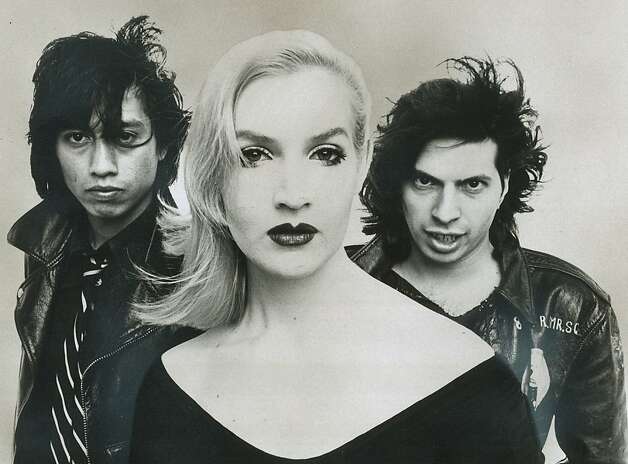

But what has stuck with me the past few weeks is not the music as much as the story of their keyboard player, Jennifer Miro, who, along with Jeff Olener and Richie Detrick, was a vocalist. (For Jennifer Miro's story check out the excellent SF Weekly piece by Jack Boulware.)

Miro died of breast and liver cancer in December of the year before last alone in hospice care at Manhattan's Bellevue Hospital Center. Up until then she had been employed as a receptionist for celebrity divorce attorney Raoul Felder. Obits can be found at the SF Weekly and the San Francisco Chronicle.

The Nuns put out five more albums after The Nuns (1980), all built around Jennifer Miro and her embrace of a cold, drum-track driven, synthesizer-based sound and a sexual fetishist persona. Not my cup of tea. But I am drawn to a woman, a fellow office worker, who, present at the creation of our current exhausted Zeitgeist, chose to die alone as quietly as possible. There is something to be learned here. 

Let's end with the last lines from Jack Boulware's appreciation:
On January 14, 1978, at the Winterland in San Francisco, what would be the final show ever for the Sex Pistols, the most talked-about punk show in history, before the mob of 5,000 roared to life and pelted the stage with spit and D-sized batteries, before anyone knew what to expect, before rock media anointed this night as the death of punk rock, before the voiceover introduction, "We're The Nuns, and we ain't from New York, and we ain't from England, we're from San Francisco!", the very first person to take the stage was Jennifer, walking out by herself in a single spotlight, scared to death and emotionally fragile from just having broken up with Crime drummer Brittley Black. She sat at her piano, began a closing-time saloon melody, leaned into the mic and sang, "I'm so lazy, so lazy...I'm too lazy to fall in love...It's such a bother, I'd much rather stay home and watch TV..." 
Jennifer remembered the moment clearly. "After that," she said, "you can't go back to a normal life."

Friday, August 23, 2013

Hippies vs. Punks: Q: Are We Not Men? A: We Are Devo!


Yesterday started out poorly. It could have been the big slice of chocolate cake eaten at 9 AM making me feel stoned. Add to that a general feeling of exhaustion that comes with the end of the work week; and then to top it off I listened to The Nuns' 4 Days in a Motel Room - Their Greatest Sins (1994) four times in a row from start to finish.

On the train home I was ready to fly the white flag of surrender. I needed something to wipe everything clean, to redeem myself, to give me the strength to carry on. On my post-work agenda I had the grocery store, a birthday gift for a coworker, dinner preparations. All minor mundane chores of a burdened bachelor made monumental by flagging spirits. Then I thumbed through my iPod and found the answer to my prayers. Q: Are We Not Men? A: We Are Devo! (1978).

By the time I listened to all 11 tracks through "Shrivel-Up," I had stormed up the hill to the grocery store and was a man reborn by dint of Nietzschean self-overcoming -- thanks to Messrs. Casale, Mothersbaugh & Myers.

I'm running a 10K tomorrow. My first one of the year. So I'm cutting Hippies vs. Punks short tonight in order to avoid an evening hunched over the keyboard. Suffice it to say that I had high expectations for tonight following multiple posts devoted to The Last Waltz (1978). At first, I was going to focus on The Dicks' seminal SST Records release Kill From the Heart (1983). Then I thought, No, I've got to do MDC's super-historical Millions of Dead Cops (1982). I saw both bands at the Rock Against Reagan concert in front of Moscone Center where the Democratic National Convention was taking place in July of 1984. That was a big event in my 19-year-old life. Dead Kennedys headlined. I participated in the march on the Hall of Justice following the concert and the running game of hide and seek with San Francisco's Finest (about which I still dream 30 years later). Better to spend some quality time on that post.

Then I looked at the undercard of the famous Winterland show in January of 1978 when the Sex Pistols blew apart. Avengers and The Nuns were the warm-up acts. I listened to the eponymous Avengers (1983) all the time in college. I downloaded the Avengers' Live at Winterland 1978 (2010) album this week. It's good; it sounds a lot like the Avengers album. But I was intrigued by The Nuns, the only knowledge of whom I had was the name. And that brings us back to the top of this post.

We'll have to explore The Nuns another time. It's a thoroughly depressing tale. Next to Crime, they were the biggest San Francisco Punk band in the heady days of 1977, a group briefly courted by San Francsico Sound impresario Bill Graham.

As for Q: Are We Not Men? A: We Are Devo!, though some will scoff, I'd class it with Never Mind the Bollocks (1977), Horses (1975), Pink Flag (1977) and Entertainment! (1979) as one of the greatest Punk/Post-Punk albums of all time.

Monday, January 28, 2013

Crime in the City

John Tierney has an excellent, substantial story from this past Saturday about the remarkable and thoroughly debated year after year decline in New York City crime. There is a lot of information here, for instance, New York City crime continues to drop even though there have been reductions in the police force whose expansion in the 1990s is credited with creating safer streets in the first place:
Elsewhere, studies have shown that crime drops when more police officers are hired, so it is not surprising that the expansion of New York’s police force in the 1990s by more than a third was accompanied by a drop in crime. But during the past decade, the force has shrunk by 15 percent, and yet crime has mostly continued falling.
The thinking is that if you have a physical police presence at "hot spots" -- areas of high crime -- you see significant decreases in crime citywide. The criminals don't just pack their bags and set up shop in a different neighborhood; in other words, crime is more spatial than characterological.
Nonetheless, the hot-spot strategy was initially met with skepticism by police veterans. 
“We assumed that if we hit one area hard, the crime would just move somewhere else,” said Frank Gajewski, a former police chief of Jersey City, who worked with Dr. Weisburd on the experiments there.
But Dr. Weisburd won over Mr. Gajewski and other skeptics — and also won the 2010 Stockholm Prize, criminology’s version of the Nobel — by showing that crime was not simply being displaced. Moreover, he and his colleagues reported a “spatial diffusion of crime prevention benefits” because crime also declined in adjoining areas, as the police in Jersey City had observed.
“Crime doesn’t move as easily we thought it did,” Mr. Gajewski said. “If I’m a robber, I want to be in a familiar, easily accessible place with certain characteristics. I need targets to rob, but I don’t want people in the neighborhood watching me or challenging me. Maybe I work near a bus stop where there are vacant buildings or empty lots. If the police start focusing there, I can’t just move to the next block and find the same conditions.”
After more than two dozen experiments around the world, criminologists generally agree that hot-spot policing is “an effective crime prevention strategy,” in the words of Anthony Braga, a criminologist at Harvard and Rutgers who led a review of the research literature last year.
There's more in Tierney's story; it's also an argument for rerouting money currently spent on incarceration back to policing. He traces the boom in prison building back to an article published in 1974:
New York, while now an exception to the mass-incarceration trend, also happens to be the place that inspired it. When New York State four decades ago commissioned an evaluation of programs to rehabilitate criminals, the conclusions were so discouraging that the researchers were initially forbidden to publish them.
Eventually one of the criminologists, Robert Martinson, summarized the results in 1974 in the journal Public Interest. His article, “What Works? Questions and Answers About Prison Reform,” was soon known as the “nothing works” thesis. Dr. Martinson concluded that rehabilitation strategies “cannot overcome, or even appreciably reduce, the powerful tendencies of offenders to continue in criminal behavior.”
An outgrowth of the study was a consensus to eliminate parole for many offenders and to mandate long sentences determined by formulas rather than rely on the discretion of judges and parole boards.
Dr. Martinson wrote an article in 1979 recanting his “nothing works” conclusion, but by then it was too late. The trend toward tougher sentences continued, causing prison populations to grow rapidly in the 1980s throughout the country, including in New York. When crime kept rising anyway, sentences often were further lengthened.
My time in New York City, spent predominantly in the 33rd Precinct, was during the last several years prior to the expansion of the police force and the crackdown on petty crimes with the enforcement of a broken windows theory under Giuliani. I suppose what I saw while living in Washington Heights from 1988 until 1993 was the end of era.