Showing posts with label Avengers. Show all posts

Friday, December 6, 2013

Hippies vs. Punks: Penelope Houston's Birdboys


The Friday before last Hippies vs. Punks dealt with the Avengers, the first wave San Francisco Punk band famous for preceding the Sex Pistols at the January 14, 1978 Winterland show that signaled the demise of the Pistols only a few months after the masterpiece Never Mind the Bollocks, Here's the Sex Pistols (1977) was released.

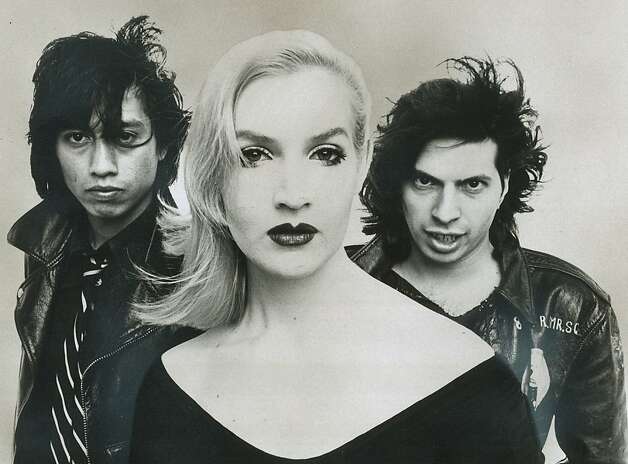
Ten-years later -- nine years after the Avengers broke up and five years after the release of their sole full-length album, Avengers (1983) -- lead singer and feminine Punk avatar Penelope Houston released her debut solo album, Birdboys (1988).


It was my final year at the university. By 1988 I was, at 23 years of age, somewhat of a salty dog: a drinker, a confused philanderer and occasional street fighter, a reader of weighty texts and a teaching assistant. I was headed back East to live in the Big Apple where my girlfriend, who I would marry en route, had been admitted to medical school.

Nineteen-eighty-eight was a tumultuous year. The Pixies' Surfer Rosa (1988) would appear and put a little pep back into a music scene that was listing from underground indie toward the corporate mainstream. My friends and I were listening to a lot of The Pogues. We played constantly Rum Sodomy & the Lash (1985) and If I Should Fall from Grace with God (1988).

It was into this milieu that Penelope Houston made her debut with Birdboys (which was also the name she gave her acoustic backing band). I never owned or even heard the record. Put out by Bay Area Punk label Subterranean Records, I remember reading a review of it in the East Bay Express and seeing a picture of PH in what I took to be some sort of Hippie dress. It confused me. She still had her Punk insouciance, but she was wearing a Hippie dress. My buddy and musical mentor Oliver made a sarcastic comment about the former Avenger's metamorphosis from Punk to Hippie.


I don't think I was alone in avoiding Birdboys. The album didn't find an audience. Most of us were still fully wedded to the "Hey Hey, My My" rock 'n' roll fantasy. It took five more years for Penelope Houston to find her niche, and it turned out to be in Germany, where she was dubbed the "Queen of neo-folk" and would end up signing with major label WEA Germany. (For a helpful synopsis of Penelope Houston's career, see her interview with Richie Unterberger.)

When I was working on the Avengers post a couple weeks back I decided to download Birdboys and listen to what I missed out on 25 years ago. The album garners favorable reviews online.


I wasn't much impressed my first few listens. The songs have a "Michael Row the Boat Ashore" / "He's Got the Whole World in His Hands" elementary-school-growing-up-in-California-in-the-'60s-sing-along daintiness and preciousness that is off-putting when listened to on iPod ear buds, prompting me to say to myself, "No wonder she never cashed in like Suzanne Vega."

It wasn't until I heard Birdboys on good speakers at home on a Saturday evening cooking dinner that I found myself enjoying the record. I proceeded to play it repeatedly. I understood what Penelope Houston was up to -- the aural capture of empty space -- and how the "Kumbaya" folkiness of Birdboys is of a piece with the first wave Punk of the Avengers. Here is how Houston explains it in the interview with rock 'n' roll historian Unterberger:
I remember I used to tell people that we were a folk band when I was in the Avengers. What I meant was that we were just playing music that we made up for friends, the way the original of folk is just music of the people. It's the folk music of Mexico, or the folk music of whatever. It's music that's played by regular people. It's not played by the court entertainers for the king. It's just the music that people go out on their porch and start strumming, and the neighbors come around. When I said the Avengers were a folk band, I just meant that we were making it up ourselves, that we'd taken it out of the realm of arena rock and the gigantic showplaces, and taken it back to the garage. 
I never really thought, oh, I want to do a cover version of "Wild Mountain Thyme." But there wasn't any...the loudness of the Avengers was so much of the expression. There wasn't really a chance to actually sing. I don't remember ever having monitors. I know we must've had monitors, but I don't remember looking at them and thinking, "I'm not getting enough of myself on the monitor." Everything was really loud and you just screamed at the top of your voice to be heard in live shows. I didn't think our live shows were anything...they were so different than our recorded output. 
I guess it was 1984 that I did my first show that was acoustic. The idea of having these big holes in the music, where there was no sound and then my voice would come out, was the most terrifying thing to me. I thought it was much more frightening than getting up in front of a Marshall stack three-piece band and screaming your lungs out. It was like stepping on a tightrope over this huge hole that was left in the music. 
And I was never a big fan of rock. I was never a rock'n'roller before I was a punk rocker. I was just a punk. I was just doing it because it was the most exciting thing that was happening. It was different, it was new, and we were creating it ourselves, and I felt the same way when I started doing this music with different instruments that had big holes in it. I didn't think, I'm going to start playing folk music. I just thought, we're doing something new and it's exciting and it's scary. The whole thing became more musical after that. But the way we started it was more like the Violent Femmes. It was more like kind of a punk attitude towards really quiet music. Since then, I think I've become a lot more musical. I guess in that way, I've changed.
Going forward in future Hippies vs. Punks posts, several topics suggest themselves from Penelope Houston's biography; the aforementioned influence of the Violent Femmes, for starters. Also, Houston, during the period she lived in England in the early '80s, performed on Howard Devoto's only solo album, Jerky Versions of the Dream (1983). I intended to post on Jerky Versions of the Dream before. It was ubiquitous at the time of its release, and it typified a kind of sound that spelled doom for the Punks, much like the California pop rock of the Eagles and Fleetwood Mac spelled doom for the Hippies.

Finally, PH mentions in the interview that at some point in her solo career she realized how much she had been influenced by English folk rockers Fairport Covention and Pentangle:
When I was younger, before the Avengers, listened to a lot of Pentangle and Fairport Convention and Incredible String Band. I loved them. I didn't really realize this until maybe six years ago, after I'd recorded Birdboys. I got a copy of the double Pentangle album, Sweet Child. I listened to it and I knew ever song on it. I was like, "Whoa! This is weird." It was before my punk life, I'd heard a lot of English folk-rock. So I think that was a big influence that I'd forgotten about somehow.
These are bands that were vital for the Hippies but were also held dear by the Punks. Why is that? Which brings up the issue of Richard and Linda Thompson, who, as I will argue in a future post, provide an example of a Hippie counter-avant-garde during a time when the Punks were wiping out the last vestiges of the longhair Flower Power Freak scene.

Friday, November 22, 2013

Hippies vs. Punks: The Avengers


To bring to a close a series of posts on the famous Winterland concert of January 14, 1978 -- the last show of the Sex Pistols, the event designated as the moment that Punk ended, the first wave at least, and Post-Punk began -- today's Hippies vs. Punks will look at the Avengers, the San Francisco band fronted by archetypal Punk lead singer Penelope Houston. All bands that performed that night, and even the one that didn't, will have thus been dealt with: Sex Pistols, The Nuns and Negative Trend. However meager the final product, there is something to be said for completion.


It is fitting that today, the 50th anniversary of the assassination of John F. Kennedy, is the day that we finish off the Sex Pistols' final show at Winterland. Previously, we argued that the Age of Aquarius begins the summer of 1964 with the cross country psychedelic bus trip of Ken Kesey and the Merry Pranksters to the New York World's Fair, the same time the Gulf of Tonkin Resolution is passed in Congress paving the way for the expansion of American involvement in the Vietnam War.

For several decades debate has raged in Kennedy assassination circles, largely I think due to Oliver Stone's JFK Hollywood blockbuster, whether the main motive of the conspirators who killed Kennedy was to prevent him from pulling U.S. troops out of Vietnam. John Newman wrote an influential book, JFK and Vietnam: Deception, Intrigue, and the Struggle for Power (1992), that placed special significance on one of LBJ's first official acts as president: to sign a National Security Action Memorandum (NSAM 273) committing the United States to militarily prop up the rotten government of South Vietnam. Noam Chomsky entered the fray with Rethinking Camelot: JFK, the Vietnam War, and U.S. Political Culture (1993) arguing that Kennedy was the ultimate Cold Warrior and that he had no intention of withdrawing from Vietnam.

The Hippies begin with the Vietnam War and end with the Vietnam War. First wave Punk occupies that important place where the Hippies die off and the tentacles of neoliberalism and neoconservatism are attached to the body politic. That's why it is so important in these End Times of the death throes of neoliberalism and neoconservatism that we go back and evaluate the period of first wave Punk, 1975 to 1979, in order to look for answers and see what mistakes were made and what was gotten right.

The Avengers have a nice take on the Kennedy assassination in "The Amerikan in Me," riffing on Kennedy's inaugural "Ask not what your country can do for you":
It's the American in me that makes me watch the blood
running out of the bullethole in his head.
It's the American in me that makes me watch TV
see on the news, listen what the man said.
He said

"Ask not what you can do for your country
what's your country been doing to you
Ask not what you can do for your country
what's your country been doing to your mind?"

It's the American in me says it an honor to die
in a war that's just a politicians lie
It's the American in me that makes me watch TV
see how they burn the SLA
They say

"Ask not what you can do for your country
what's your country been doing to you
Ask not what you can do for your country
what's your country been doing to your mind?"

In the USA!
In the USA!
In the USA!

It's the American in me that makes me watch the blood
running out of the bullethole in his head.
It's the American in me that never wonders why
Kennedy was murdered by the FBI (said)
Thanks to the recommendation of my buddy Oliver, I purchased a copy of the eponymous Avengers (1983), also known as the Pink Album, not too long, probably one year, after its release. I picked it up new at Rasputin Records, which tells me that at that point, late 1984, the record was still easily found and not the rarity it would become.

I played the LP a lot. I remember I copied it onto cassette tape for a high school buddy at Stanford whose musical tastes tended toward the commercial mainstream. I had a decent stereo; not connoisseur-level great, but a cut above your average undergraduate's sound system. It was a Marantz receiver, turntable and cassette tape player with a pair of fairly large big-woofer'd speakers made by a local company in Sunnyvale. I ran a patch jack from the receiver to a Toshiba boom box, allowing me to use the boom box's speakers as auxiliaries; this provided me a rich mid-range sound; it also provided the bonus, through use of the boom box's condenser mic, to add my singing voice to whatever album I was copying to cassette tape.

I only took advantage of this technical feature once. It was on a night I was making a tape of Avengers for my Stanford buddy Kevin. I was drunk and I moaned along with Penelope Houston on "Car Crash."

Later Kevin would say that whenever he had friends over to his dorm room sitting around drinking beer and they were listening to the cassette of Avengers I had made he would have to spring quickly to his stereo and fast forward past that part of the tape to save him and me from embarrassment.

In any event, the Pink Album was put together by drummer Danny Furious a few years after the band broke up in 1979. Penelope Houston describes the process in an excellent interview with rock 'n' roll historian Richie Unterberger:
I moved to England, and before I left the country--this was in '81, '82--Danny [Furious], who was the drummer, was living in San Francisco trying to ask me for any tapes I had or photos. Because he wanted to get an album together. I think I sent him some stuff. The album originally came out on Go! Records, which were partners with David Ferguson [of CD Presents]. They had some falling out. He ended up suing them, and preventing them from releasing that record when they had already printed up 1000 record covers. Every now and then you can see those in collections. But I was in Europe, and basically he was dealing with Danny. So he had Danny's permission to put it out on his label. 
At some point, I think that the other guys said hey, what about us? Because Danny was getting these producer advances. So then Jimmy came on board, Jimmy Wilsey, and he was doing something with it. Because he felt that Danny was not handling it. When I came back to San Francisco, I called up Ferguson's. I said, "You've put all this stuff [out], you haven't even asked me. And you haven't given me money, you haven't sent me any contract." He said, "Oh, yeah, come on in." I was visiting, actually, I hadn't moved back. I called and called and called. I tried to contact him from the U.K., where I was living. I went to his house, and as soon as I was there on his door, somebody said, "Oh, I have some contracts for you to sign now!" So he gave me a small advance. That was the last money that I ever saw from him. It came out as a CD after that. Of all the CDs that have sold of that record, I've seen zero royalties. 
It would have been great if somebody might take it upon themselves to wrest the rights from CD Presents, because they really don't exist as a label anymore. They can sell the rights. Since he hasn't paid the band their royalties or their publishing...at one point I got together with Jimmy and Greg [Westermark], and we went and saw a lawyer. Danny was living in Sweden. To see what we could do to get back the publishing. The contract that was signed was so horribly written that not only did we get nothing, not only that we didn't get the pittance that was accorded to us on the contract, but you couldn't take it to court, it had to be settled in arbitration or something like that. The lawyers just looked at it and said, "This is fucked." We didn't have the money to throw at it. I keep hoping that someday some label will decide to write them a letter and see what they're willing to do. In the meantime, we haven't gotten anything. The last time we saw any money from them was over ten years ago. I don't know what it really sold.
It is a great album. I think it is the closest that an American band came to the sound and vibe of Never Mind the Bollocks, Here's the Sex Pistols (1977). For that reason alone it is an amazing record.

Steve Jones produced one of the band's two EPs, Avengers (1979), which appeared shortly after the band split up. Two of the songs -- "White Nigger" and "Corpus Christi" -- end up on the Pink Album. You can hear the signature Steve Jones Sex Pistols guitar sound on "White Nigger"; it is one of my favorite cuts:


Penelope Houston is the perfect counterpart to Johnny Rotten. She is a pure manifestation of West Coast egalitarian femininity and strength. When you listened to the Avengers there was never any questioning Penelope Houston's sexual identity. Yet she never vamps. It is a feminine persona that is tough -- you would never dare imagine fucking with Penelope Houston -- but also waifish and vulnerable. There is no other first wave Punk lead except for Johnny Rotten who taps into that untouchable, unassailable white light of youth, the ultimately rare type of soul who you would follow over the ramparts to a certain death because she is so pure, so true.

The 2012 digital-download version of the two-disk Pink Album, available on Penelope Houston's web site, is a must-have. I imagine as the years wind on Avengers will continue to grow in importance and it will come to be seen -- if it isn't already -- as one of the seminal recordings of first wave Punk..

Though "Second to None" and "Corpus Christi" appear on side two of the 1983 vinyl LP, the songs I mostly remember from my college days are "The Amerikan in Me," "White Nigger," "Car Crash," the cover of "Paint it Black," and of course "We Are the One." Hearing these two tracks today they both sound really good. Below are recent performances of "Second to None" and "Corpus Christi":


Friday, September 6, 2013

Hippies vs. Punks: The Nuns


World War III, usually associated with the Cold War and its many crises -- Suez, Berlin, Cuban Missile -- and proxy military conflicts -- Korea, Vietnam, Afghanistan, Nicaragua -- is back with a vengeance. The United States is banging its war drum. China is reportedly sending a warship to the Mediterranean. Russia, with an anti-submarine ship and a missile cruiser already there, is sending additional ships. They will be monitoring -- and who knows what else -- a U.S. submarine and the five U.S. destroyers loaded with cruise missiles meant for Syria. One mistake, a faulty guidance system on one of the Tomahawks, and a regional crisis becomes a global conflagration.

For the last several weeks I've been meaning to take a stab at a Hippies vs. Punks post devoted to The Nuns, a first wave Punk group from San Francisco. Along with Crime and Avengers they dominated the San Francisco Punk scene in the early years, 1976 through 1978. 

What captivated me at first about The Nuns was the realization that they are the band that kicked off the famous last show of the Sex Pistols, the moment when Punk died and Post-Punk began. The venue was Bill Graham's Winterland Ballroom where The Last Waltz had been filmed a little over a year earlier. The line-up that January night in 1978 was The Nuns, Avengers, Sex Pistols, followed by Negative Trend.

None of The Nuns' recordings really jump out at you. The eponymous The Nuns, released in 1980, was minus guitarist, co-founder, song writer and present-day star Alejandro Escovedo. The band broke up in 1979 and reformed, except for Escovedo, for a single week in the spring of 1980 to quickly record the self-titled album. To hear the band in its prime with Escovedo on guitar you have to track down singles.

What does exist is video of The Nuns' performance at the Sex Pistols' Winterland show, January 14, 1978. (The web sites where one can find it, sadly, require membership.)


But what has stuck with me the past few weeks is not the music as much as the story of their keyboard player, Jennifer Miro, who, along with Jeff Olener and Richie Detrick, was a vocalist. (For Jennifer Miro's story check out the excellent SF Weekly piece by Jack Boulware.)

Miro died of breast and liver cancer in December of the year before last alone in hospice care at Manhattan's Bellevue Hospital Center. Up until then she had been employed as a receptionist for celebrity divorce attorney Raoul Felder. Obits can be found at the SF Weekly and the San Francisco Chronicle.

The Nuns put out five more albums after The Nuns (1980), all built around Jennifer Miro and her embrace of a cold, drum-track driven, synthesizer-based sound and a sexual fetishist persona. Not my cup of tea. But I am drawn to a woman, a fellow office worker, who, present at the creation of our current exhausted Zeitgeist, chose to die alone as quietly as possible. There is something to be learned here. 

Let's end with the last lines from Jack Boulware's appreciation:
On January 14, 1978, at the Winterland in San Francisco, what would be the final show ever for the Sex Pistols, the most talked-about punk show in history, before the mob of 5,000 roared to life and pelted the stage with spit and D-sized batteries, before anyone knew what to expect, before rock media anointed this night as the death of punk rock, before the voiceover introduction, "We're The Nuns, and we ain't from New York, and we ain't from England, we're from San Francisco!", the very first person to take the stage was Jennifer, walking out by herself in a single spotlight, scared to death and emotionally fragile from just having broken up with Crime drummer Brittley Black. She sat at her piano, began a closing-time saloon melody, leaned into the mic and sang, "I'm so lazy, so lazy...I'm too lazy to fall in love...It's such a bother, I'd much rather stay home and watch TV..." 
Jennifer remembered the moment clearly. "After that," she said, "you can't go back to a normal life."

Friday, August 23, 2013

Hippies vs. Punks: Q: Are We Not Men? A: We Are Devo!


Yesterday started out poorly. It could have been the big slice of chocolate cake eaten at 9 AM making me feel stoned. Add to that a general feeling of exhaustion that comes with the end of the work week; and then to top it off I listened to The Nuns' 4 Days in a Motel Room - Their Greatest Sins (1994) four times in a row from start to finish.

On the train home I was ready to fly the white flag of surrender. I needed something to wipe everything clean, to redeem myself, to give me the strength to carry on. On my post-work agenda I had the grocery store, a birthday gift for a coworker, dinner preparations. All minor mundane chores of a burdened bachelor made monumental by flagging spirits. Then I thumbed through my iPod and found the answer to my prayers. Q: Are We Not Men? A: We Are Devo! (1978).

By the time I listened to all 11 tracks through "Shrivel-Up," I had stormed up the hill to the grocery store and was a man reborn by dint of Nietzschean self-overcoming -- thanks to Messrs. Casale, Mothersbaugh & Myers.

I'm running a 10K tomorrow. My first one of the year. So I'm cutting Hippies vs. Punks short tonight in order to avoid an evening hunched over the keyboard. Suffice it to say that I had high expectations for tonight following multiple posts devoted to The Last Waltz (1978). At first, I was going to focus on The Dicks' seminal SST Records release Kill From the Heart (1983). Then I thought, No, I've got to do MDC's super-historical Millions of Dead Cops (1982). I saw both bands at the Rock Against Reagan concert in front of Moscone Center where the Democratic National Convention was taking place in July of 1984. That was a big event in my 19-year-old life. Dead Kennedys headlined. I participated in the march on the Hall of Justice following the concert and the running game of hide and seek with San Francisco's Finest (about which I still dream 30 years later). Better to spend some quality time on that post.

Then I looked at the undercard of the famous Winterland show in January of 1978 when the Sex Pistols blew apart. Avengers and The Nuns were the warm-up acts. I listened to the eponymous Avengers (1983) all the time in college. I downloaded the Avengers' Live at Winterland 1978 (2010) album this week. It's good; it sounds a lot like the Avengers album. But I was intrigued by The Nuns, the only knowledge of whom I had was the name. And that brings us back to the top of this post.

We'll have to explore The Nuns another time. It's a thoroughly depressing tale. Next to Crime, they were the biggest San Francisco Punk band in the heady days of 1977, a group briefly courted by San Francsico Sound impresario Bill Graham.

As for Q: Are We Not Men? A: We Are Devo!, though some will scoff, I'd class it with Never Mind the Bollocks (1977), Horses (1975), Pink Flag (1977) and Entertainment! (1979) as one of the greatest Punk/Post-Punk albums of all time.