Showing posts with label Nate Silver. Show all posts

Monday, August 28, 2017

Trump's Poll Numbers Should Continue to Decline

Last week Nate Silver's "7 Rules For Reading Trump’s Approval Rating" established some helpful guidelines for looking at Trump's poll numbers post-Charlottesville and with Congress soon to return from its August recess and begin budget negotiations.

Silver didn't see any big dip in support for Trump due to his pro-fascist comments following Charlottesville, but that doesn't mean that Trump is holding steady. Silver argues that Trump is losing a percentage point a month, and Trump's rock bottom is somewhere in the mid-to-low-20s:
But let’s not lose sight of the big picture. Despite the relatively small shift after Charlottesville, the overall trend in Trump’s numbers so far has been toward decline. In fact, a simple linear trend line captures most of the variation in his approval ratings so far and implies that his approval ratings are dropping slightly more than 1 percentage point per month. If Trump were to continue losing ground at this rate — though he probably won’t (see below) — it would be truly catastrophic for him, as his numbers would fall into the low 20s by midterms.
Silver identifies an underlying seesaw to Trump's polling numbers. Approval tends to decline over a president's term, but it also tends to revert to the mean; this helps explain why the dam has never really broken on Trump:
And while there are a couple rules of thumb for how presidential approval ratings behave over the long run, they’re contradictory in Trump’s case. On the one hand, approval ratings tend to decline over the course of a president’s term, which would predict a further decrease for Trump. On the other hand — in part because of partisanship — approval ratings are mean-reverting, meaning that they tend to rise when they’re lower than roughly 40 percent and to decline when they’re above 50 percent, which would tend to produce an increase since Trump’s ratings are below 40 percent now.
So far, the first rule — a president’s rating tends to get worse during his term — has usually won out for Trump, and his approval rating has continued to decline. But the first rule won’t necessarily keep winning the tug-of-war with the second rule. Partisan gravity could pull Trump’s numbers back into the low 40s if he has a couple of relatively calm weeks or months — as he did this April, for example. Or an issue that Americans aren’t thinking about very much now — say, a military confrontation with North Korea — could be pivotal in the 2018 and 2020 elections. The best news for Trump is that there’s a long way to go before voters go to the polls again.
Trump could get a bump if it turns out that his handling of Hurricane Harvey wasn't completely inept. I think the bar is low here because of the chaos unleashed by 2005's Hurricane Katrina. If Harvey's damage is less, which it appears to be, and Trump's response is less callous than Bush's, then he comes away unscathed.

On the other hand, the Arpaio pardon is not going to be a winner for Trump. It reveals that Trump is completely dependent upon the Bannon formula -- motivating the hard-shell Tea Party types -- to cling to power. The only way this strategy continues to be a winner is if the Democrats remain completely deplorable. Right now, though there is some indication that leadership is beginning to figure things out, that seems a good bet.

Big trouble awaits Trump when Congress begins work on the budget. Trump has threatened a government shutdown unless funds for the border wall are appropriated. The Freedom Caucus is going to want big cuts in social and regulatory programs.

Another enormous problem for Trump is that by now it should be apparent to all the "America First" libertarians who voted for him that perpetual war has not been pared back; it is expanding.

Thursday, July 13, 2017

Democrat Elites Still in Bernie Denial + Kid Rock a U.S. Senator?

What is a "hipster"? A good definition is "a bourgeois bohemian," someone who is safely, superficially, predictably unconventional; someone, like a medieval courtier, who adheres to certain shifting protocols. Hipsters are usually fickle, bitter and filled with fear.

A "faux-hipster" then is someone who affects the coolness of a hipster but with the intention of buttressing the mainstream, the conventional, the "square" world. A faux-hipster is the serpent eating its tail, Ol' Blue Eyes backing Reagan.

MSNBC has built its brand on the faux-hipster, and FiveThirtyEight, Nate Silver's ESPN project, has followed along, leaning on the nerdy, geeky, wonky aspects of the millennial hipster.

Recently a Bernie Sanders presidential run in 2020 has received some attention. Last week Vox's Matt Yglesias argued that "Bernie Sanders is the Democrats’ real 2020 frontrunner." Yesterday Common Dreams published "It's Too Early, Says Bernie Sanders, But 2020 Run 'Not Off The Table' "

And this morning FiveThirtyEight has a delightful chat, "Is Bernie Sanders Really The Democratic Front-Runner?," I think it is a must-read because it shows how lost the Democratic elite are. Nate Silver is attacked by his three colleagues for arguing the obvious -- Bernie is the front-runner. Take a taste:
harry: If you’re going to use Sanders’s prior support, then why is he polling at less than half of what he got in 2016? Doesn’t that suggest that a lot of that support was merely anti-Clinton and not pro-Bernie?
natesilver: Because they’re polling a ballot with 14 candidates, whereas it was a two-horse race in 2016. I dare you to look up Sanders’s favorability ratings with Democrats, Harry!
harry: I dare you to look up Trump’s favorability ratings with Republicans even after he entered.
clare.malone: Cool impasse.
natesilver: I’m not sure why you’re being such a hipster about this, Harry. Sanders is really well liked among Democrats. He was second last time. He’s leading in the polls now. Isn’t it obvious that he’s the front-runner?
If you read through the round table a couple of things rise to the top. Democratic elite opinion, here represented by FiveThirtyEight writers Harry Enten, Clare Malone and Perry Bacon Jr., is waiting, pining, begging for Elizabeth Warren to get into the presidential race. (Warren is better than Hillary, but I think the outcome would be the same because she can't juice turnout of the "Obama coalition" -- minorities and young people.) Bernie's candidacy is once again being written off because he allegedly doesn't have the support of black voters. So we can expect more and possibly worse race-baiting in 2020. It's going to be the Super Tuesday firewall all over again. Divide and conquer. And if Bernie is blocked, another Trumpocalypse.


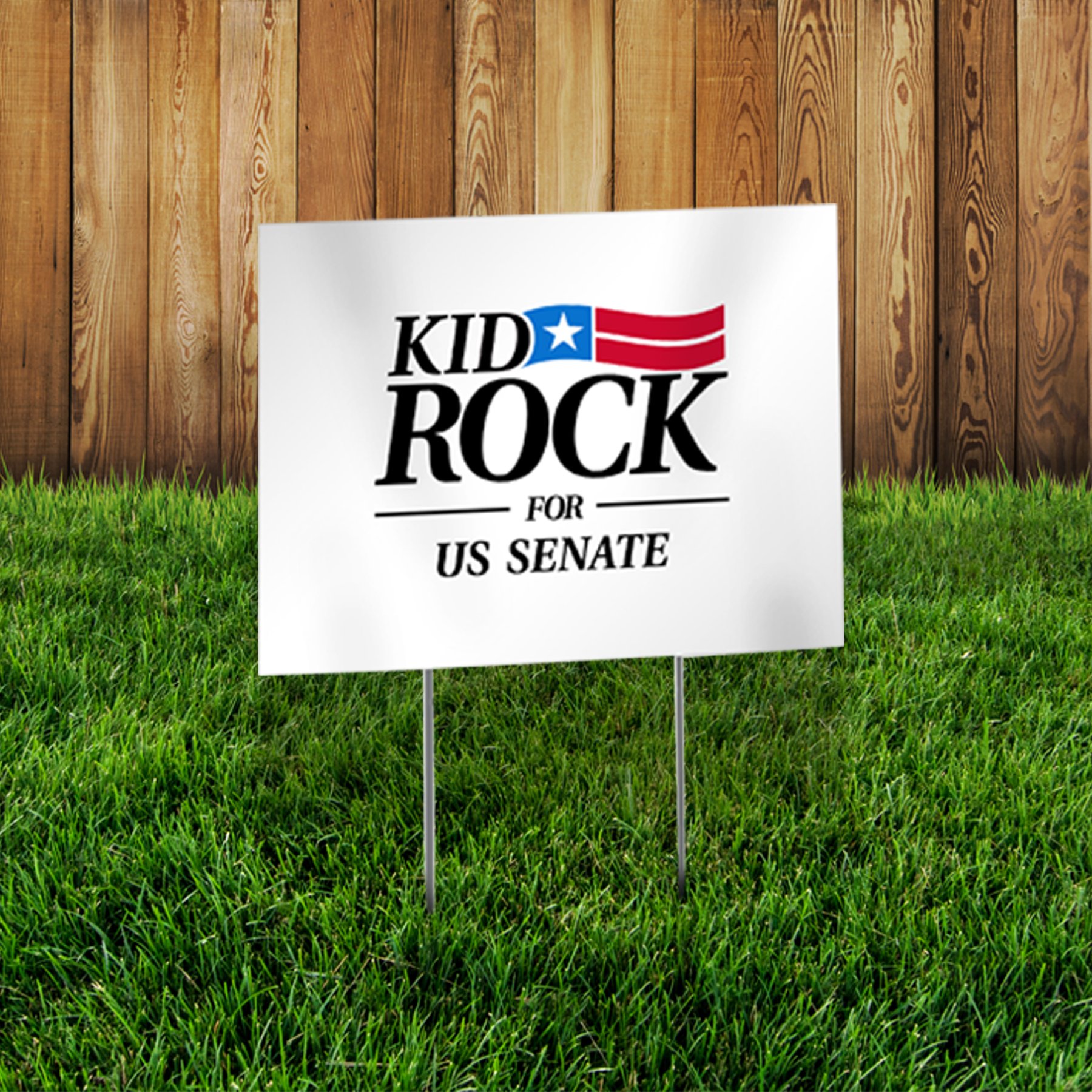
For a real hipster take on potential candidacies there is yesterday's Slog from Charles Mudede, "Hick Hopper Kid Rock Running for Senate," about Kid Rock challenging Debbie Stabenow in Michigan:
This afternoon, "rapper," scratcher, and country singer Kid Rock tweeted that recently launched website Kid Rock For Senate is the real deal. In 2018, he will run against the Democrat Debbie Stabenow, Michigan's senior US Senator. In 2012, Kid Rock supported Mitt Romney, and his song "Born Free" was Romney's campaign theme. In 2016, Rock supported Donald Trump's successful run. In 2017, he visited the White House with Sarah Palin and Ted Nugent, and famously mocked Hillary Clinton's official portrait. 
The album that made Kid Rock Kid Rock (his real name is Robert Ritchie) is Devil Without a Cause. It was released in 1998, sold a gazillion copies, and introduced the world to "hick hop." Rock is not much of a rapper, indeed he's what we once called wack; but he can work the wheels of steel like an old school DJ. In this video, you can see him light up and smoke a cigar, and pour whisky in to a glass while cutting records down to the bone.
Rock also appeared on a sex tape with Creed's Scott Stapp. In this video, which was filmed in 1999 and entered the eternity of the internet in 2006, his cock is sucked by more than one woman. Recently, Rock's glass dildo was "subpoenaed in Insane Clown Posse lawsuit."
All of that said, Rock has not yet filed for the senate race. But if he does, if he actually runs, Stranger news editor Steven Hsieh thinks he will win. 
Now that's some fine hipster writing.

Friday, May 26, 2017

Russophobia Alone is Not Going to Work for Democrats

Yesterday afternoon I was ready to declare that Trump is in real trouble based on a reading of Nate Silver's article from Wednesday, "Donald Trump’s Base Is Shrinking":
...Trump’s base seems to be eroding. There’s been a considerable decline in the number of Americans who strongly approve of Trump, from a peak of around 30 percent in February to just 21 or 22 percent of the electorate now. (The decline in Trump’s strong approval ratings is larger than the overall decline in his approval ratings, in fact.) Far from having unconditional love from his base, Trump has already lost almost a third of his strong support. And voters who strongly disapprove of Trump outnumber those who strongly approve of him by about a 2-to-1 ratio, which could presage an “enthusiasm gap” that works against Trump at the midterms. The data suggests, in particular, that the GOP’s initial attempt (and failure) in March to pass its unpopular health care bill may have cost Trump with his core supporters.
But then this morning there is the news that Republican Greg Gianforte handily beat Rob Quist, darling of the Bernistas, in the Montana special election to fill Ryan Zinke's at-large congressional district seat, and this despite Gianforte being charged with assault on the eve of the election.

The anti-Trump mainstream press is spinning the result by closing the barn door after the pony has departed the farm, saying that, well, Quist never really had a chance to win. Here's a sample from Nate Silver's "What Went Down In The Montana Special Election":
Our vantage point is that we’re mostly looking at special elections in terms of how they might predict 2018. A night where Democrats are losing Montana by “only” 6 or 7 points is consistent with the sort of map you might see if Democrats were either taking over the House, or coming pretty close to it.
On the other hand, our expectations were already pretty high for Democrats. The opposition party — the party that doesn’t hold the White House — usually does well in midterm elections. And Trump is not a popular guy. The Democrats have plenty of issues, like the GOP’s unpopular health care bill, to campaign upon. This isn’t complicated stuff. You’d expect them to do pretty well under such circumstances, and to have a decent shot — let’s call it 50 to 60 percent — of taking over the House.
This result in Montana doesn’t change our priors much, therefore. Furthermore, it’s a somewhat quirky race, given that Quist and (especially) Gianforte both have their issues as candidates, and that Montana has been a little bit more competitive in Congressional and statewide races than in races for the presidency. Quist winning by 1 or losing by 13 might have called for a recalibration of our assumptions; we don’t think this result does.
We have a situation where Trump is losing his true believers at the same time the Democrats are trying to find true believers based on a new McCarthyism. It is a race to the bottom. While the touts at FiveThirtyEight are proclaiming, based on the numbers, that control of the House should shift to the Democrats. The problem with this is all the Dems are offering voters is an infantile, delusional complaint that it is all Russia's fault.

Look at this morning's lede unsigned editorial "President Trump Fails NATO," in the "newspaper of record":
That Mr. Trump and the allies were unable to agree on a common approach toward Russia was also worrisome. Moscow has become increasingly aggressive as Mr. Putin annexed Crimea, waged war in eastern Ukraine, meddled in the American and European elections and intervened militarily in Syria. The most that emerged from a meeting between Mr. Trump and Donald Tusk, president of the European Council, was that the two shared the “same line” on Ukraine.
All told, Mr. Trump’s commitment to NATO and America’s tradition of leadership remain very much up in the air. Should the president abdicate both, no one would be happier than Vladimir Putin.
If Russia were an aggressive power, shattering states right and left, forever on the offensive, this pitch might find an eager audience. Instead it's an upside-down view of the world. Russia is acting overwhelming in a defensive manner. The deep-state Democratic Party is asking voters to embrace a Bizarro World. That's a tough sell.

Trump is peddling a similar product. Rather than Russophobia, Trump is pitching Wahhabi-philia. It is not just the reality of Trumpcare upsetting his true believers; it's Trump's cavorting with the sheikhs and failing to collaborate with Russia to role up ISIS that is prompting his die-hard supporters to calve off from the base. Once this happens, once your vanguard crumbles, the rout is on. (A modified form of this happened with Obama in 2013.)

It surprised me that on Tuesday David Brooks, "The Alienated Mind," nonchalantly referred to Trump's impeachment as inevitable:
As the impeachment investigation proceeds, it’ll be important for us Trump critics to not set our hair on fire every day, to evaluate the evidence as if it were against a president we ourselves voted for. Would we really throw our own candidate out of office for this?
But in order for that to happen, Democrats have to take back the House next year. Russophobia alone is not going to get that done.

Wednesday, March 22, 2017

Even Mainstream Commentators are Complaining about the Skimpiness of the Trump-Russia Story

When a snarky, middle-brow establishmentarian website like FiveThirtyEight categorizes the Trump-Russia story as more smoke than fire, seconding the assessment of former acting CIA chief Mike Morrell, you know there is really no there there.

This from "How Much Of The Trump-Russia Story Is Smoke And How Much Is Fire?," a discussion between FiveThirtyEight writers and editors posted this morning:
clare.malone: Thing on the Russia story is how much it’s been back and forth. Take this story from October — the headline on that said “no clear link.” So what people took away was, “no link!”
micah: Which is a reasonable reading. It’s very confusing. 
clare.malone: And then a couple of months later, we find ourselves here, with a new spin on that story — still no clear link, but as Perry said, people have been acting awfully suspicious.
natesilver: I think that Oct. 31 story from the The New York Times that Clare linked to really does not hold up well in light of their subsequent reporting.
perry: Agree.
micah: And I’d add the confusion of churn. So, weirdly, we didn’t actually learn anything new on Russia on Monday, yet there’s a new spate of stories. So the smoke-to-fire ratio gets bigger.
Nate Silver hedges throughout the conversation. The other participants you get the feeling have some sort of allegiance to the Democratic Party. And that's the "donkey" in the room throughout the chat: No where is the Democratic Party's role in manning the smoke machine mentioned.

Towards the end of the piece there is this:
micah: Last question: This investigation will probably last many months — if not years. How does it affect Trump’s ability to pursue his agenda if it’s sort of a constant low hum in the background?
clare.malone: That depends on America’s continuing reaction to the Trump era. There are a lot of things we don’t know, like how Trumpism will age. Are people, Republican constituents particularly, going to have the same patience or tolerance for this stuff in, say, a year? Maybe. Maybe not.
natesilver: If Democrats ever take over one or both branches of Congress, the investigations could obviously cripple Trump’s agenda.
perry: I think it’s huge. Remember a few weeks ago Trump gave that joint session speech. Van Jones praised him. Then, the Sessions-Russia story eliminated that news cycle.
micah: Hmmm …
perry: That led to Trump making up the wiretapping story.
micah: But, for example, has that affected Neil Gorsuch’s Supreme Court confirmation hearings or the health care bill?
natesilver: You can certainly make an argument that Trump is mishandling health care. 
Nothing about the deep state, about Politico's story of Ukrainians trying to get Hillary elected, about working with Russia in Syria. All very superficial. But interesting that even from a mainstream perspective Democrats are getting tired of the smoke in their eyes.

Tuesday, January 24, 2017

Pink Revolution Demographics + Trump on Trade + Goading the Dragon + Brexit in Play

Nate Silver has a definitive breakdown of Saturday's women's marches ("The Long March Ahead For Democrats"):
Saturday’s Women’s Marches, which rebuked President Trump on the day after his inauguration, probably drew more than 3 million participants between hundreds of locations across the United States, making them among the largest mass protests in American history. The marches recalled the tea party protests of April 15, 2009, an event that helped to mark the beginnings of a backlash to former President Obama — but overall attendance at the Women’s Marches was about 10 times higher than at the tea party rallies, according to our estimates.
But the geographic distribution of the marches also echoed November’s election results, in which Hillary Clinton lost the Electoral College despite receiving almost 3 million more votes than Trump nationwide. About 80 percent of march attendees were in states that Clinton won, and a disproportionate number were in major cities. So if the marches were a reminder of the depth of opposition to Trump — unprecedented for a president so early in his term — they also reflected Democrats’ need to expand the breadth of their coalition if they are to make a comeback in 2018 and 2020.
Silver then proceeds to analyze the marches in terms of geography. The marches overwhelming took place in big cities, in states Clinton won, and reflect an urban versus rural divide that defined the election. Silver has very faint praise for the overall import of the Pink Revolution:
Like the early tea partiers, some of the people who turned out on Saturday will turn into organizers, fundraisers and influential voices in their communities, and some of them will even become candidates for office. The Democratic Party needs broader geographic appeal than what it has right now. But turning out 3 million people one day after the new president is inaugurated is a pretty good start.
My gut sense is that the women's march is a classic one-off like the People's Climate March of 2014 organized by 350.org -- huge but hard to replicate and of uncertain merit in creating meaningful change.

Yves Smith assesses what is in store for us with a Trump presidency. In "Consternation as Trump Starts Delivering on Campaign Promises While Making More Crazy Attacks on Critics" Smith argues that Trump is a narcissist with a difference -- he's a narcissist who is willing to regularly destroy his own image:
With Trump, we have, far more visibly. the same question that dogged the Obama Administration: what does he really stand for? With Obama, we learned that he was conservative and cautious, but also very much liked the appearance of getting things done. His press office repeatedly cited how much legislation was passed on his watch, as if volume was more important than quality. Trump is likely to have the same orientation. It’s easy to assume, as critics do, that Trump wants to become even wealthier. But Trump more than anything wants to be visible: his splashy/trashy buildings, his TV show, his relentless self-promotion, his reckless tweets. While Trump in oh so many ways looks like a classic narcissist, one departure is his need to mix things up. Most narcissists are working above all to have their environment reflect back a good image of them. Trump’s regular undermining of his own image is at odds with that.
There are far too many moving parts to have any firm view as to how the Trump Administration will pan out. But even though there was good reason to suspect that given the record of both celebrity politicians and DC outsiders, that Trump would wind up as Jimmy Carter squared, a President that didn’t get much done, the flip side is that underestimating Trump has proven to be a losing bet. Stay tuned.
Much a Trump's popular support is going to depend on how he handles trade. The Democrats doomed themselves by Obama pushing the TPP throughout 2016. Trump is off to a good start by scrapping the TPP. But as Smith points out much remains to be seen:
Both Bernie Sanders and the Teamsters praised Trump for ending the TPP. It is surprisingly under-reported that Trump met today with labor leaders, almost all of whom had supported Clinton. It is a not-well-kept secret that many union members bucked the leadership and voted for Trump. But the bosses engaging in a session with Trump that they described as “excellent” may be the start of the formal and long-overdue exit of unions from a party that has treated them as disposable for over 30 years. 
But how far will Trump go? The problems with TPP were much better publicized than many might assume; when Lambert saw Trump speak in Bangor, Trump referred to the TPP only by its initials, didn’t explain it, and the crowd seemed familiar with it. By contrast, other dangerous “trade” deals, like the TTIP and TISA, are still as of now, moving forward.
Trump appears committed to goading the Dragon. According to this morning's Foreign Policy Situation Report:
Warning shot aimed at Beijing. Sean Spicer also told reporters Monday that Washington is prepared to take action to prevent China from building more islands in the South China Sea and claiming the territory as its own. "It’s a question of if those islands are in fact in international waters,” he said, “and not part of China proper, then yeah, we’re going to make sure that we defend international territories from being taken over by one country."
Chinese Foreign Ministry spokeswoman Hua Chunying shot back on Tuesday that China's sovereignty over the Spratly Islands in the South China Sea was "irrefutable," adding, “we urge the United States to respect the facts, speak and act cautiously to avoid harming the peace and stability of the South China Sea," Hua said. "China's resolve to protect its sovereignty and maritime rights in the South China Sea will not change.” 
If Trump continues down this path it can't end well. Trump acts as if he thinks that the Chinese are lightweights. He is going to have to switch up his game or risk catastrophic failure.

When it comes to catastrophic failure the UK political class' management of Brexit comes to mind. The Supreme Court ruled today that Article 50 negotiations can't begin until Parliament votes. Here is an 11th-hour opportunity for the discredited neoliberal orthodoxy. Parliament could block Article 50 and in effect repeal Brexit. This outcome is usually dismissed in most stories. But why? A majority of Labour and Conservative MPs opposed Brexit. I suppose they are worried about the repercussions to their political careers if they were to block Brexit. But a plausible scenario is to amend and talk any Parliamentary vote to death, May's government would fall and new elections would be held which would be a replay of the Brexit referendum. The outcome could very well be different this time.

Wednesday, December 21, 2016

Blaming Russia Fails to Persuade the Masses

Here is a gem from Lambert Strether's Water Cooler:
“Just one-third of Americans say they believe Russia influenced the 2016 presidential election, according to a new POLITICO/Morning Consult poll” [Politico].. Good proxy for the size of Clinton’s base. Not enough.
After a solid week, possibly more, of incessant haranguing about the evil genius of Putin-directed Russian hackers stealing the presidential election from poor victim Hillary, the mainstream media has largely gone silent on the topic. (The big story now is whether Congress will create a special select committee to investigate the hack or whether existing committees will handle the chore.)

By now New York Times editors, let alone Deep State power brokers, should be able to connect the dots and realize that the "Russians ate poor, poor Hillary's lunch" is a colossal dud. This isn't 1950. Joseph Stalin is long dead. The Democratic Party fosters a tiny fraction of the allegiance it did in the Truman era. Instead Dem stalwarts should get to work on the 2018 midterms -- which as Nate Silver argues in "Democrats Need To Win Elections, Not Flip Electors" could see a change in control of the House -- rather than moaning about Russian bogeymen.

But as I have opined before, blaming the Russians keeps the Bernistas at bay and forestalls any reckoning for the money bags who run the show; it also splits Trump from his own party, as John McCain's almost daily Strangelovian pronouncements make clear. So even if the "Russians did it" is a dud, it is a song that will likely be in steady rotation, both for the internal political ambiance it creates as well as its dulcet neocon tone for U.S. clients among the Gulf emirates.

There is some self-congratulation from the Gray Lady today. "How We Identified the D.N.C. Hack’s ‘Patient Zero’ , " according to a blurb, "[D]etails how [Eric Lipton] and his Times colleagues David E. Sanger and Scott Shane constructed a chronological narrative of one of the most famous hacks in history."

Marcy Wheeler pokes holes in this timeline in "THE DNC’S EVOLVING STORY ABOUT WHEN THEY KNEW THEY WERE TARGETED BY RUSSIA."

Maybe the sudden disappearance of the Russian hack story from the front page is due to a preponderance of evidence pointing to a leak, whether from someone within the Clinton/Democrat organization or the NSA, rather than a hack.

Tuesday, November 8, 2016

Hillary on Her Way to a Big 300+ Electoral Vote Win

There is a fluid that we all share. We live in it together all at once. It is time. That's our placenta. The key is to recognize this with whatever umbilical cord -- newspapers, comic books, film, music, baseball, television -- you have.  I have discerned a big break for Hillary from Sunday on, following the FBI announcement that nothing actionable was discovered in the Weiner/Abedin email hoard.

Nate Silver's latest post, "Election Update: Clinton Gains, And The Polls Magically Converge," backs this up: "As a lot of you noticed, Nevada, North Carolina and Florida flipped from red to blue over the course of Monday."

Silver discounts this as non-significant, one-day movement in the polls. But my sense is that it is real. I think Hillary will clear 300 electoral votes, as FiveThirtyEight's latest map shows. So 2016 is going to end up being more like Obama-Romney 2012 than a Bush v. Gore constitutional crisis.

Which as an election-day reality is all for the best. A Trump shellacking at the polls will prove that white male supremacy as an electoral divide-and-conquer strategy is done.

The systemic problems don't disappear tomorrow though. We're still headed for some sort of collapse or seismic slip. The Western theater will just pack up and move east across the Atlantic.

Friday, October 28, 2016

Texas in Play?

From an AFL-CIO honcho in the Lone Star State who replied (see below) to a question as to whether Texas was truly in play, as has been reported, emailed him (and shared with me) by a guy who works in my building:
In play? Yes and no.
Polls are close (3 points and up) and maybe the Latino vote is underestimated. Labor is certainly working it.
But we are not a "battleground," nor are we getting major resources.
If we win, it will be amid the worst GOP implosion since 1964.
So it's possible, but no one is predicting a win.
How big will Hillary win? This appears to be where we are at with about a week-and-a-half to go. Trump has been written off. He is done. Kaput. The debate now appears to be whether his supporters will pick up their muskets and pitchforks after November 8, or, the $64,000 question, "How long will Clinton's coattails be?"

I think both -- Trump's fascist revolution and a Democratic landslide -- are hype.

My sense, as I have said before, is that Hillary will have coattails that will barely cover her ass. The latest from Nate Silver is that the presidential polls are narrowing again:
We’ve reached the point in the campaign where there are so many polls coming in — state polls, national polls, tracking polls, one-off polls — that it’s really nice to have a model to sort out all the data. A couple of days ago, the model was beginning to detect tenuous signs that the presidential race was tightening. Now, that seems a bit clearer. Clinton’s lead over Donald Trump is now 5.7 percentage points in the polls-only model, down from 7.1 points on Oct. 17. And Trump’s chances of winning the election have recovered to 18 percent from a low of 12 percent. Trump’s chances in the polls-plus forecast are 21 percent, improved from a low of 15 percent.
Almost all the tightening is happening because Trump’s numbers have improved. Clinton’s share of the vote — about 46 percent in national polls— is still as high as it’s been all campaign. But Trump seems to have brought home some Republicans who were thinking about sitting out the election or voting for a third-party candidate. Libertarian Gary Johnson has fallen to 5 percent in our popular-vote forecast — his lowest point to date. (If Johnson finishes with less than 5 percent, the Libertarian Party would be deprived of federal matching funds for the 2020 election.) The undecided vote is also declining, although it remains high compared with recent elections.
Then again, I read a story today that said Darrell Issa (longtime GOP incumbent in California’s 49th CD) is dangerously close to being ousted. So I don’t know.

My prediction? Hillary is no LBJ. The electoral college might be a blowout. But the popular vote margin will not be more than five-six points (and it very well could be in the Obama-Romney range, which was four points). For Dems: House, no; Senate, it’s so tight you would have to be a precog to know the outcome. I think the third party totals will end up surprising us. Stein is at 2% in the national polls; Johnson, a little over 5%. Based on anecdotal evidence (people -- women of color -- I know who have never voted third party, voted for Jill Stein) I think Stein might do as well as Nader did in 2000, 2.74%. In other words, Stein could very well outperform her polls. Johnson appears to be bleeding. Hopefully, he'll hold on so that the anti-imperialist Libertarians can grab those federal matching funds.

Monday, September 26, 2016

The Black Swan

With the first presidential debate tonight, it is interesting to note that Nate Silver, polling guru who made a name for himself successfully predicting both of Obama's robust victories, has basically punted when it comes to divining the outcome for 2016. The polls are too close and the trend lines are going in odd directions in swings states versus the nation at large. But what Silver is really saying, at least what I came away with, is that polling in this presidential election year is not reliable.

In other words, the polling guru is calling a black swan. Silver won't name it as such because his FiveThirtyEight web site, owned by ESPN, is part of the corporate media monopoly and is therefore all in for Hillary. But a significant part of this particular black swan is the corporate media monopoly itself. So Silver's elliptical reference to a black swan makes perfect sense. Self-censorship.

The black swan of which I speak is a Trump victory. Impossible based on the factoid that the candidate who is leading in the polls two weeks after the last nominating convention always wins. But who could have imagined in late August, after the daily pummeling Trump receives on the front page of the "newspaper of record" and the tens of millions of dollars Clinton has spent on unchallenged ads, that in late September Trump would be ahead in Ohio and Florida and that we would have a nail-biter on our hands?

Hillary's path to 270 electoral votes is easier to imagine because I don't see Trump winning in Pennsylvania or Michigan, states Trump needs to find a way to the White House. But there is also a small chance that no candidate gets to 270. This could happen if Trump wins Colorado, New Hampshire and one of the two electoral votes Maine apportions based on Congressional District. Assuming all the swings break according to the current FiveThirtyEight map, this would keep Clinton under 270.

Andrew Levine in "The Meaning of the Trump Surge," which was the featured piece on the CounterPunch web site over the weekend, thinks that after the debates Hillary will reattain her substantial post-convention lead. In this scenario, Levine thinks the best that can be hoped for is that the Jill Stein vote will reach five percent; at that threshold the Green Party will qualify for federal funds. This is a big deal. It was the unicorn we were after in 2000 with Nader-LaDuke.

If Nader-LaDuke couldn't do it, neither will Stein-Baraka.

On Saturday I participated in a 5K road race that is part of an annual community event in a working-class neighborhood in the northernmost reaches of the city. I go every year. It is my favorite run. I think it has something to do with its small scale. I like racing on the empty streets early on Saturday morning. What I noticed this year is that people still have their Bernie signs up. This is a phenomena I have noticed in the more inexpensive precincts of my neighborhood, something one would expect to see in apartment windows. But in the northern home-owning neighborhood of working-class Broadview it came as a surprise. No Trump signs. No Hillary signs. Only Bernie signs and Seahawks signs (and less of those than in years past).

What do these signs portend? It is hard to say. Were Kucinich signs still up in yards and apartments at this point in 2004?

I don't think every Bernie sign is a marker for Jill Stein. After all, Bernie has capitulated and is campaigning for Clinton. I think these signs are similar to Tibetan prayer flags and signify nothing more than the bleached aspiration of a weekend Buddhist living in a 'roided-out consumer culture. I think we need to start looking at the electoral map from the 2004 election.

Wednesday, April 27, 2016

Point of No Return: President Hillary and the Demise of the European Union

I feel decent this morning for the first time in more than a week. Stress and strain on the job has led me to abandon this page. I feel like I am back at an SEIU local where I worked ten years ago, which was the closest I have ever come to being a member of a cult. Everyone was fucking each other, lying to each other, drinking and drugging, calling in sick, etc. My current situation is not anywhere near as bad. But I am ten years older, and working a 12-hour day doesn't get any easier.

So I am entertaining the idea of mothballing Burdens. My horizon looks bleak: overtime, staff retreats, six-day work week after six-day work week. We'll see. I think I can manage one post a week.

Enough about me. What about the world in which we live? Yesterday's primary results solidified last week's consensus coming out of New York. It is going to be a Trump vs. Hillary race to the bottom. Trump swept five Eastern states -- Connecticut, Delaware, Pennsylvania, Rhode Island and Maryland -- in commanding fashion, and Hillary almost equaled his performance, losing only Roger Williams' colony.

The big takeaway from yesterday is a post this morning by Nate Silver, an avowed Trump denier: "It’s Trump’s Nomination To Lose. (Well, at least if he wins Indiana.)" With the Kasich-Cruz pact to derail Trump quickly disintegrating, even FiveThirtyEight thinks Trump's path to 1,237 is all but assured. For a moment I was swayed by a Van Jones interview I saw at the beginning of this month where he argued that the GOP was headed straight for a brokered convention because Trump had proven unable to win consistently more than 50% of the vote. Well, he has proven it repeatedly in April. And I think he will do very well in California. I was hoping for a battle royale at the Republican National Convention, maybe even an event where Trump would march his delegates out.

For the Democrats, I was hoping that Bernie could win New York and California and a few other states along the way and bring his children's crusade to the City of Brotherly love where another convention fight would be staged. Remember, it was the meltdown in Chicago in 1968 that brought about the McGovern reforms that led to McGovern's nomination in 1972 and Carter's nomination in 1976, and which superdelegates were created in 1984 to counteract. So convention meltdowns have a big historical impact.

Unfortunately it doesn't look like there will be any convention meltdowns. If anything happens, it will be the big unions backing Hillary (SEIU, for one) attempting to lure disaffected youth back into the corrupt Democratic Party by staging direct action type mobilizations against Trump, possibly even at the GOP convention in Cleveland. I hope youth are too shrewd to be appropriated by Hillary, but in this regard I am not too confident; after all, there was a push in March by MoveOn to mobilize against Trump.

What does a race to the bottom between Hillary and The Donald look like? It is hard to know how the deep the depths, but deep indeed I imagine they will be. A guy who works on the same floor of the building where I work came into the office last week and handed me a sheet he had printed out. It was from The New York Times, based on the "NYT 4/19/16" he scrawled on the bottom of the page. There is no byline. I will retype the key sentences:
Meanwhile, her [Hillary's] negative ratings have been rising and now outweigh her positives by 24 points. That makes her seen no more favorably than Cruz is. Her only salvation is Trump's net negative is minus 41.
Combine these high marks of disapproval for both front runners with the low voter turnout numbers from the 2014 midterm elections, which were so low you had to go all the way back to the total war mobilization of World War Two to find comparable figures, and we could see participation levels as poor as the 1920s. And while this is proof of a broad distrust of our political system, it does not represent the kind of revolution that is called for.

At this point it looks like Clinton will muddle through. Fear usually trumps hope. By the time November arrives, Trump will be so thoroughly demonized the Rubio-voting soccer mom crossover will more than make up for any hardhat crossover in the opposite direction, leaving the election to be decided by black and Latino turnout. All hail Hillary.

We will have to look for regime change elsewhere.

Though "four more years" yawns at us, I am convinced now more than ever (and not just because I am reading Elizabeth Kolbert's excellent The Sixth Extinction: An Unnatural History) that we are headed for some sort of collapse.

This page since its inception has been preoccupied with the fracturing of the current Pax Americana neoliberal paradigm. From the fiscal cliff, Cyprus, the coup in Kiev, sarin in Ghouta, ISIS in Anbar, Syriza's Greece, Afghanistan, the refugee crisis in Europe to World War Four in Syria the paradigm is quaking.

Europe is critical. The unipolar world of Pax Americana is dependent on a supine, fraudulently monolithic Europe. That party has ended. Obama's meek and exhausted goodbye junket to the continent drove the message of defeat home.

The ceasefire in Syria is over. In the new phase of fighting the U.S. alliance with Al Qaeda affiliate Al Nusra is more manifest than ever. The only thing keeping it from popular consciousness is a polite, conspiratorial elision by the mainstream media.

Renewed fighting in Syria and Iraq means a surge in refugees to Europe. Yemen is cued up to be even worse. All in time for the June 23 Brexit referendum. (Interestingly, in 1975, Year 1 of neoliberalism, the Brits voted by a supermajority to remain part of the European Community. It will be much closer this time.)

Even if the UK votes to stay in the EU, the continent will continue to fray because war in the Middle East is going to accelerate. The sheikhs of the Gulf are engaged in an arms buying bonanza, while the Saudis are in full tilt PR smokescreen mode. The panic is palpable. The captive USG is doing its part by sabotaging Obama's remaining legacy achievement, the nuclear deal with Iran. This can't end well. Hillary, more beholden to the neocons and the Saudis, will only make things worse.

And we haven't even mentioned the militarized Asia pivot or NATO's New Cold War with Russia, both of which were initiated absent public support. This is a "no future" horizon.

Monday, February 22, 2016

Who Won the Hispanic Vote in Nevada?

As to be expected, The New York Times is tattooing the Sanders campaign as a sure loser following Hillary's solid victory on Saturday in the Nevada caucuses. Nevada was important for Bernie, and in many ways it seemed ready-made for his anti-establishment candidacy, given the state's higher-than-average union density and its long suffering since the 2008 financial meltdown. But Hillary beat him, and she beat him handily in Clark County, home to Las Vegas and its heavy Latino population and its union casino workers.

And herein lies a mystery. Based on entrance and exit polling, Bernie won the Latino vote in Saturday's caucus by eight points. Then how is it that Hillary beat him by 11 points in Clark County? This has created a kerfuffle with number-cruncher Nate Cohn, "No, the Polling Doesn’t Prove Bernie Sanders Won the Hispanic Vote in Nevada," rejecting the polls. Charles Blow summarizes in his anti-Bernie column, "Bernie Sanders Hits a Roadblock":
According to the entrance poll, Sanders also won the Hispanic vote, but this is where some prominent poll watchers took exception to the poll’s accuracy. 
The New York Times’s Nate Cohn tweeted
“Based on the results in Clark, the precincts in ELV, and the overall entrance poll error, I do not believe Sanders won the Hispanic vote.” 
ELV, or East Las Vegas, is the largely Hispanic part of Clark County, by far the most populous county in the state, where actual results showed Clinton winning handily
Nate Silver tweeted support for Cohn’s analysis: 
“We share @nate cohn skepticism about entrance poll finding that Clinton lost Hispanics in Nevada.”
I think this anomaly can be explained by a passage from the post-election dispatch written by Amy Chozick and Patrick Healy, "Hillary Clinton Beats Bernie Sanders in Nevada Caucuses":
Her support among labor also ran deep, even though the Culinary Workers Union, which represents 57,000 members, many of whom are Latino, declined to endorse a candidate. But on Thursday, Senator Harry Reid of Nevada, who also remained neutral, said in an interview he had spoken to D. Taylor, the head of the union’s parent group, to make sure its members could have paid time off to participate in the caucuses, a move that operatives in the state believed helped tip the race in Mrs. Clinton’s favor. 
She overwhelmingly defeated Mr. Sanders in the caucuses that were held at six major Las Vegas casinos, including Harrah’s, the Wynn and New York-New York, which heavily drew working-class minority voters.
Caucuses are not secret ballots. Leadership of the Culinary Workers Union, despite a professed neutrality, got time loss for its members to caucus for Hillary. The members did so, but many on the way in and on the way out identified as Bernie supporters. That is why there is a disconnect between the polling and the actual outcome in Clark County.

What does it all mean? Certainly not how Team Clinton is spinning the win this morning as somehow foreshadowing an inevitable triumph in the primary. Hillary won 19 delegates to Bernie's 14. That's it. Even Cohn sees the Nevada results as proof that the Sanders campaign has reason to hope he can diminish Hillary's advantage among people of color:
The actual election returns in Las Vegas’s Clark County hint at a different story. Analyzed neighborhood by neighborhood, they suggest that Mrs. Clinton might have won the Hispanic vote by a comfortable margin. She won about 60 percent of delegates in heavily Hispanic areas, a result that calls the finding of the polling into question.

There is not much evidence, though, that Mrs. Clinton won Hispanic voters by the sort of landslide margin that she did eight years ago. That’s a good sign for Mr. Sanders, who needs to make up for the huge swing among black voters, who have gone from uniformly for President Obama to uniformly for Mrs. Clinton.
So we need to take with a grain of salt Patrick Healy's frontpage headline this morning, "Delegate Count Leaving Bernie Sanders With Steep Climb." There is plenty within the guts of Healy's story which should give the Clintonistas pause:
Mrs. Clinton has 502 delegates to Mr. Sanders’s 70; 2,383 are needed to win the nomination. These numbers include delegates won in state contests and superdelegates, who can support any candidate. She is likely to win a delegate jackpot from the overwhelmingly black and Hispanic areas in the Southern-dominated Super Tuesday primaries on March 1, when 11 states will vote and about 880 delegates will be awarded. 
Since delegates are awarded proportionally based on vote tallies in congressional districts and some other areas, only blowout victories yield large numbers of delegates. And Mrs. Clinton is better positioned than Mr. Sanders to win big in more delegate-rich districts, like those carved out to ensure minority Democrats in Congress, where she remains popular.
“She could effectively end the race in less than two weeks’ time on Super Tuesday,” said David Wasserman, a top analyst for The Cook Political Report, who has been closely tracking the delegate race. 
Of course, politics is unpredictable, as this cycle’s presidential campaign has demonstrated. Mrs. Clinton will face questions about her candidacy, including the outcome of an F.B.I. investigation into the use of a private email server while she was secretary of state. And Mr. Sanders has shown an ability to create grass-roots excitement in surprising places.
Still, while Mrs. Clinton is far from reaching 2,383 delegates, she is poised to create the sort of mathematical quandary for Mr. Sanders that she faced in 2008. That winter, Barack Obama used an 11-state winning streak to establish a lead of 100 delegates that Mrs. Clinton was never able to surmount. While a similar streak is unlikely this year, advisers to Mr. Sanders concede that Mrs. Clinton could generate a significant delegate lead now that she has momentum from her Nevada win. But they say they are not out of the running. 
“The Clintons can get a delegate lead quicker than we can, and they have a way to gut out the delegate fight,” said Tad Devine, a senior adviser to Mr. Sanders. “We have to turn victories in state after state into big momentum that can change the numbers.” 
Mrs. Clinton already has a huge lead over Mr. Sanders in support from superdelegates — elected officials and party elders who each count toward the magic number of 2,383. But superdelegates could switch candidates if Mr. Sanders is the overwhelming choice of regular voters. 
For now, Mrs. Clinton is focused on building her lead among so-called pledged delegates — those awarded proportionally by congressional districts from primary and caucus results. Mr. Sanders is aiming to score wins in states like Massachusetts and Minnesota while holding Mrs. Clinton to narrow wins elsewhere. Small margins of victory keep delegate allocations roughly even. A New York Times analysis found that Mrs. Clinton and Mr. Sanders are tied in the pledged delegate count, at 51 each.
The support for Bernie is not going to evaporate. It is hardcore. It provides a solid foundation of funds and grassroots all across the country. For example, I attended a "Labor for Bernie" rally yesterday at 4 PM -- this is 4 PM on a Sunday afternoon, a time when a lot of people are doing grocery shopping and getting ready for the work week -- and the hall was packed. More chairs repeatedly had to be hauled in to accommodate the overflow. Several state legislators were in prominent attendance. This is not a Howard Dean type of movement that is going to suddenly collapse. This is a long haul operation of people who want to tear down a system that is multiplying wars and planetary destruction faster than most can track.

The fight is just getting started. What happens, as Healy alludes, when the FBI comes back with evidence of wrongdoing? How about the transcriptions of those Goldman speeches? Hillary's corpse might appear reanimated but the stench is still there.

As for Trump, only the most committed dead-enders can deny the obvious: After Super Tuesday the GOP nomination will be Trump's.

The fantasy being peddled by Republican apparatchiks is that the race will turn into a two-way contest between Rubio and Trump, and Trump, who has never proven that he can muster much more than 30%, will fall to the more centrist candidate. This is all summarized in Nate Silver's "Trump Optimists And Trump Skeptics Are About To Go To War."

The problem with this analysis is that it assumes Cruz is going to get out the race, and he is not. He's got too much money.

Monday, February 1, 2016

Iowa

What we have witnessed over the last week is an amazing rescue operation performed by the mainstream media on behalf of the Clinton campaign. It is similar to the effort that followed the first Democratic Party presidential debate last October when the mainstream spin cycle locked into high gear and created the impression that Hillary won a smashing victory.

For a pure, distilled form of this pro-Hillaryese, go over to FiveThirtyEight, Nate Silver's ESPN-owned (The Walt Disney Company) outlet and read his "What Happens If Bernie Sanders Wins Iowa." Silver's argument goes something like this: Yes, Sanders might win in Iowa, and he will likely win New Hampshire, but it means nothing because there is no sign he can win in Dixie. Sanders is not doing enough to bridge his divide with black voters. So he will lose in South Carolina, and he will lose on Super Tuesday. And, oh, by the way, if Sanders can't win in Iowa, his candidacy is cooked, done, kaput.

Silver follows up that piece, which was published Friday afternoon, with one that appeared yesterday, "Hillary Clinton May Win Iowa After All," which argues that Sanders's momentum has stalled and Hillary maintains her lead in the final polls conducted before today's caucus. Silver attributes Clinton's strength to her organizational ground game in the Hawkeye State, and her enduring popularity among Democratic voters.

In other words, according to Silver, Hillary can't lose regardless of the outcome today, and she very well might knock Bernie out of the race. 

This is basically the same snake oil that is being peddled by Silver's former employer, "the newspaper of record," the august New York Times, which endorsed Clinton over the weekend, bizarrely dismissing the Sanders campaign as catering pie-in-the-sky to "alienated middle-class voters and young people," while simultaneously raising up Hillary as the most experienced politician to keep us safe from the Republican bogeymen.

The question comes down to whether there are enough Iowa Democrats willing to be duped; that, or enough caucusing Democrats who are actually pleased with the status quo. The answer to the second question is an easy one. I don't think there are many working-class voters who are ready to sing praises to the present state of affairs. Wages are stagnant. Housing and health care costs continue to rise. And job growth, despite a rosy picture that appears once every few months, has never really pierced a pervasive sense of gloom.

So the question comes down to dupes. Are there that many in Iowa? The polls say yes. But answering a telephone call is not the same as going to a caucus. There is no doubt that Bernie holds the edge in motivation. To this Clintonistas reply that Sanders' support is clustered in urban areas and around college towns, but it is thin in rural areas. 

What is being obscured by the mainstream media smokescreen is the intense revulsion voters feel towards Hillary. If Obama 2008 was a powerful collective hallucination that a better world was possible, Sanders 2016 is a shared gut feeling that the status quo with its huge banks, fraudulent justice and perpetual war is killing us all and therefore must be destroyed.

What is rarely if ever given any ink in the prestige press is that the Obama administration has been an enormous failure. Obama turned out to be a false idol, a Nobel Peace Prize winner who is presiding over innumerable undeclared wars. Hillary, by wrapping herself in his mantle, is gambling that Democrats are still in love with Obama. I say no. And even if her gamble pays off and she advances to the general, she has boxed herself in. Obama is more unpopular with the opposing party than any president -- including W. -- going back to Eisenhower.

Bernie wins Iowa. I haven't said anything about Trump because I think he has separated himself from the field recently. Trump wins Iowa. The battle in the GOP then becomes one over who will the party coalesce around to take out Trump. A Rubio vs. Cruz battle is developing to see who will be the main contender.

Wednesday, December 9, 2015

Regional Elections in France Point the Way for the U.S. in 2016

The surmise is that Trump timed his headline-grabbing announcement about banning Muslims from entering the United States until "we can figure out what the hell is going on" because of a poll in Iowa showing Ted Cruz taking the lead there. This is from yesterday's story by Patrick Healy and Michael Barbaro, "Donald Trump Calls for Barring Muslims From Entering U.S.":
Mr. Trump has a track record of making surprising and even extreme comments whenever he is overtaken in opinion polls by other Republican candidates – as happened on Monday just hours before he issued his statement about Muslims. A new Monmouth University survey of likely Iowa Republican caucus-goers found that Mr. Trump had slipped from his recent top spot in the state, which holds the first presidential nomination contest on Feb. 1. According to the poll, Senator Ted Cruz of Texas earned 24 percent of support, while Mr. Trump had 19 percent and Senator Marco Rubio of Florida had 17 percent. But another Iowa poll released on Monday, by CNN/OCR, showed Mr. Trump with a comfortable lead but Mr. Cruz gaining ground on him.
Over at FiveThiryEight Nate Silver & Co. suss out the meaning of that Monmouth poll in "What If Ted Cruz Wins Iowa?" FiveThirtyEight can't stop drinking the "Trump Can't Win" Kool-Aid. So most of the analysis that one reads there is tilted toward explanations of improbable scenarios where Establishment-worthy candidates like Rubio or Cruz -- now even Chris Christie is being mentioned -- come out on top in the Republican primaries.

This speaks to the hollowness and superficiality of "horse race" reporting, the kind of writing which dominates election coverage in the United States, because it misses the obvious tsunami heading toward the duopoly. People don't believe in the parties and national government anymore. Perpetual war, skyrocketing inequality, institutional racism, partisan gridlock, wage stagnation, rising housing and healthcare costs -- what is there to feel hopeful about?

Establishment analysts pay too little heed to the alienation swelling in the ranks of the average citizen. It is on full display in France where the first round of regional elections took place last weekend and which will finish up this weekend with what everyone is predicting will be a big win for Marine Le Pen's National Front. The National Front will no longer be an also-ran but one of the top two parties in France, replacing the Socialists.

Alissa Rubin laid it all out yesterday in "National Front Gets a Boost in French Regional Elections"; she might as well have been talking about the U.S.:
The National Front not only came in first in the popular vote on Sunday with 28 percent of votes cast nationwide, it was leading races to govern six of France’s 13 regions, decisively in at least two. 
Many factors combined to help Ms. Le Pen’s party in the first round of voting — the second will be held on Sunday — but the overwhelming message was one that the French elites have been reluctant to confront: The political rules that have governed the country for the past 25 years are being reshaped by a wave of nationalist right-wing populism familiar to voters in many other countries, not least fans of Donald J. Trump in the United States. 
Just like Mr. Trump, Ms. Le Pen is shrewdly speaking to voters who feel economically strained, distant from leaders they perceive as elitist and out of touch, and angry or frightened by waves of immigration that they feel threaten their national identity and personal security. Her appeal, which helped her party win political control of a few French cities last year, seems to have only grown since the attacks in Paris last month that killed 130 people, giving the National Front a chance to establish greater credibility by governing key regions, including the area in the north around Calais that has been struggling all year to deal with an encampment of thousands of migrants.
***
Her success is rooted not just in her ability to modulate her message, cloaking some of her more xenophobic ideas in coded language. She also had the good fortune to come to the political stage at a moment when the traditional parties are splintering, seemingly unable to address the economic woes of the middle class, stem the more negative effects of globalization on the French way of life or convince voters that they are not imperiled by immigration and extremism. Ms. Le Pen has long had proposals on these issues — albeit ones that exclude immigrants from many of the benefits that go to French citizens, or that force assimilation.
The old Socialist Party is “incapable of changing at the moment; it is an empty shell,” said Pierre Haski, the co-founder of the French news site Rue 89. “The Socialists are losing the cities, except for Paris, Lyon, maybe Lille; it’s lost most departments; and it’s going to lose regions after this election. It’s been weakened so that it’s very difficult to imagine it could win the next presidential election.

“And you find the same crisis in the traditional right,” Mr. Haski said. “Sarkozy’s party is in disarray.”
Trump has shrewdly protected his spot at the top of the polls since the summer. And while his Islamophobia is grossly demagogic, it is better politics than demonizing undocumented Latinos who make up a far-larger percentage of the electorate than the 2% who identify as Muslim. Also, Trump has cast his spear at the Achilles' heel of the U.S. Global War on Terror (GWOT). Administration policymakers refuse to acknowledge that the brand of Sunni Islam that is the primary fuel for jihadist terrorism is an export of our chief Arab ally, Saudi Arabia. The U.S. voter has been vaguely aware of this since 9/11, but conflicting messaging of the USG and the shallow reporting by the mainstream press has kept the Saudi role in GWOT from reaching critical consciousness.

Trump has once again proven he can command the direction of the presidential race. And like Marine Le Pen, he remains the candidate who must be beat.