Showing posts with label Elizabeth Warren. Show all posts

Monday, November 4, 2019

A Specter is Haunting Wall Street

Wall Street must have finally figured out that Elizabeth Warren will be the likely winner of the Democratic Party nomination because a piercing bestial wail has gone up in the last couple of weeks, one that coincides with a Buttigieg boom. According to Kate Kelly and Lisa Lerer in "As Warren Gains in Race, Wall Street Sounds the Alarm":
Interviews with more than two dozen hedge-fund managers, private-equity and bank officials, analysts and lobbyists made clear that Ms. Warren has stirred more alarm than any other Democratic candidate. (Senator Bernie Sanders, who describes himself as a socialist, is also feared, but is considered less likely to capture the nomination.)
Wall Street has long tried to influence American politics and generally donated to both parties, though it traditionally has been more aligned with Republicans. But while there’s no coordinated strategy, the industry is more or less united against Ms. Warren. With just months before the first voting begins, it is unleashing a barrage of public attacks, donating money to her rivals and scrambling to counter her blistering narrative about Wall Street.
“Everyone is nervous,” said Steven Rattner, a prominent Democratic donor who manages the wealth of Michael R. Bloomberg, the former New York City mayor. “What scares the hell out of me is the way she would fundamentally change our free-enterprise system.”
While even some of Ms. Warren’s detractors see her soak-the-rich approach as a winning issue in the Democratic primary, President Trump and his team would undoubtedly try to weaponize it against her in a general election. Already, some Republicans are defining Ms. Warren as a veiled socialist who would disrupt the fragile economy with her sweeping plans.
As president, Ms. Warren would also confront a long list of powerful and well-funded opponents on Wall Street, potentially complicating her ability to enact her agenda. Her tightly organized campaign has no Wall Street liaison or circle of advisers drawn from the industry and has done little outreach to the finance world.
Yet even if Ms. Warren cannot get some of her more far-reaching proposals through Congress, finance executives fear that as president she would appoint regulators who take a far stricter view of the industry.
Ms. Warren’s campaign declined to comment, pointing to her public remarks, in which she has welcomed doing battle with Wall Street.
In recent weeks, Wall Street’s warning signals about Ms. Warren have begun exploding into the public, coloring analyst reports and earnings calls, and echoing from the stages of industry conferences. The billionaire money manager Leon Cooperman castigated her in an open letter released Thursday, and on Friday Goldman Sachs researchers suggested that tax hikes proposed by Ms. Warren and others could lower corporate earnings by 11 percent.
Prominent money managers have predicted a double-digit decline in the stock market if Ms. Warren wins the presidency, a claim that some skeptics find hyperbolic. Some traders and investors have said, only half-kiddingly, that they’ll leave the country — or at least, relatively high-tax states like New York — to minimize the impact of what they view as punitive policies.
With the presidential election one year away it is clear that the real contest will not be Warren versus Trump but Warren versus Wall Street. As Kelly and Lerer note, Watt Street's preferred candidates are Buttigieg and Trump:
Ms. Warren also ranks well down the list in money raised from individual donors in the finance industry. She has raised about $330,000, according to year-to-date figures compiled by the Center for Responsive Politics, far less than Mr. Buttigieg, who leads the Democrats with nearly $1.3 million. (At about $1.5 million, Mr. Trump is the biggest beneficiary of finance-industry donations.)
In her presidential campaign, Ms. Warren has eschewed donations from corporate PACs and bundlers, swearing off big donor events as she collects a flood of small donations that have put her among the race’s leading fund-raisers. Last month, her campaign announced that they would no longer accept contributions of more than $200 from executives at big banks, hedge funds or private equity firms.
To understand why Warren is shaping up to be a radical, transformative figure, all one need do is read about how she proposes to finance her Medicare For All plan (see Margot Sanger-Katz and Sarah Kliff, "Elizabeth Warren’s ‘Medicare for All’ Math"):
  • Employers would be required to pay fees to the federal government, equivalent to 98 percent of what they now spend on their employees’ health care. Some companies would be exempt, and companies with unionized work forces would be able to lower this payment if they increased workers’ wages. Currently, companies vary greatly in the cost and generosity of their health benefits, so this fee would vary substantially by firm. ($8.8 trillion)
  • States and local governments would be required to make payments to the federal government, similar to what they currently spend on government employee benefits and their share of Medicaid expenses. ($6.1 trillion)
  • Corporate taxation would be increased. ($2.9 trillion) 
  • Tax collections would increase through improvements to I.R.S. enforcement, which Ms. Warren believes could raise a lot of money. ($2.3 trillion)
  • The top 1 percent of individual earners would pay new taxes on their capital gains; they would pay taxes on increases in investment value annually, instead of waiting until assets are sold. ($2 trillion)
  • Income tax collections would increase, since workers would no longer pay part of their salaries for insurance premiums, which are not taxed now. ($1.4 trillion)
  • Billionaires would pay a higher wealth tax than the rate Ms. Warren has previously proposed: 6 percent, up from 3 percent. ($1 trillion) 
  • A new financial transactions tax would be imposed on stock trades. ($800 billion) 
  • Pentagon spending from an overseas contingency fund, often criticized as a slush fund, would be eliminated. ($800 billion)
  • Income earned by immigrants, following the passage of her immigration overhaul plan, would provide new tax revenues. ($400 billion)
  • A risk fee on the liabilities of banks with more than $50 billion in assets would be introduced. ($100 billion)
It's the most radical, substantial attack on the U.S. oligarchy by a viable major-party presidential candidate in my lifetime.

So what is Wall Street going to do?

First, the financial industry will keep doing what it has been doing: scaremongering and funneling money and media attention to Mayor Pete.

The problem for Wall Street is if they are seen as the source of the attacks the attacks will actually boomerang. That's how unpopular Wall Street and its neoliberal political creed are. I'm sure right now a suitable cutout -- small farmers, public housing mothers -- is being hunted up to deliver the anti-Warren message.

Another problem for Wall Street is that its preferred candidates -- Kamala Harris, Cory Booker, Amy Klobuchar -- are all unpopular with voters. This leaves Joe Biden, who is not viable, and Pete Buttigieg, who is not electable.

Buttigieg's principal shortcoming in the Democratic primary is that black voters don't trust an LGBTQ Harvard elite who as mayor can't even control his own police force. Young people don't trust him either, while older voters who support Biden are just as likely to transfer their allegiance to Warren because Mayor Pete makes loves to a man.

By early March, if Wall Street can't somehow transfer all of Biden's supporters to Buttigieg and Warren and Sanders are left standing tall, the Democratic National Committee will do everything in its power to hobble its front-runners, and Mike Bloomberg will begin his quadrennial talk of a third party challenge.

Wednesday, June 26, 2019

The Warren Boom

UPDATE: If you want a sample of the staleness of faux-hipster establishmentarian analysis read FiveThirtyEight's round table discussion "What We’re Watching For In The First Democratic Debates."

There are a couple of interesting takeaways though: 1) Despite the month-long Warren boom in the pages of The New York Times, the Massachusetts senator is not nearly as high in the polls as I imagined. FiveThirtyEight lists her combined polling average as 8.7%. That's 20-points south of Biden's combined polling average, and ten points behind Bernie. 2) Democratic operatives fear and hate Tulsi Gabbard more than any other primary candidate. What does that tell you about the Democratic Party's commitment to the war machine? I'd say it's at least 69% pure.

****

Tonight is the first Democratic presidential debate; it can be streamed on NBC News. Elizabeth Warren headlines a crowd of also-rans, and I include Booker and Beto in that group. I'm interested to see if Tulsi Gabbard can spotlight, however briefly, the suicidal nature of the U.S. perpetual war machine; also, if New York City mayor Bill de Blasio can distinguish himself from the pack.

The story of the last month is definitely Elizabeth Warren. The amount of attention she has been receiving in the "newspaper of record" is noteworthy. She graced the cover of the Magazine this past Sunday, and in yesterday's national edition there was Sabrina Tavernise's (a reporter I like)
"How Elizabeth Warren Learned to Fight" (the photo -- a pre-cultural revolution 1960s high school Betsy clutching her debate trophies -- alone is worth a bounty of votes).

It's hard to say at this point whether The New York Times is boosting Warren because the paper's cognoscenti realize that Biden is another putrid cadaver of the Hillary type who needs to be incinerated before fouling the general election and ushering in a second term for Trump or if the paper is using Warren as a cat's paw to dash Bernie's hopes.

Given Warren's penchant for a modest redistribution of wealth, my bet is that it is the latter.

Tuesday, April 2, 2019

Elizabeth Warren's Presidential Campaign Already in Trouble

The New York Times reported the other day (see "Elizabeth Warren Loses Finance Director as She Struggles in Early Fund-Raising" by Astead Herndon and Jonathan Martin) that Elizabeth Warren's presidential campaign is already in trouble. Though her first-quarter fundraising totals have not been announced, Warren's finance director, Michael Pratt, quit after Warren made the decision to forego big-ticket fundraisers which cater to the wealthy and rely instead on small donations:
Ms. Warren’s most immediate challenge, though, may be money. She raised only $299,000 in the first day of her candidacy, far below the $5.9 million and $6.1 million Mr. Sanders and Mr. O’Rourke brought in for the same period and also less than Ms. Harris. In emails to supporters, asking for as little as $3, her campaign flatly says her rivals will post “fund-raising figures we won’t be able to match.”
And after demonstrating little capacity to raise cash online, Ms. Warren effectively doubled down on small-dollar contributions, announcing last month that she would no longer hold big-money fund-raisers or seek wealthy donors to bundle hundreds of thousands of dollars in checks.
She cast it as a decision long in the making that will offer her more time with voters. In truth, she made the choice only after a robust debate inside her campaign that led to the resignation of her finance director, Michael Pratt, who strenuously objected to the idea.
At a Valentine’s Day meeting at Ms. Warren’s Washington condominium that began with a heart-shaped cake but soon grew heated, Mr. Pratt noted that campaigns often collapse when they run out of money and pleaded with her not to cut off a significant cash stream, according to Democrats briefed on the conversation. He pointed out that winning over wealthy fund-raisers across the country helped build networks that could translate into political support, not just checks.
But Mr. Pratt lost the argument to two of Ms. Warren’s closest advisers, Dan Geldon and Joe Rospars, who made the case about standing apart from the field and freeing up her schedule.
I admit to being intrigued by Warren's candidacy. She has led in terms of progressive policy ideas. Unfortunately, after reading her article in Foreign Affairs, "A Foreign Policy for All," I can only conclude that she is a fraud. She says she wants something different and then she embraces confrontation of Russia and China.

We'll have to wait and see what she reports for the first quarter, but early indications are that once she burns though the $10 million she transferred from her senate campaign, she'll basically be kaput.

Monday, February 11, 2019

Booker and Klobuchar: More Neoliberals Enter the Democratic Presidential Primary

UPDATE: Glen Ford, executive editor of Black Agenda Report, had an accurate assessment last week regarding the present state of the Democratic Party, in which he concludes:
Only three Democratic members of the House, California Rep. Ro Khanna, Minnesota Rep. Ilhan Omar and Hawaii Rep. Tulsi Gabbard, have condemned the U.S. actions against Venezuela, and much of the phony left has found common cause with Trump in the crime.
It is possible that AOC will grow an internationalist consciousness, without which one is no socialist. But it’s way too late for 77 year-old Bernie Sanders. His historical mission is to run for president once again, on a platform opposed to endless austerity, and hopefully generate such momentum that Democratic leaders will be forced by their corporate masters to sabotage Sander’s campaign in the full light of day, provoking a significant exodus of lefties from the Party.
The corporate duopoly cannot buck the Lords of Capital, whose only vision for the planet is endless austerity and war, with themselves forever on top. The real resistance can only be nurtured outside the Party. Bernie Sanders' job, although certainly not his intention, is to explode the Democrats by running on a platform that supermajorities of people support – and to be publicly crucified for it.
Bernie will run, and Bernie will be blocked by the party once again.

For the party to bar the exits to the "exodus of lefties," of which Ford speaks, the oligarchs who fund the DNC are likely whispering to Kamala Harris to go as far to the left as she see fits, knowing full well it's merely pillow talk.

But Harris won't win the primary; plus, she would just be fodder for Trump in a general election. That leaves a co-opted Elizabeth Warren as the Democratic Party's best bet to maintain a semblance of cohesiveness and win the White House.

****

The Democratic presidential primary is cleanly divided into two rhetorical camps. In one camp, the neoliberals, preach unity and healing and "reaching across the aisle to get things done"; in the other, you have social democrats preaching confrontation with entrenched corporate interests that have corrupted the political process to the disadvantage of regular working people.

This dichotomy is explored in Alexander Burns' "Democrats’ 2020 Choice: Do They Want a Fighter or a Healer?," a look at the contrasting messages of Cory Booker and Elizabeth Warren, both declared presidential candidates in the Democratic primary, both in Iowa over the weekend. I get the sense that Burns' true intention is to make up for the damning Booker campaign kickoff piece that The Times published Friday, February 1 (see "Cory Booker Announces Presidential Bid, Joining Most Diverse Field Ever," by Nick Corasaniti and Shane Goldmacher) by providing a stealth fluff piece for the New Jersey senator and notorious Wall Street lickspittle.

Neoliberal candidates like Booker are preaching unity because that's what the wealthy donors want to hear. The plutocrats definitely don't want to see Elizabeth Warren's wealth tax, which targets people worth at least $50 million, catch on. Unfortunately for the oligarchs, in the age of Indivisible and the Women's March, the unity message rings false -- it's Obama's message and Obama was an empty suit shortly after his reelection; so we're talking about something that is six-year's out-of-date -- and the Warren and AOC message of the rich paying their fair share rings true.

Another neoliberal (they're called "centrists" in the mainstream media) tossed her hat into the presidential ring yesterday. Minnesota senator Amy Klobuchar (see "Amy Klobuchar Enters 2020 Presidential Race," by Mitch Smith and Lisa Lerer) is another corporate lawyer who hopes to capture lightning in a bottle in the age of #MeToo; in Klobuchar's case, it was her ballyhooed exchange regarding alcohol consumption with supreme court nominee Brett Kavanaugh during his senate confirmation hearing.

The Times includes this acidic passage in its coverage of the Klobuchar kickoff:
Despite Ms. Klobuchar’s friendly public persona, she’s said to be a difficult boss. A survey of senators by the website LegiStorm from 2001 to 2016 found that her office had the highest turnover in the Senate. “I have high expectations,” she told The New York Times last year. A recent HuffPost article portrayed her as a demanding manager who lost some potential 2020 campaign staff members because of her reputation.
Republicans latched onto that criticism on Sunday, dismissing her candidacy as one of limited appeal.
“She has virtually no grass-roots backing and even her own staff is complaining that she’s ‘intolerably cruel,’” Michael Ahrens, a spokesman for the Republican National Committee, said in a statement.
Let's face it. The honchos that run the Democratic National Committee must be shitting in their britches. An outsider is going to capture the party organization. At this point Kamala Harris is the best bet for the oligarchs to maintain control. But her record in California politics is a liability. So that means Biden will probably run, as will the feckless Beto O'Rourke.

Thursday, July 13, 2017

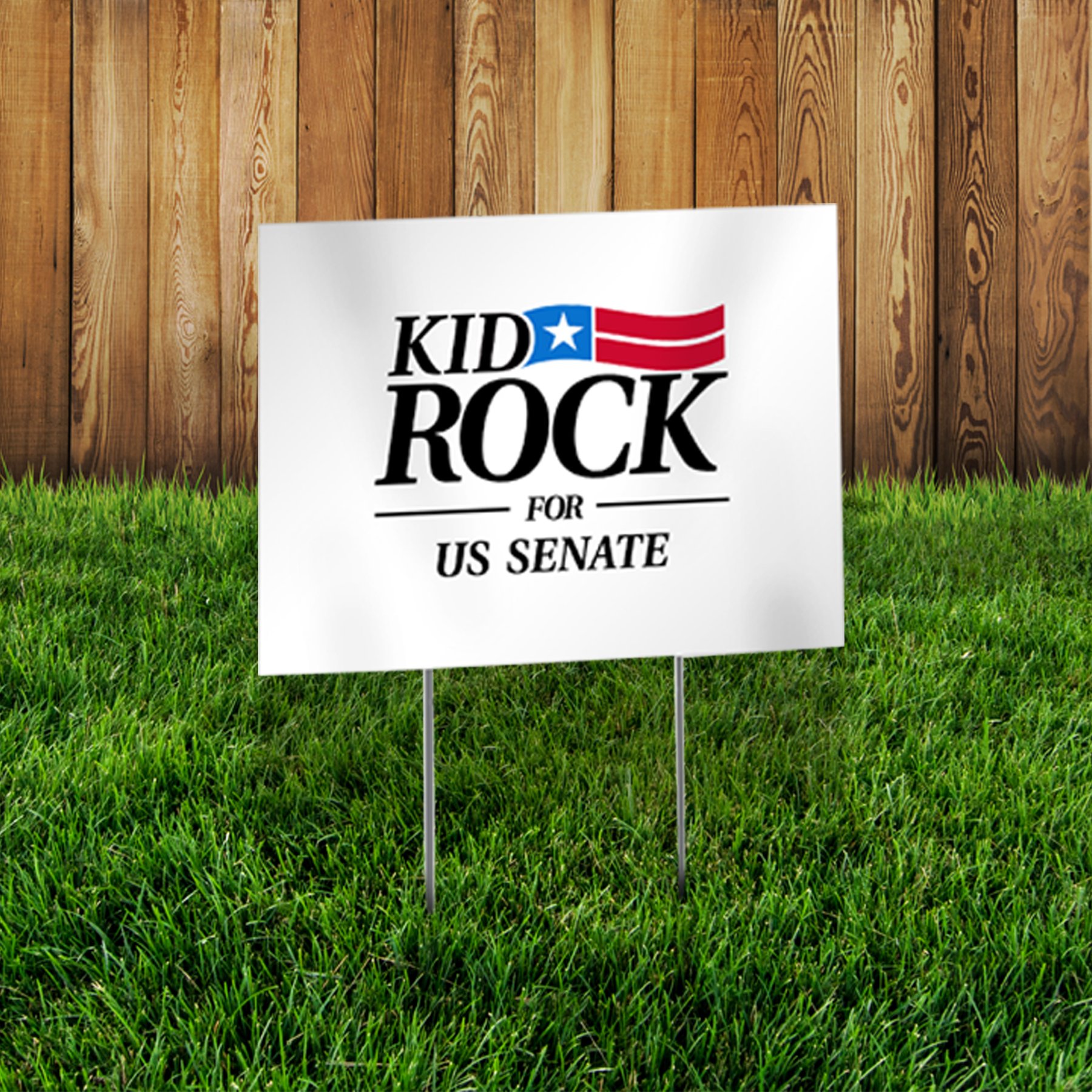
Democrat Elites Still in Bernie Denial + Kid Rock a U.S. Senator?

What is a "hipster"? A good definition is "a bourgeois bohemian," someone who is safely, superficially, predictably unconventional; someone, like a medieval courtier, who adheres to certain shifting protocols. Hipsters are usually fickle, bitter and filled with fear.

A "faux-hipster" then is someone who affects the coolness of a hipster but with the intention of buttressing the mainstream, the conventional, the "square" world. A faux-hipster is the serpent eating its tail, Ol' Blue Eyes backing Reagan.

MSNBC has built its brand on the faux-hipster, and FiveThirtyEight, Nate Silver's ESPN project, has followed along, leaning on the nerdy, geeky, wonky aspects of the millennial hipster.

Recently a Bernie Sanders presidential run in 2020 has received some attention. Last week Vox's Matt Yglesias argued that "Bernie Sanders is the Democrats’ real 2020 frontrunner." Yesterday Common Dreams published "It's Too Early, Says Bernie Sanders, But 2020 Run 'Not Off The Table' "

And this morning FiveThirtyEight has a delightful chat, "Is Bernie Sanders Really The Democratic Front-Runner?," I think it is a must-read because it shows how lost the Democratic elite are. Nate Silver is attacked by his three colleagues for arguing the obvious -- Bernie is the front-runner. Take a taste:
harry: If you’re going to use Sanders’s prior support, then why is he polling at less than half of what he got in 2016? Doesn’t that suggest that a lot of that support was merely anti-Clinton and not pro-Bernie?
natesilver: Because they’re polling a ballot with 14 candidates, whereas it was a two-horse race in 2016. I dare you to look up Sanders’s favorability ratings with Democrats, Harry!
harry: I dare you to look up Trump’s favorability ratings with Republicans even after he entered.
clare.malone: Cool impasse.
natesilver: I’m not sure why you’re being such a hipster about this, Harry. Sanders is really well liked among Democrats. He was second last time. He’s leading in the polls now. Isn’t it obvious that he’s the front-runner?
If you read through the round table a couple of things rise to the top. Democratic elite opinion, here represented by FiveThirtyEight writers Harry Enten, Clare Malone and Perry Bacon Jr., is waiting, pining, begging for Elizabeth Warren to get into the presidential race. (Warren is better than Hillary, but I think the outcome would be the same because she can't juice turnout of the "Obama coalition" -- minorities and young people.) Bernie's candidacy is once again being written off because he allegedly doesn't have the support of black voters. So we can expect more and possibly worse race-baiting in 2020. It's going to be the Super Tuesday firewall all over again. Divide and conquer. And if Bernie is blocked, another Trumpocalypse.


For a real hipster take on potential candidacies there is yesterday's Slog from Charles Mudede, "Hick Hopper Kid Rock Running for Senate," about Kid Rock challenging Debbie Stabenow in Michigan:
This afternoon, "rapper," scratcher, and country singer Kid Rock tweeted that recently launched website Kid Rock For Senate is the real deal. In 2018, he will run against the Democrat Debbie Stabenow, Michigan's senior US Senator. In 2012, Kid Rock supported Mitt Romney, and his song "Born Free" was Romney's campaign theme. In 2016, Rock supported Donald Trump's successful run. In 2017, he visited the White House with Sarah Palin and Ted Nugent, and famously mocked Hillary Clinton's official portrait. 
The album that made Kid Rock Kid Rock (his real name is Robert Ritchie) is Devil Without a Cause. It was released in 1998, sold a gazillion copies, and introduced the world to "hick hop." Rock is not much of a rapper, indeed he's what we once called wack; but he can work the wheels of steel like an old school DJ. In this video, you can see him light up and smoke a cigar, and pour whisky in to a glass while cutting records down to the bone.
Rock also appeared on a sex tape with Creed's Scott Stapp. In this video, which was filmed in 1999 and entered the eternity of the internet in 2006, his cock is sucked by more than one woman. Recently, Rock's glass dildo was "subpoenaed in Insane Clown Posse lawsuit."
All of that said, Rock has not yet filed for the senate race. But if he does, if he actually runs, Stranger news editor Steven Hsieh thinks he will win. 
Now that's some fine hipster writing.

Thursday, April 23, 2015

Cracks in the Washington Consensus

The writings of Thomas Friedman, longtime foreign affairs columnist for The New York Times, are a contradictory mishmash of Panglossian optimism (in American hegemony) spiced with paragraphs of accurate assessment. His column on Iran yesterday, "Deal or No Deal," is a good example. After repeating all the old stale thoughts on Iran being a rogue outlier led by an irrational ayatollah committed to mendacity and mayhem -- a more accurate description of Israel and the Gulf monarchies -- Friedman does a somersault and concludes his piece with the following prescient paragraph:
Finally, you have the regional challenge. Iran, with about 80 million people, is simply a more powerful and dynamic state today than most of the Sunni Arab states to its west, half of which have collapsed. Iran, even if it had good intentions, almost can’t help but project its power westward given the vacuum and frailty there. When Nixon opened to China, and helped unleash its economic prowess, China was largely surrounded by strong or economically powerful states to balance it. But an Iran enriched by billions in sanctions relief would be even more powerful vis-à-vis its weak Arab neighbors. Our Gulf Arab allies are deeply worried about this and are looking to the U.S. for both protection and more sophisticated arms. I get that. But unless we can find a way to truly ease tensions between Shiite Persians and Sunni Arabs, we will find ourselves unleashing Iran to the max while arming the Arabs to the teeth. Maintaining that balance will not be easy.
The first point, that Iran is the dynamic state of the Middle East, should be clear by now. I remember reading that during World War Two Goebbels complained that the U.S. was getting more out its population for the war effort than Germany. I am sure there are officials at Langley who are making a similar assessment about Iran.

The point can be expanded to include Russia and China, two nations that seem to be getting more from their people than the West is from theirs. Recently I watched a travel video produced by The New York Times, "36 Hours in Beijing," and I was blown away by how clean and prosperous the megalopolis looked, like San Francisco. I have been mentioning it to coworkers when the discussion veers to the perilous condition of the United States. After recently reading Tariq Ali's "The New World Disorder," I'm starting to repeat his line from that essay, something to the effect that, "A friend asked me what happened to the U.S. working class. I told him it is in China."

Ali downplays American declinism, seeing plenty of testosterone left in the corpus of the global Leviathan. But I am not so sure. There has been a dialectical shift in the U.S. since W.'s presidency; a combination of Citizens United and the abject failure of Obama as a progressive leader has led to precipitous collapse of confidence in the political system which resulted in the record low turnout in the 2014 midterms. Harvard academic Larry Lessig addresses this in a recent talk he gave imploring Elizabeth Warren to challenge Hillary.

It is going to be hard to overcome people's distrust in reformist politicians after the epic failure of Obama.

Which brings us to the Friedman's final point: Iranian dynamism is being translated into an arms race in the Middle East that will destroy the region and is leading to a new world war. How is that prevented?

Given that the U.S. is a pay-to-play system that the sheikhs and the Israelis seem to have wired, it is difficult to imagine a reformist situation that can change the ongoing addiction to warfare and destruction. What is needed are two things, which might be the same thing: 1) a crack in the Washington Consensus, whether a default by Greece, a Le Pen victory in France, a nativist rebellion in Germany that collapses Merkel's government, and/or 2) the war needs to come home; the leaders of the Western core nations need to feel the death and destruction that they export around the globe -- in Libya and Syria -- lap up on their shores. This is happening already.

Wednesday, March 11, 2015

Hillary Cannot Win in 2016


After watching about 14 minutes of Hillary Clinton's email apologia the only thing that was apparent to me was that she has next to no chance of winning a presidential election.

Whatever the precise details of whether the State Department reviewed Hillary's email account while she was Secretary of State or why she was allowed to use her personal email instead of a .gov email pales in comparison to the obviously unappealing nature of the woman.

Hillary reminds me of Bette Davis in her Whatever Happened To Baby Jane? (1962) renaissance period: an imperious postmenopausal woman who terrifies males and offends females.


Nate Cohn had a piece, "Hillary Clinton Is More Vulnerable in 2016 Than You Think," in yesterday's paper that provides the big picture polling numbers to back up my gut reaction to Hillary's UN press conference. Hillary has never been very popular:
Her ratings started out high as first lady in 1993, as is often the case with that role, but dropped to the mid-40s when she pursued health reform. Her ratings surged during the Monica Lewinsky scandal, but returned to the mid-40s once she ran for Senate, and remained there through her 2008 presidential campaign. Her ratings recovered again after she withdrew from the 2008 race and was no longer active in day-to-day politics. 
There is little about Mrs. Clinton’s electoral history that suggests she’s a stronger candidate than these ratings. As a Senate candidate in New York in 2000, she ran well behind Al Gore’s presidential election numbers in New York that year. Few defend her performance in the 2008 presidential primaries. If anything, the extent to which she was criticized by the left has largely been forgotten. As Slate’s Alec MacGillis put it, there is “a sort of collective amnesia among Obama supporters when it comes to their former estimation of Clinton — a reluctance to reckon fully with their aversion to her then and what has come of it since.”
The New York Times is critical of  Hillary's showing before the media yesterday. Michael Schmidt's "Questions Regarding Hillary Clinton's Personal Email Use"; "Hillary Clinton Tries to Quell Controversy Over Private Email" by Amy Chozick and Michael Schmidt; and Scott Shane's "No Classified Emails by Clinton? Some Experts Are Skeptical" all blow holes in Clinton's defense.

After watching Hillary I was mollified by her argument that she was following the precedent established by former Secretaries of State in using a personal email account. Apparently John Kerry is the first Secretary of State to exclusively use a .gov email. And while I am in general agreement with MoveOn.org's position that saturation coverage on Hillary's email is a sideshow, reading The Times' coverage this morning does re-frame the email issue in its larger political context, which is a tendency of the 1% to feel as if they don't have to abide by the laws that govern the 99%. Hillary, or staff who works for her, is the one who is determining which emails are personal and which are private and what can be released for public consumption. Her statement that her emails never dealt in classified information is risible.

One of the questions that Hillary dodged had to do with why, if she is such a champion of women's rights (which ostensibly was why she was appearing at the United Nations to begin with), the Clinton Foundation takes money from Saudi Arabia and other Gulf nations -- states who adhere to a primitive view of gender roles.

In any event, my takeaway was clear: Hillary cannot win, and Democrats are experiencing some sort of dementia, some sort of pre-death fever in thinking she can. Hillary needs to be dumped pronto. Jim Webb or Martin O'Malley seem to me at this point to be a much better standard bearer for the Democrats. I'm not endorsing their candidacies. I'm just saying if the Democrats want to win and try to prevent a WWIII from happening (as the GOP continues its soft coup in Congress) they would be wise to dump Hillary, ditch the "Draft Warren" campaign (it would tough for her to win) and get real.

Monday, December 22, 2014

Collapse of the Democratic Party + Obama Embraces Egyptian Police State + Blue Lives Matter Vs. Black Lives Matter

Yesterday in the Gray Lady's Sunday edition Jonathan Martin had a story, "Role for Warren: To Push, if Not Supplant, Clinton," that had the effect of tossing a bucket of cold water on the effort by MoveOn.org to draft Senator Elizabeth Warren (Dem.-Mass.) to run for president. After reading the piece one comes away feeling fairly certain that Warren will not lock horns with Hillary Clinton for the nomination of the Democratic Party; in fact, Martin's article reads as if it had been written by a Hillary press handler, as one can tell from the first few paragraphs:
DES MOINES — Eight years ago this month, then-Senator Barack Obama began his evolution from political phenom to presidential contender with his first-ever trip to New Hampshire, a visit that attracted 2,500 voters, 150 journalists and a comparison by the state’s governor of Mr. Obama to the Rolling Stones. 
Last week, in the side room of Java Joe’s coffee shop here, the liberal group MoveOn.org took the first step to propel Senator Elizabeth Warren, Democrat of Massachusetts, on a similar path, holding a rally to encourage her to get into the 2016 race. 
Yet there were only about 75 people present, some of them local political professionals engaging in a bit of reconnaissance and recreation, and just a handful of reporters. The highest-ranking official there was the Iowa Senate president, who carefully avoided stating her support for a Warren candidacy. 
Not that there is such a thing: Ms. Warren herself was not here, and she has repeatedly stated in public that she is not running for president. In private, according to several Democrats who have talked with her, Ms. Warren, 65, has also indicated that she would not challenge Hillary Rodham Clinton.
 Martin goes on to depict the potent force, juggernaut-like, of Hillary's candidacy:
A Des Moines Register-Bloomberg poll in October showed Mrs. Clinton leading Ms. Warren by 43 percentage points. In New Hampshire, where Mrs. Clinton led Mr. Obama in a Granite State Poll at the outset of the 2008 race by 14 points, she was beating Ms. Warren by 49 points last month in a Bloomberg-Saint Anselm College survey. 
“There is only a very small segment of the party this time around that’s looking for an alternative,” said Jim Demers, a New Hampshire Democrat who backed Mr. Obama in 2008 and is now supporting Mrs. Clinton.
The bold red quote above by Jim Demers is absurd. It is not a "very small segment of the party" that does not want Hillary; it is the activist base, the ones who volunteer to knock on doors and who pay attention to current events. As I see it, Elizabeth Warren is the only politician who has enough legitimacy on issues of Main Street vs, Wall Street to keep enough of the Obama coalition -- Latinos, blacks, youth, women -- engaged and on the reservation to secure a presidential victory for the Dems in 2016. Democrat strategists have said they plan to win by having Hillary turn out the Obama coalition.

It is possible that Hillary Clinton could muddle through if the GOP nominates Scott Walker, Ted Cruz or Marco Rubio. But at this point I think Jeb Bush, if he can weather the storm of the Republican primaries, beats Hillary in a general election. At this point I won't even rule out the possibility that Mitt Romney could triumph over Hillary.

To get a sense of just how bad things are -- for both parties -- a must-read article is "Americans Are Sick to Death of Both Parties: Why Our Politics Is in Worse Shape Than We Thought" by academics Walter Dean Burnham and Thomas Ferguson. Burnham and Ferguson describe a Democratic Party in denial of how historic -- historically poor -- its performance was in the 2014 midterms:
[O]ur cautious guess is that turnout in this year’s Congressional races will finally weigh in at around 36 percent of the potential electorate that had legal rights to cast a ballot. 
That’s a shocking statistic. Put aside for a moment all talk of 1942 and absolute levels of turnout. Instead focus on changes in turnout between presidential elections and the next off-year election. Across the whole sweep of American history, the momentous dimensions of what has just happened stand out in bold relief. The drop off in voting turnout from the presidential election of 2012 to 2014 is the second largest of all time – 24 percentage points. Only 1942’s decline from 1940 was bigger – 29 percentage points. But then there was an excuse. Millions of Americans were hurriedly fanning out across the globe to wage total war. (World War I showed a similar pattern – turnout in the off year elections of 1918 fell 22 points from 1916’s presidential race, marking the fourth largest decline ever. Which leads naturally to the question of the third largest. Read on.)
Now cast a glance at the actual levels to which turnout in many states sank this year. In the last generation, turnouts in the many formerly industrialized states in the Northeast, the Mid-Atlantic region, and parts of the Midwest have bounced around, with one or another state sometimes touching historic lows in a particular election. But this year the decline is broad and to levels that boggle the mind – rates of voting that recall the earliest days of the 19th century, before the Jacksonian Revolution swept away property suffrage and other devices that held down turnout. Turnout in Ohio, for example, fell to 34 percent — a level the state last touched in 1814, when political parties on a modern model did not exist and it had just recently entered the Union. New York trumped even this: turnout in the Empire State plunged to 30 percent, almost back to where it was in 1798, when property suffrage laws disenfranchised some 40 percent of the citizenry. New Jersey managed a little better: turnout fell to 31 percent, back to levels of the 1820s. Delaware turnout fell to 35 percent, well below some elections of the 1790s. In the west, by contrast, turnout declined to levels almost without precedent: California’s 33 percent turnout appears to be the lowest recorded since the state entered the union in 1850. Nevada also hit a record low (28 percent), as did Utah at 26 percent (for elections to the House).
We are witnessing levels of voter participation that go back two-hundred years to the days when suffrage was synonymous with property ownership. This is a collapse the size of which is truly sublime.

And what is the Democratic Party -- the party nominally committed to the "little guy," to working men and women -- doing about this crisis of legitimacy? They are telling us to line up behind Hillary Clinton, the spouse of the man who brought us NATO expansion and the war against Yugoslavia as well as the repeal of the Glass-Steagall.

This will not end well. People can no longer stomach the lies. Voters made their way to the polls in two consecutive presidential elections, giving Obama huge margins of victory in both 2008 and 2012, and for what? The benefits of the economic recovery, what of it there is, have all gone to the wealthy. Unions and pensions are less secure. We do have a new market-based system of health insurance that can count the expansion of Medicaid as an achievement. But we also have a new iteration of the Cold War and war in Iraq and Syria, both of which are largely due to the U.S. and its allies in the Gulf Cooperation Council.

A recent example of an indigestible lie: USG has cleared the way for the delivery of military helicopters to Egypt, helicopters that have been put on hold since the Egyptian military ousted the elected president Mohamed Morsi in a coup the summer of 2013. Morsi is in prison along with more than 10,000 imprisoned this year alone. Egypt is a massive police state. Yet neither the USG nor Congress will sanction the generals of Egypt and Thailand like it has sanctioned Venezuela and Russia.

And right on cue there is evidence of the U.S. police state kicking back against the Black Lives Matter protest movement by waving the bloody tunics of two police officers murdered in their squad car this past Saturday in Brooklyn. As Liz Robbins and Nikita Stewart report in "At Demonstrations, a Change in Tone After Officers Are Killed": "After the killings on Saturday, the protest motto of 'Black Lives Matter' was joined by a chorus of 'Blue Lives Matter' on social media, in support of officers."

This was all predictable. As soon as police died in the line of duty their deaths would be used as a political cudgel to beat down the Black Lives Matter movement, which has been maintaining its momentum. There are Black Lives Matter actions all over the country all the time. The precedent here is when CIA agent Richard Welch was murdered in Greece at the height of the Church Committee revelations of national security state lawlessness, his death was used to kill off calls for sunlighting the Deep State.

The police are going to be called on in short order to maintain control as the political parties continue to lose the allegiance of the people.

Monday, September 8, 2014

Democrats Drifting and Headed for Defeat

Democrats are in trouble. To get a feel for how big that trouble is all you need do is watch about ten minutes of Bill Moyers' interview with Massachusetts Democratic Senator Elizabeth Warren this past Friday.

Warren was first tapped by Senate Majority Leader Harry Reid to chair an oversight panel on the implementation of the federal stimulus bill in the wake of the stock market meltdown before being selected by Obama to get the Consumer Financial Protection Bureau up and running; she then beat Republican Scott Brown in the 2012 Massachusetts senate race. Warren is the only politician that the national Democrats have left to offer as a somewhat credible progressive voice that speaks for the working class.

And that voice, based on the Bill Moyers interview, is pretty weak.

Warren bangs the drum for increasing the federal minimum wage. Moyers says that is all well and good but why is it that the Democrats who control both the Senate and the executive branch can't do anything about it. Might it have something to do with all the corporate money they take?
BILL MOYERS: --that first talk, and the middle class is still struggling. In fact, their income, adjusted for inflation is lower than it was five years ago, and they’ve lost about three percent of their purchasing power since then. Yet stocks are soaring, the economy is expanding, and the benefits are not going to the middle class families. Why can't Washington do better by them? 
SENATOR ELIZABETH WARREN: So I think Washington doesn't do better by them because Washington isn't trying to do better by them. If you look at Washington as a whole, I think this is the fundamental problem in our system right now. Washington works for those who can hire armies of lobbyists, armies of lawyers, and get just the rules they want. It doesn't work so well for American families. 
Look, we know the things we need to do. Raise the minimum wage. Nobody should work full time and still live in poverty. Minimum wage nationally hasn't been raised in over seven years. We need to make sure that we have real rules on equal pay for equal work. We need to lower the interest rate on student loans. 
In every case, we in the United States Senate have a majority. All of the Democrats have voted in favor of this. And occasionally, we even pick up a Republican. The Republicans have filibustered in the Senate. They won't even bring things to a vote in the House of Representatives. This is really a case where one party has said, the usual rules of governing, you know, we'll come together, we'll try to talk about these things, we'll try to work something out, their answer is no, no, no. They're not there to help middle class families. 
BILL MOYERS: But isn’t part of the problem that the Democratic Party is divided between its corporate Democrats, I mean, right now, more corporate and business associations, PACs, Political Action Committees, are contributing to Democrats in seven states, where the race is close this fall, than they are to the Republican challengers. Isn't the Democratic Party so divided between its progressive wing and its corporate wing that it can't really act in concert? 
SENATOR ELIZABETH WARREN: Well, actually, I disagree.
BILL MOYERS: Okay. 
SENATOR ELIZABETH WARREN: Am I unhappy with the influence of money in Washington? You bet I am. But look at these issues. We had every single Democrat who said, it's time to raise the minimum wage. Every single Democrat who said, and listen to this, it is more important to cut the interest rate on student loans than it is to protect tax loopholes for millionaires and billionaires. Every single Democrat who said, equal pay for equal work matters. I should throw in one more. Every single Democrat who said, your employers, it's none of your employers' business what kind of birth control you're using. So it's-- we've got to build on our successes. And these are successes. Not in the sense that we've gotten them through yet. 
But in the sense that we've pulled together, we've focused on them, and we've said, these are the things that Democrats stand for. We're going to make sure Americans get a fair shot. We're going to get out there and fight for America, and these are ways that we can do it. And we've all stood up behind that. 
BILL MOYERS: But if Democrats really had their act together, if they weren't, as so many people think, apparently feckless, wouldn't that message be in every speech, every ad, every campaign across the country right now? Couldn't, shouldn't they be running a national campaign on raising the minimum wage? Which is supported by 70 percent of the public? 
SENATOR ELIZABETH WARREN: Well, all I can say is we got every Democrat to vote for it. I'm certainly out there talking about it. And I think there are a lot of folks who are talking about it in their races. You know, we need people to get engaged in this election. And to say to those who voted against the minimum wage, you're not representing me. And that means I'm not going to vote for you anymore. 
If that happens in this election in 2014, we start to see real change. I think we've got a lot of Democrats lined up to do this. You know, you ask us to get organized. I do want to be clear. We got this bill out there, we made them vote on it, all of the Democrats lined up for it, and most of us have given speeches across this country on it. 
We need more engagement. Should we find more ways to engage? You bet. That's why I come here and talk to you. It's why I go all around the country when I can. Yes, we need more engagement. But the point is, I know who's standing for working people. It's the Democrats who are voting for the minimum wage, not the Republicans who are blocking it. 
BILL MOYERS: You read the numbers. Three-quarters of Americans don't feel confident their children's lives will be better than theirs. And almost that many say their problems are largely due to Washington's elected officials. So explain to me if 70 percent of the people want the minimum wage, and if three-quarters of the people don't think the future looks very bright, how can there be such a gap between official Washington and the lived experiences of people like your parents? 
The interview goes on like that. Finally I had to switch it off. It was too depressing.

Whether Elizabeth Warren is going to run for president is not important. What is important is that the Democratic Party realizes that it has a problem with the informed progressive voters it needs in order to be competitive, and Elizabeth Warren is the party's answer to that problem. She is being sent out on the hustings to keep progressives, the pointy edge of the spear, engaged and on the Democratic Party reservation. Warren is fulfilling a role similar to Dennis Kucinich when he ran for president in the 2004 Democratic primaries. His candidacy was designed to keep progressives from straying over to Ralph Nader.

But Warren's message is too tepid and conflicted. All she can promise is that Democrats will vote on legislation like the minimum wage and equal pay for equal work; she won't say that they will actually pass any of it. Progressives are not going to be motivated to turnout in November.

Obama's turnabout on immigration is going to hurt Democrats with Latinos, who represent the foundation of the party's future growth.

Then there is Obama's announcement to the nation this Wednesday that the Global War on Terror is going to require a sustained commitment; Americans at the same time are being asked to back a new Cold War against Russia. Couple this with the dire condition of the economy -- the official unemployment rate of 6.1 percent is actually closer to the recession-era high of 10 percent if you include the estimated 5.9 million jobless who have given up looking for work -- and you have a guarantee for a low-turnout election, which benefits the Republicans.

No matter how much Dems scream about the GOP bogeymen, this will not motivate enough of their voters to go to the polls. The Democratic Party does not inspire; it is a hollow shell controlled by the same corporate plutocrats who have hollowed out the nation as a whole. Democrats will lose and Republicans will gain. Things are going to go from bad to worse.

Thursday, February 6, 2014

Edsall on the TPP

I mentioned yesterday in my description of marching downtown with a mass of Seahawks fans for the Super Bowl victory parade how it reminded me of the 1999 Seattle WTO protests in terms of the sheer number of people. It turns out another momentous round of trade negotiations is currently being conducted. Popularly known by the acronym "TPP," which stands for the Trans-Pacific Partnership, it is a proposed trade agreement between 12 nations. 

If you have heard about the TPP most likely it has been negative. The negotiations have been conducted under a cloak of secrecy with even members of Congress having difficulty finding out what is on the table. What has leaked out is not good. A massive increase in intellectual property rights, a.k.a., corporate control of information, as well as a loss of net neutrality.

Yesterday the august Thomas Edsall devoted his online New York Times opinion column to the TPP. For a one-stop primer on the TPP in particular and multilateral trade agreements in general check out "Free Trade Disagreement."

I know I rave on about Thomas Edsall's columns. What I find so amazing about them is that they provide a Noam Chomsky or Ralph Nader perspective, delivered in the sober tones of an accomplished, establishment reporter, nestled right in the Gray Lady's bosom. Read the last few paragraphs of Edsall's piece and ask yourself how this differs from a Trotskyite Socialist:
On Sept. 8 last year, Senator Elizabeth Warren of Massachusetts declared in a speech to the AFL-CIO: 
“Why are trade deals secret? I’ve heard people actually say that they have to be secret because if the American people knew what was going on, they would be opposed. Think about that.” 
Warren is right. Trade negotiations have, in fact, become so wide in scope, with so many losers and winners, that negotiations cannot be conducted in the open. 
The case of trade reflects a larger shift in the balance of power. As multinational or “stateless” capital diminishes the sovereignty of individual countries, including the United States, and strengthens the autonomy of international corporations, it weakens the already fragile economic security of millions of out-of-work Americans. Their plight appears to be unheeded in the world of “advisory committees.” One can only fear what comes next.